

Incorporating cycling tours into travel itineraries means designing a multi-day package where cycling is a core activity, not an optional add-on, and where logistics like bike rental, luggage transfer, and route support are built in from the start. The best agencies treat cycling not as a novelty but as the organizing principle of the trip. When done well, it changes how clients experience a destination entirely. They move at a pace that lets places actually register.
How agencies incorporate cycling tours in itineraries: the planning foundation
The starting point is always the client, not the route. Planning starts with client aspirations, not destinations, to align the cycling experience with group or individual goals. A corporate team building in Catalonia has completely different needs than a retired couple cycling through Burgundy. Getting this wrong at the start means fixing it on the road, which nobody enjoys.
Agencies assess three things before designing any cycling package:
- Fitness level and cycling experience. A leisure traveler comfortable on a city bike needs a different daily distance than an active adventure client who trains on weekends.
- Trip theme and broader goals. Is cycling the main event, or one element in a mixed itinerary? A wellness retreat in Mallorca might include cycling as a morning activity before spa time. A dedicated cycling tour of the Loire Valley puts the bike at the center of every day.
- Group composition. Mixed fitness groups, families with children, or corporate teams each require different pacing, route difficulty, and support levels.
Daily mileage is the most consequential decision in cycling tour itinerary planning. Overestimate client fitness and you get exhausted, unhappy travelers. Underestimate it and you get bored ones. Most leisure cycling packages target 40–60 kilometers per day, which gives clients time to stop, eat, and actually notice where they are.
Pro Tip: Ask clients to describe their last physical activity, not their fitness goals. What people do tells you more than what they aspire to.
Which essential logistics and services do agencies arrange for smooth cycling tours?
Logistics are where most cycling packages succeed or fail. The cycling itself is the easy part. Getting bikes, bags, and people to the right place at the right time is the real work.
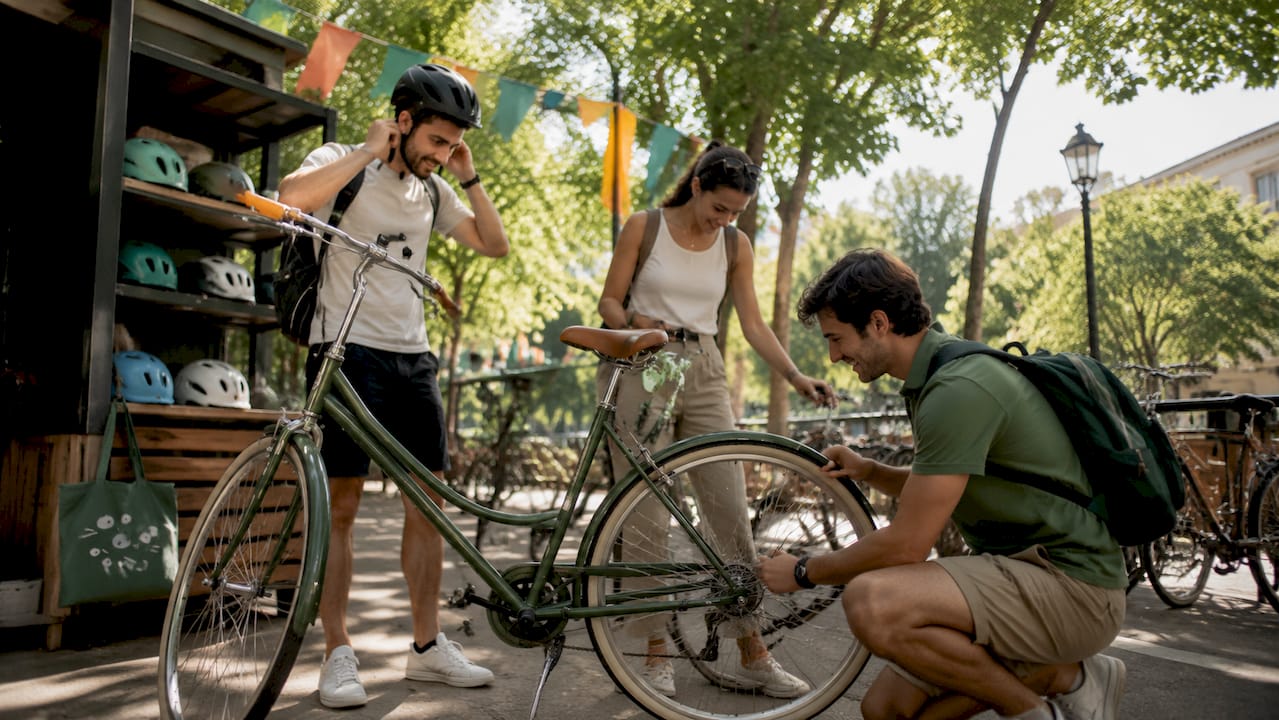
A standard 7-day cycling itinerary covers between 250 and 400 kilometers, which works out to roughly 35–57 kilometers per day. That range accommodates most active travelers without requiring serious athletic conditioning. Agencies use this as a baseline and adjust based on terrain, elevation gain, and client profile.
The core services agencies arrange for cycling tours in travel packages include:
- Luggage transfer. Clients carry only a day bag. Their main luggage moves ahead by van to the next accommodation. This single service transforms the experience from a slog to a pleasure.
- Bike rental, including e-bikes. Agencies provide e-bike options to make routes accessible to clients who would otherwise be excluded by fitness or age. E-bikes also let mixed groups stay together without the stronger cyclists waiting constantly.
- Mechanical support. A puncture on a remote road is a minor inconvenience when support is a phone call away. Without it, it ends the day.
- Accommodation selection and timing. Arriving at each destination by 4–5 pm gives clients time to shower, rest, and enjoy the evening before dinner. Agencies build this into route planning, not as an afterthought.
Accommodation choice matters more than most planners expect. A hotel with no secure bike storage, no drying room for wet gear, and a 7 am breakfast creates friction at every point of the day. Agencies that specialize in cycling tours maintain lists of properties that understand cyclists' needs.
Pro Tip: Always confirm luggage transfer cutoff times with accommodation partners before finalizing the itinerary. A 9 am cutoff at a hotel that serves breakfast until 9:30 am creates a daily scramble.
How do multi-modal and innovative approaches enhance cycling tour itineraries?
The most interesting cycling packages today are not purely cycling packages. They combine bikes with trains, boats, or both. This approach solves a real problem: clients want the experience of cycling through a region without spending every day in the saddle.
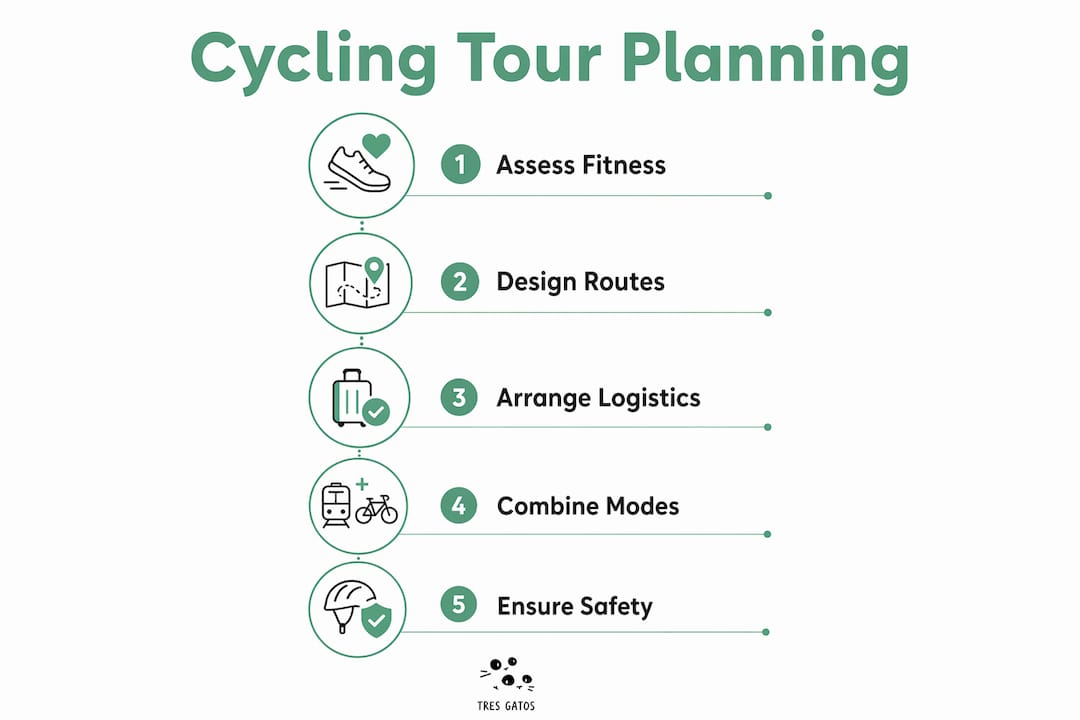
Combining cycling with rail travel promotes sustainability and covers distances efficiently. A client can cycle from Barcelona to Girona, take a train to the French border, and cycle through Roussillon without retracing a single kilometer. The route stays linear, the scenery stays fresh, and the daily distance stays manageable.
Bike-and-boat holidays take this further. Bike-and-boat formats blend cruising comfort with cycling activity, appealing to cruise clients who want something more active than a deck chair. The boat serves as a floating hotel, eliminating luggage transfer entirely. Clients cycle from port to port, return to the same cabin each night, and wake up somewhere new. It is a genuinely different product from a standard cycling tour, and it sells well to clients who would never book a traditional cycling package.
| Format | Best for | Key advantage |
|---|---|---|
| Fully guided cycling tour | Active adventure travelers | Daily support, group energy |
| Self-guided cycling tour | Independent travelers | Flexibility, personal pace |
| Cycling plus rail | Mixed fitness groups | Varied scenery, less fatigue |
| Bike and boat | Cruise clients, couples | No luggage hassle, comfort |
Multi-modal packages also reduce the fatigue problem that kills repeat bookings. Clients who finish a trip exhausted do not book another one. Clients who finish energized do. Building in a train leg or a boat day gives legs a rest and gives the itinerary a natural rhythm.
For corporate groups, group bike tours work particularly well in a multi-modal format. A morning cycling segment followed by an afternoon workshop, then a boat dinner, gives the day structure without demanding athletic performance from everyone.
What best practices ensure safety and personalized support in cycling tour planning?
Self-guided tours are the fastest-growing segment in cycling travel, and also the most misunderstood. Self-guided does not mean unsupported. A properly designed self-guided tour includes a personal briefing before departure, a professional bike fitting, a local contact number, and a clear emergency protocol. Without these elements, it is not a self-guided tour. It is just a bike rental with a map.
Agencies that add bike tours to travel packages effectively build safety into the product design, not the fine print. The key practices include:
- Personal briefing on day one. Walk clients through the route, highlight tricky junctions, and confirm they know how to use the GPS device or app. This takes 20 minutes and prevents most problems.
- Professional bike fitting. A saddle set 2 centimeters too high causes knee pain by day three. Agencies that skip fitting save 10 minutes and lose a client.
- Local contacts at each stop. Not a central call center. An actual person in each town who knows the roads, the weather patterns, and where the nearest bike shop is.
- Manual route verification. Automated route tools must be manually checked for resupply gaps and safety thresholds. A GPS tool will happily route clients down a road with no food or water for 70 kilometers. A human planner catches this before it becomes a crisis.
Route safety also means building in rest. A day with 80 kilometers of cycling and no planned lunch stop is a bad day. Lunch stops in lesser-known villages add cultural value and give clients a genuine rest before the afternoon leg. The local trattoria in a village nobody has heard of is often the moment clients remember most.
For beginners on guided tours, the guide's role extends beyond navigation. A good guide reads the group's energy, adjusts pace without being asked, and knows when to call the support van. That judgment cannot be replicated by an app.
Key takeaways
Agencies that incorporate cycling tours successfully treat logistics, client assessment, and safety support as equally important as the route itself.
| Point | Details |
|---|---|
| Start with client goals | Assess fitness and trip purpose before designing any route or daily distance. |
| Build logistics into the product | Luggage transfer, e-bike options, and mechanical support are non-negotiable for quality packages. |
| Use multi-modal formats | Combining cycling with rail or boat reduces fatigue and broadens the client base. |
| Self-guided means supported | Every self-guided tour needs a briefing, bike fitting, and local contacts to be safe. |
| Verify routes manually | GPS tools miss resupply gaps. Manual checks prevent client emergencies on the road. |
What I have learned from watching agencies get this right and wrong
The agencies that build the best cycling packages share one habit: they ride the routes themselves before selling them. Not on a recce with a support van following. Alone, with a day bag, stopping where clients will stop, eating where clients will eat. You find things on a bike that you never find in a planning meeting.
The most common mistake I see is treating the cycling as the product and the logistics as the support. It is the other way around. The cycling is easy. The logistics are the product. A client who arrives at a hotel to find their luggage has not arrived yet, or whose bike saddle is set for someone 10 centimeters taller, does not care how beautiful the route was.
Cultural stops are consistently undervalued. Agencies plan the kilometers and forget the lunch. A 60-kilometer day with a 45-minute stop in a village market is a completely different experience from the same 60 kilometers with a gas station sandwich. The local food and cultural stops are not extras. They are the reason people remember the trip.
The role of local guides in tours is also underestimated in self-guided packages. Clients think they want independence. What they actually want is independence with a safety net. The agencies that understand this distinction build better products and get better reviews.
— Evgeny
Tresgatos bike tours for travel planners
Travel planners building cycling components into European itineraries can work directly with Tresgatos in Barcelona and Paris. Groups stay small, nine people maximum, with one guide who actually lives in the city.
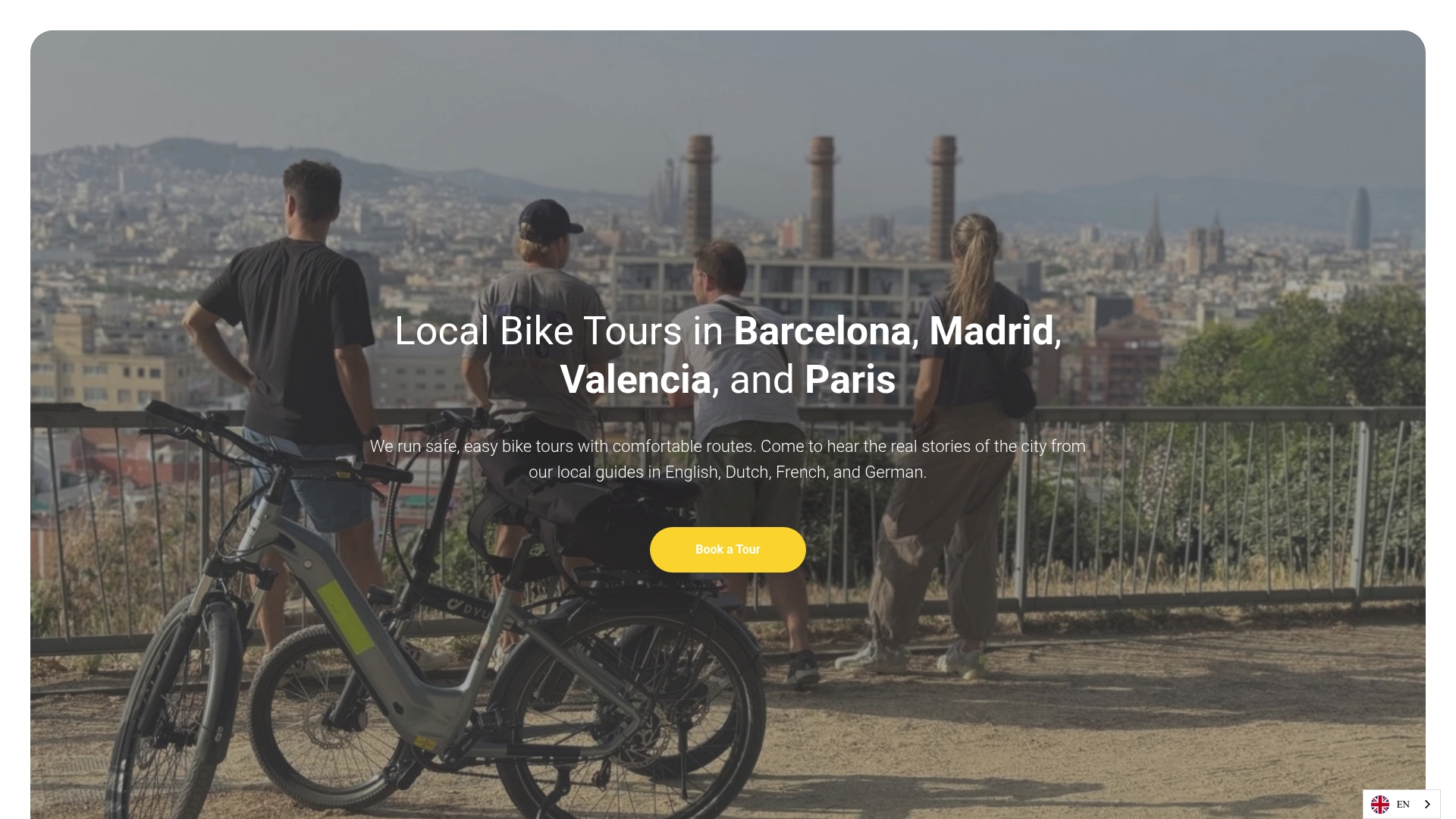
Every tour includes the bike, helmet, and insurance with no hidden charges. E-bikes are available for mixed fitness groups. The format works well as a city introduction on day one of a longer itinerary, or as a standalone half-day for corporate groups. Planners can browse city cycling tours across Barcelona, Paris, Madrid, and Valencia, or look at the Barcelona bike and e-bike tour for groups that want a focused city experience with local insight built in.
FAQ
How do agencies assess client fitness for cycling tours?
Agencies ask clients to describe recent physical activity rather than self-reported fitness levels. Daily mileage is then set based on terrain, group composition, and trip theme.
What is a standard daily distance for a cycling tour package?
A 7-day cycling itinerary typically covers 250–400 kilometers total, which averages 35–57 kilometers per day for most active travelers.
What is the difference between a guided and self-guided cycling tour?
A guided tour includes a daily guide who manages pace and navigation. A self-guided tour gives clients independence but must still include a briefing, bike fitting, and local support contacts to be considered a professional product.
How do multi-city cycling packages work for agency clients?
Multi-city cycling packages combine cycling legs with train or boat transfers, letting clients cover more ground without riding every kilometer. This format suits mixed fitness groups and clients who want variety across a single trip.
Why do agencies include e-bikes in cycling tour packages?
E-bikes make cycling tours accessible to clients who would otherwise be excluded by fitness level or age. They also allow mixed groups to ride together without stronger cyclists waiting at every hill.