

Adding guided bike tours to travel packages is the most direct way to experience a city at the pace it actually lives at, not the pace a bus schedule sets for you. Where a standard sightseeing day drops you at monuments and moves on, a cycle travel package keeps you at street level, moving through neighborhoods at a speed where things register. You notice the bakery, the argument outside the café, the way the light falls on a particular square at 10 a.m. This guide explains exactly how to add bike tours to travel packages, what to expect, what to watch out for, and how to choose the format that fits how you actually travel.
How to add bike tours to your travel package
The industry term for what most travelers are looking for is a supported guided cycling holiday, which covers everything from a three-hour city ride to a multi-day point-to-point route with luggage transfer and hotel stays. When you add bike tours to travel packages, you are essentially layering a cycling component onto an existing itinerary, or booking a package where cycling is the primary activity and logistics are built around it.
The core difference between a standalone tour and an integrated package is what gets handled for you. A well-built cycle travel package includes the bike, helmet, a local guide, and some form of support, whether that is a van following the group or a barge moving luggage between stops. BikePlanet's Amsterdam to Paris tour, for example, covers 8 nights onboard, hotel accommodation, meals, helmets, and panniers at around €2,935 per person. That price tells you something important: fully inclusive packages cost more, but they remove the coordination work that kills travel energy.
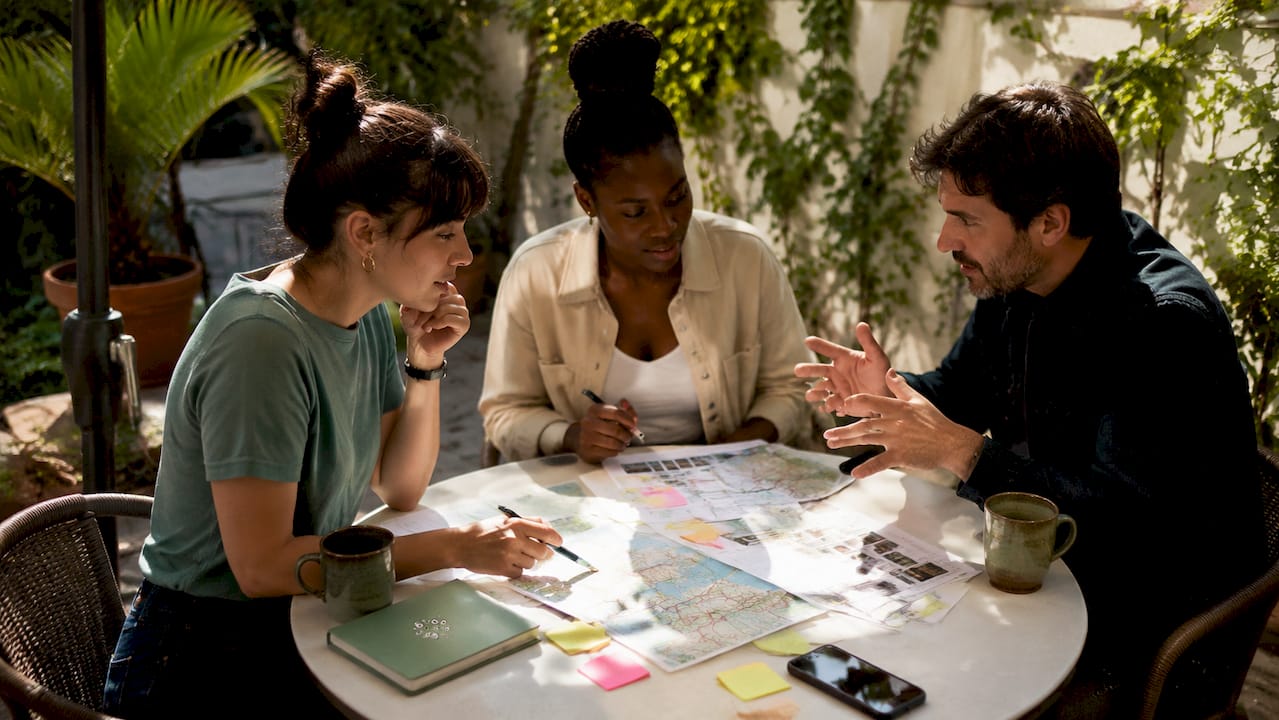
For shorter city-based bike adventure packages, the model is simpler. A three-hour guided ride in Barcelona or Paris covers 15 to 20 kilometers, includes the bike, helmet, and insurance, and gives you a local guide who actually lives in the city. No support van needed. No luggage to transfer. Just a small group and someone who knows where to stop.
What to expect from a guided bike tour travel package
Realistic expectations are what separate a good trip from a frustrating one. Here is what a properly structured guided bike tour package typically includes, and what it does not.
What is usually included:
- A local English-speaking guide (sometimes multilingual) who leads the route and provides context
- Bike rental, helmet, and basic insurance
- A support vehicle on multi-day tours, carrying luggage and assisting riders who need a break
- Accommodation and some meals on longer packages
- Airport or group transfers on fully supported trips
Much Better Adventures' Croatia cycling trip illustrates this well: 7 nights, certified local guides, a bike mechanic on call, a support vehicle, and group transfers, with a cap of 14 riders. The mechanic detail matters more than it sounds. On a multi-day tour, a flat tire at kilometer 60 is not a minor inconvenience. It is a trip-ender without support.
What is often excluded:
- Bike rental upgrades (e-bikes typically cost €99 to €289 more on self-guided packages)
- Entrance fees to museums or attractions along the route
- Alcoholic drinks and some meals
- Personal travel insurance
Pro Tip: Read the inclusions list twice. "All meals included" sometimes means breakfast and dinner only. "Transfers included" sometimes means group airport pickup, not private. Ask before you book.
The group size shapes the whole experience. A group of 14 feels like a cycling club. A group of 9 or fewer feels like traveling with friends. The social atmosphere on small-group tours tends to be more relaxed, with more flexibility to linger at a viewpoint or take a detour.
How to choose the right cycle travel package for your fitness level
The single most common mistake travelers make is booking a package based on the destination and ignoring the daily distance. Daily stage distances range from 40 to 95 kilometers on routes like the Danube Cycle Path. That gap is the difference between a pleasant morning ride and an exhausting slog that leaves you too tired to enjoy the town you just arrived in.
| Format | Best for | Daily distance | Guide included | Luggage transfer |
|---|---|---|---|---|
| City half-day tour | First-timers, city visitors | 15 to 25 km | Yes | No |
| Self-guided multi-day | Independent travelers | 40 to 80 km | No | Usually yes |
| Fully guided multi-day | Those wanting support and social experience | 40 to 70 km | Yes | Yes |
| Bike and barge | Relaxed pace, scenic routes | 20 to 50 km | Sometimes | Onboard |
Matching the itinerary's kilometer range to your actual fitness level preserves energy for sightseeing and avoids days where you arrive at the hotel and go straight to bed. A self-guided Danube tour at €689 (plus €99 to €289 for bike rental) suits confident cyclists who want independence. A fully guided package suits those who want someone else to handle the route decisions.
Beyond fitness, consider what you want beyond the riding itself. Much Better Adventures emphasizes local tastings, planned activities, and mechanical support as core parts of the experience, not add-ons. If you want to eat where locals eat and understand what you are looking at, a guided format with a local expert is worth the extra cost. If you want to set your own pace and stop when you feel like it, self-guided is the better fit.
Pro Tip: If you are unsure about fitness, choose a package with an e-bike option. The Málaga to Sierra Nevada route offers a guided supplement and seasonal pricing adjustments. An e-bike lets you keep up with the group without burning out on climbs.
Step-by-step process for adding bike tours to your itinerary
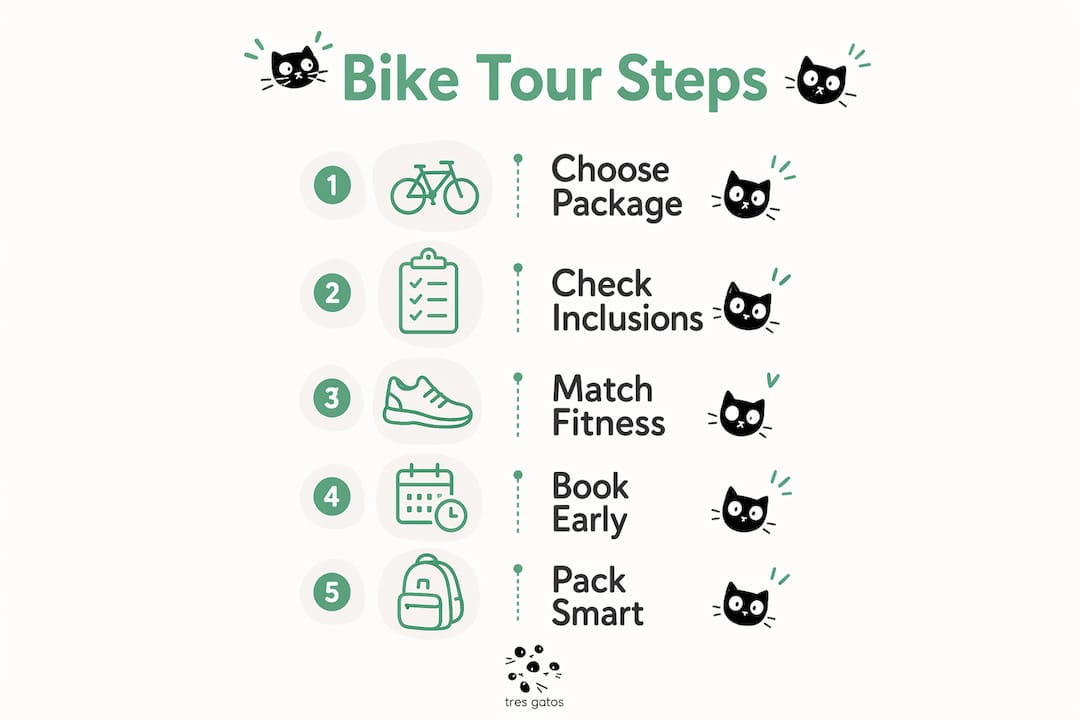
Adding a bike tour to an existing trip is straightforward when you work through it in order.
-
Check the season. Bike tours in Barcelona and Paris run year-round, but multi-day routes through mountain regions have narrow windows. Spring (April to June) and early fall (September to October) offer the best combination of weather and crowd levels across most of Europe.
-
Set a realistic budget. A city half-day tour runs €30 to €60 per person. A fully supported week-long package like the Amsterdam to Paris bike and barge runs closer to €2,935. Know which category you are in before you start comparing options.
-
Book early, especially for small groups. Tours capped at 9 or 14 riders fill up weeks ahead in peak season. Group discounts are sometimes available for parties of 6 or more, but only if you contact the operator directly before booking online.
-
Sort your packing before you sort your wardrobe. For multi-day supported tours, most operators recommend one medium suitcase (15 to 20 kg) plus a small daypack. The daypack carries your rain jacket, water, snacks, and phone. Everything else goes in the van. Pannier-based touring requires stricter limits and a different packing mindset entirely.
-
Coordinate arrival and departure logistics. If your package includes a group airport transfer, confirm the pickup time and meeting point in writing. Missing a group transfer on day one sets a stressful tone. If you are arriving independently, build in a buffer day before the tour starts.
-
Confirm what is covered for your bike. City tours typically include the bike in the package price. On self-guided multi-day routes, rental fees are often separate, ranging from €99 for a standard bike to €289 for an e-bike. This is not a small line item.
Common mistakes to avoid when booking a guided bike tour package
Most problems with bike tour packages come from assumptions, not bad luck.
- Underestimating daily distances. A 60 km day sounds manageable until you factor in hills, heat, and the fact that you are doing it again tomorrow. Check the elevation profile, not just the distance.
- Ignoring the bike type. A hybrid bike and a road bike feel completely different over 50 km. If the package does not specify, ask. An e-bike upgrade is worth considering for hilly routes or if you have not cycled regularly in the past year.
- Overpacking. Luggage transfer logistics depend on the tour format. Bike and barge tours store luggage onboard, which changes access timing compared to van-transfer tours. Either way, you do not need four pairs of shoes.
- Assuming all costs are included. Entrance fees, wine at dinner, and personal insurance are almost never in the base price. Budget an extra €20 to €40 per day for incidentals.
- Booking without reading cancellation terms. Weather, illness, and logistics changes happen. A package with a rigid no-refund policy is a risk on a trip that depends on physical participation.
"Many travel assumptions don't fit bike tours since daily km and rental fees must be planned for separately." — Cycle-Danube
The last point is the one most travelers skip. A city bike tour is low-stakes if something changes. A week-long multi-day package is a different financial commitment, and the fine print matters.
Key takeaways
Adding bike tours to travel packages works best when you match the format, distance, and guide type to how you actually travel, not how you imagine you travel.
| Point | Details |
|---|---|
| Match distance to fitness | Daily stages range from 40 to 95 km; choose based on your real cycling frequency, not optimism. |
| Read inclusions carefully | Bike rental, entrance fees, and personal insurance are often excluded even from "all-inclusive" packages. |
| Book small groups early | Tours capped at 9 to 14 riders fill fast in peak season; contact operators directly for group rates. |
| Pack one medium bag | Most supported tours allow 15 to 20 kg in a van-transferred suitcase plus a small daypack for daily use. |
| Local guides change the experience | Certified local guides with planned activities beyond riding produce a richer trip than route maps alone. |
Why the guide is the whole point
I have been on bike tours where the route was genuinely beautiful and the experience was flat. The itinerary hit every landmark. The bikes were fine. But the guide was reading from a script, and you could feel it. Nobody asked a question after the first ten minutes.
The tours that stay with people are the ones where the guide is actually from there. Not "based in" the city. From it. Someone who knows which café opened last month and which one has been there since 1987. Someone who can answer the question you did not know you had. That is not a feature you can list in a package description. It is either there or it is not.
What I have noticed, running tours in Barcelona and Paris with Tresgatos, is that the small group format is not just a selling point. It changes what is possible. With 9 people, a guide can stop mid-route because something interesting is happening on that street right now. With 24 people, you keep moving. The logistics of a large group override the spontaneity that makes a city feel real.
Packing light also changes the trip more than people expect. When you are not worried about your luggage, you are present. You look at things. You talk to the guide. The bike tour becomes the trip, not the activity you did between hotel check-ins.
For family bike excursions or mountain bike holidays, the same principle applies: the right guide on the right route at the right pace is what you are actually paying for. The bike is just the vehicle.
— Evgeny
Bike tours in Barcelona, Paris, and beyond with Tresgatos
Tresgatos runs three-hour guided bike tours in Barcelona, Paris, Valencia, and Madrid, with groups capped at 9 people and one local guide who actually lives in the city. Every tour includes the bike, helmet, and insurance. No hidden fees, no surcharges at checkout.
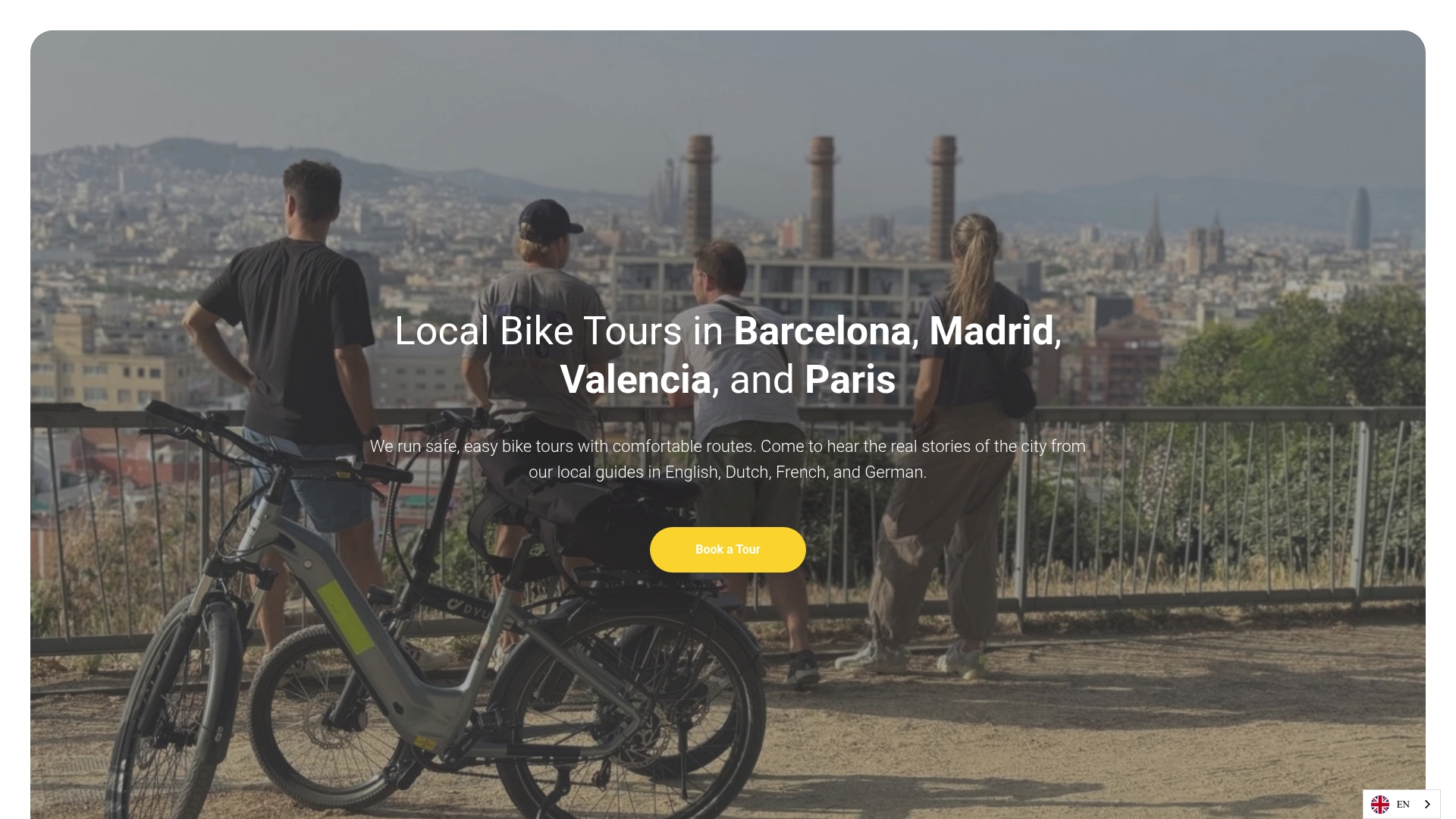
If you are building a trip to Barcelona or Paris and want to add a bike tour that fits a full travel day without taking it over, the Barcelona and Paris bike tours are designed exactly for that. You can also check the Barcelona bike tour page for route details, guide profiles, and availability. For something beyond the main sights, the Valencia bike tour covers the Turia Park and the neighborhoods most visitors never reach. Three hours. Nine people maximum. One guide who knows the city.
FAQ
What does a guided bike tour travel package typically include?
Most guided bike tour packages include the bike, helmet, a local guide, and basic insurance. Multi-day packages often add accommodation, some meals, luggage transfer, and a support vehicle, though bike rental upgrades and entrance fees are frequently excluded.
How far do you cycle on a typical guided bike tour?
City tours cover 15 to 25 km over two to three hours. Multi-day guided packages average 40 to 70 km per day, while self-guided routes like the Danube Cycle Path can reach 95 km on longer stages.
How early should I book a guided bike tour?
Book at least four to six weeks ahead for peak season (June through August), especially for small-group tours capped at 9 to 14 riders. Popular routes and city tours in Barcelona and Paris fill up faster than most travelers expect.
Are e-bikes available on guided tour packages?
Yes, most operators offer e-bike upgrades, though they typically cost €99 to €289 more than standard rental bikes on multi-day packages. City tour operators like Tresgatos include e-bike options at a fixed price with no additional surcharges.
What should I pack for a multi-day supported bike tour?
Pack one medium suitcase of 15 to 20 kg for van transfer, plus a small daypack with a rain jacket, water, snacks, and your phone. A helmet is non-negotiable and is usually provided by the operator.