
Planning a corporate event that people actually look forward to takes more creativity than booking a conference room. Understanding how group bike tours work for companies can completely change your approach to team building. Unlike a ropes course or a trivia night, a guided bike tour drops your team into a real city, moving together through streets and stories that spark conversation naturally. This guide covers the logistics, formats, benefits, and planning steps that make corporate cycling events genuinely memorable rather than just another item on the HR calendar.
Table of Contents
- Key takeaways
- How group bike tours work for companies: the core components
- How to organize a corporate group bike tour
- Comparing corporate bike tour formats
- The real benefits of bike tours for teams
- My honest take on what planners get wrong
- Plan your next team event with Tresgatos
- FAQ
Key takeaways
| Point | Details |
|---|---|
| Guides manage pace and safety | Professional guides keep groups together and handle emergencies, making tours accessible for all fitness levels. |
| Support vehicles are standard | SAG vehicles carry spare bikes, gear, and luggage so participants focus on the experience, not the logistics. |
| E-bikes level the playing field | Mixed-ability teams can ride together comfortably when e-bikes are part of the fleet. |
| Format shapes the outcome | Half-day, full-day, and multi-day tours each serve different goals, from quick bonding to deep team immersion. |
| Benefits go beyond exercise | Cycling together builds communication, reduces stress, and creates shared memories that outlast the event. |
How group bike tours work for companies: the core components
Most planners assume a corporate bike tour is just renting bikes and sending people off. The reality is far more structured. A well-run group cycling tour for businesses operates more like a mobile event with professional crew, safety systems, and hospitality built in.
The centerpiece is the professional guide. Guides control riding pace and schedule regroup stops to keep the group connected, which matters enormously when your team has a mix of cyclists and people who haven't touched a bike in years. A good guide reads the group constantly, adjusting the pace without making slower riders feel singled out.
Support vehicles are the other piece most planners don't anticipate until they realize how much they need them. SAG vehicles carry 10+ spare bikes along with tools, luggage, and emergency supplies, enabling point-to-point travel without anyone hauling a backpack. If someone's knee gives out two hours in, the support van picks them up without disrupting the group. That kind of backup transforms a potentially stressful event into a genuinely relaxed one.
Before anyone clips in, professional guides run a stationary safety briefing. Pre-ride briefings cover route hazards, hand signals, emergency protocols, and bail-out pickup points. This happens before the group starts moving, not during, which makes the information actually stick. Participants know what to do if they need to stop, and they understand the signals that keep the group riding safely as a unit.
Equipment quality shapes the whole experience. Quality hybrid or city bikes suit most urban tours, but the real game-changer has been the e-bike. E-bikes create a level playing field for mixed-ability groups, letting your fittest colleague and your least sporty colleague ride side by side without either one suffering.
- Professional guide: Manages pace, narrates the route, handles safety, and keeps the group together
- Support vehicle (SAG): Carries spare bikes, tools, luggage, and handles pickups for anyone who can't continue
- Quality bike fleet: Includes standard and e-bikes to accommodate all fitness levels
- Pre-ride safety briefing: Covers hand signals, route hazards, bail-out points, and emergency contacts
- Guide-to-guest ratio: Frequent head counts and group management prevent splitting and keep everyone accounted for
Pro Tip: Ask your tour provider specifically about their e-bike ratio before booking. For a corporate group with mixed fitness levels, having at least 30 to 40 percent of the fleet as e-bikes prevents the experience from feeling like a fitness test.
How to organize a corporate group bike tour
Getting the logistics right is where most corporate planners either succeed or scramble. Here is a step-by-step approach that experienced event organizers use.
-
Assess your group. Gather basic information about group size, average fitness level, and any mobility considerations. You don't need everyone to fill out a medical form, but knowing whether your group skews active or sedentary shapes every other decision.
-
Define your objective. A half-day city tour in Barcelona serves a different purpose than a two-day charity ride. Are you celebrating a milestone, onboarding new hires, or rewarding a high-performing team? Your goal determines the format, intensity, and tone of the event.
-
Select your route and timing. Urban routes through cities like Barcelona, Valencia, or Paris work beautifully for corporate groups because the scenery and cultural stops create natural conversation moments. Morning slots avoid midday heat and traffic. Route safety checks conducted before events by professional providers catch hazards before your group encounters them.
-
Coordinate logistics with your provider. Confirm bike hire quantities, e-bike availability, support vehicle coverage, and any accommodation needs for multi-day events. Scalable fleets manage groups from 10 to several hundred riders, so don't assume your group is too large or too small.
-
Communicate with participants. Send a pre-event brief covering what to wear, what to bring, the meeting point, and what the day looks like. People who know what to expect arrive calmer and more engaged. Include a note about e-bike availability so no one feels pressure to keep up physically.
-
Build in contingency. Confirm bail-out points with your provider and have a plan for participants who need to exit early. Weather contingencies matter too, especially for full-day or multi-day events.
Pro Tip: Book a short call with your tour provider's event coordinator rather than relying entirely on email. Fifteen minutes of conversation surfaces details, like local road closures or seasonal route adjustments, that a booking form simply won't capture.
Comparing corporate bike tour formats
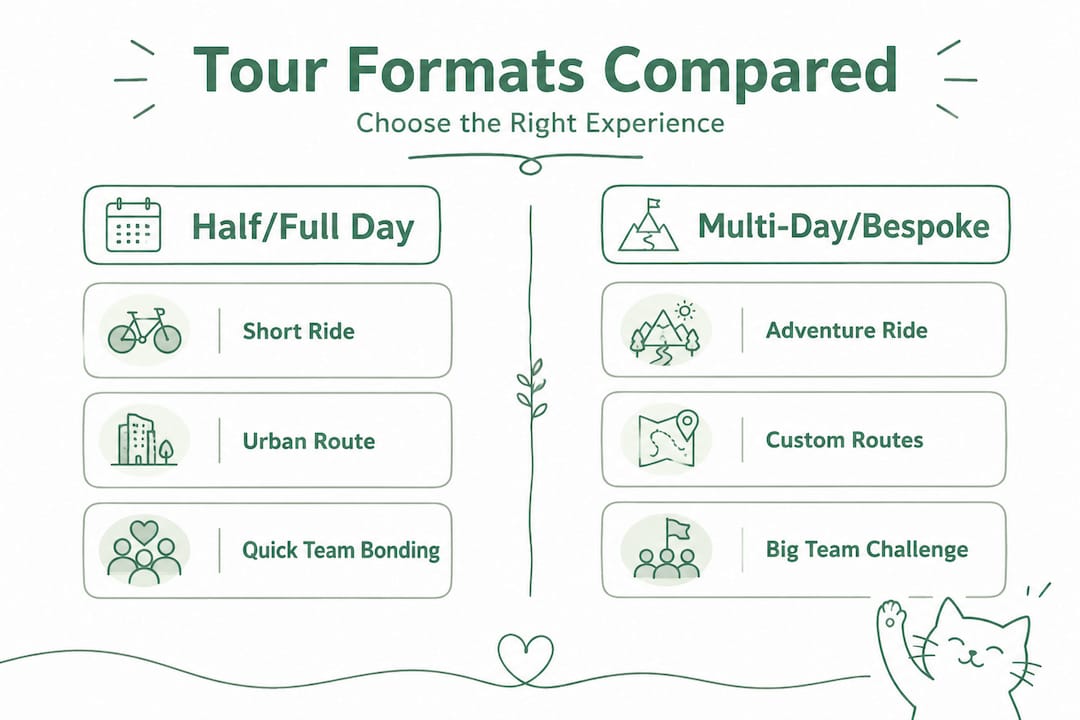
Choosing the right format is one of the most consequential decisions in corporate bike tour logistics. The table below breaks down the main options so you can match the format to your goals.
| Format | Duration | Best for | Group size | Logistics complexity |
|---|---|---|---|---|
| Half-day tour | 2 to 4 hours | Quick team bonding, city exploration | 10 to 50 | Low |
| Full-day tour | 5 to 8 hours | Deeper engagement, milestone events | 15 to 100 | Medium |
| Multi-day tour | 2 to 5 days | Immersive team building, charity rides | 15 to 60 | High |
| Bespoke challenge | Variable | Company-specific goals, branded events | Any | High |
Half-day tours are the most accessible entry point for companies new to group cycling tours for businesses. They fit into a conference day, require minimal fitness preparation, and deliver a genuine shared experience without dominating the schedule.
Full-day tours create more depth. A team that spends six hours navigating a city together, stopping for local food, and solving small logistical moments as a group builds a different kind of rapport than one that shares a two-hour workshop.
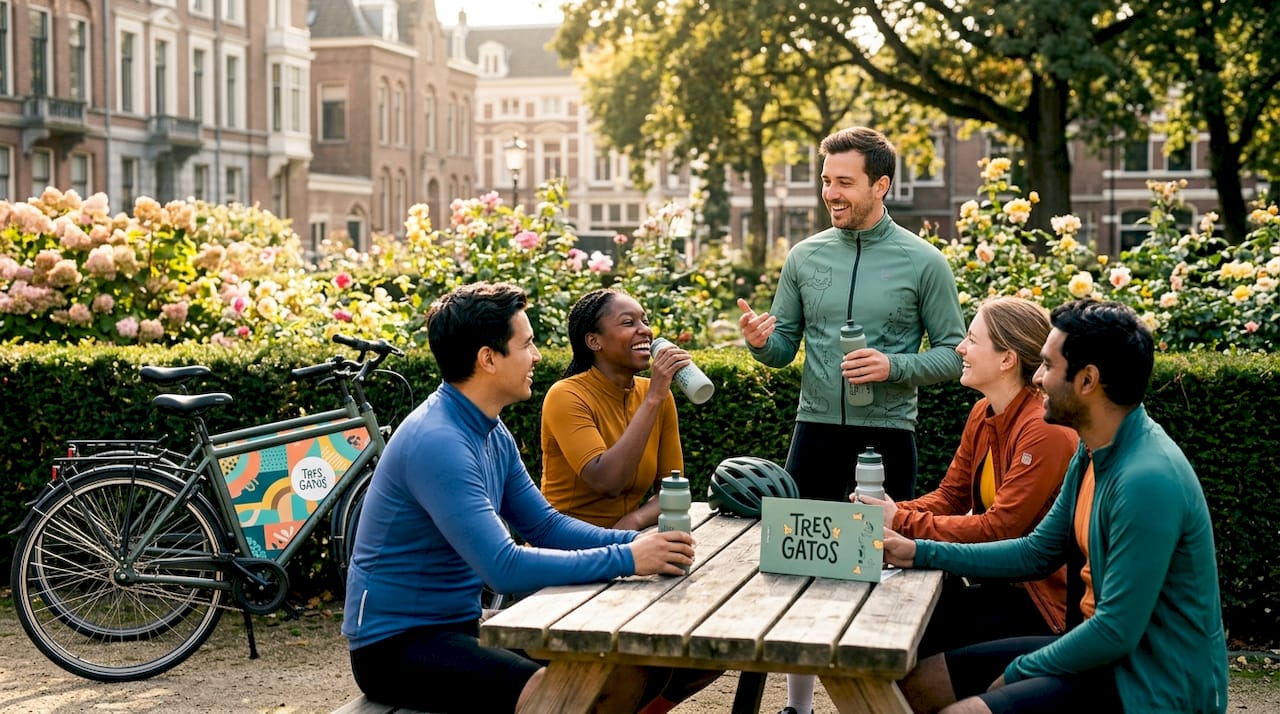
Multi-day corporate cycling trips combine activity with accommodation and full event planning, which makes them immersive but also more complex to coordinate. They work best for leadership retreats, annual team events, or charity fundraising rides where the journey itself is the point.
Bespoke challenges, including branded jerseys, custom routes, and company-specific milestones, suit organizations that want the event to reflect their identity. Popular events offer customizations like branded jerseys and flexible route choices to meet diverse corporate needs.
The real benefits of bike tours for teams
The most common misconception about team building bike rides is that they are primarily a fitness activity. They are not. Cycling brings people together through outdoor movement, conversation, and shared problem-solving in a way that sidesteps the awkwardness of traditional corporate days entirely.
Here is what actually happens when a team rides together through a city:
- Communication improves naturally. Riding in a group requires constant, low-stakes coordination. People call out turns, check on each other, and share observations. That behavior carries back to the office.
- Hierarchies flatten. On a bike, the VP and the analyst are just two people trying to keep up with the guide. Shared physical experience strips away title-based distance faster than any facilitated workshop.
- Stress drops measurably. Shared physical activity motivates and energizes employees, and the outdoor setting amplifies that effect. Moving through a beautiful city at a comfortable pace is genuinely restorative.
- Memories are specific and shared. Teams remember the moment someone's bike chain slipped on the Passeig de Gràcia, or the photo stop at Turia Park in Valencia. Specific shared memories create stronger bonds than generic "team building" experiences.
- Wellness becomes part of company culture. A well-received bike tour plants the idea that the company values employee wellbeing in a tangible, enjoyable way.
"The physical activity of group bike tours facilitates interpersonal interaction more than competition or exercise alone." — Breezy Tracks
The benefits of bike tours for teams extend well past the day itself. People who share a memorable outdoor experience together tend to communicate more openly afterward. That is the long-term return on a well-planned cycling event.
My honest take on what planners get wrong
I've seen corporate bike tours executed brilliantly and I've seen them fall apart in ways that were entirely preventable. The most common mistake is underestimating how much the guide matters. Planners spend time on bikes, routes, and catering, and then treat the guide as an afterthought. A mediocre guide turns a beautiful route into a forgettable procession. A great guide turns a flat city street into a story your team retells for months.
The second thing I've learned is that fitness diversity is not a problem to solve. It's a feature to design around. When you build e-bikes into the fleet and communicate that clearly before the event, the slower riders arrive without anxiety and the faster ones don't feel held back. The tension disappears before it starts.
What I find most underappreciated is the value of the stops. The moments between riding, a coffee break in a local square, a photo stop at an iconic landmark, a guide explaining the real history behind a building, are where the actual team building happens. The cycling gets people there. The stops are where people talk.
My honest advice: don't try to organize this yourself from scratch. Work with a provider who has run corporate groups before, who pre-rides routes, and who has genuine support infrastructure. The difference between a stressful DIY event and a smooth professional one is not price. It's experience.
— Evgeny
Plan your next team event with Tresgatos
If you're ready to move your team building off the conference room wall and into the streets of one of Europe's most vibrant cities, Tresgatos makes it genuinely easy. Their guided city bike tours in Barcelona, Madrid, Valencia, and Paris are designed for all skill levels, with quality bikes, expert multilingual guides, and routes that balance safety with real local flavor.
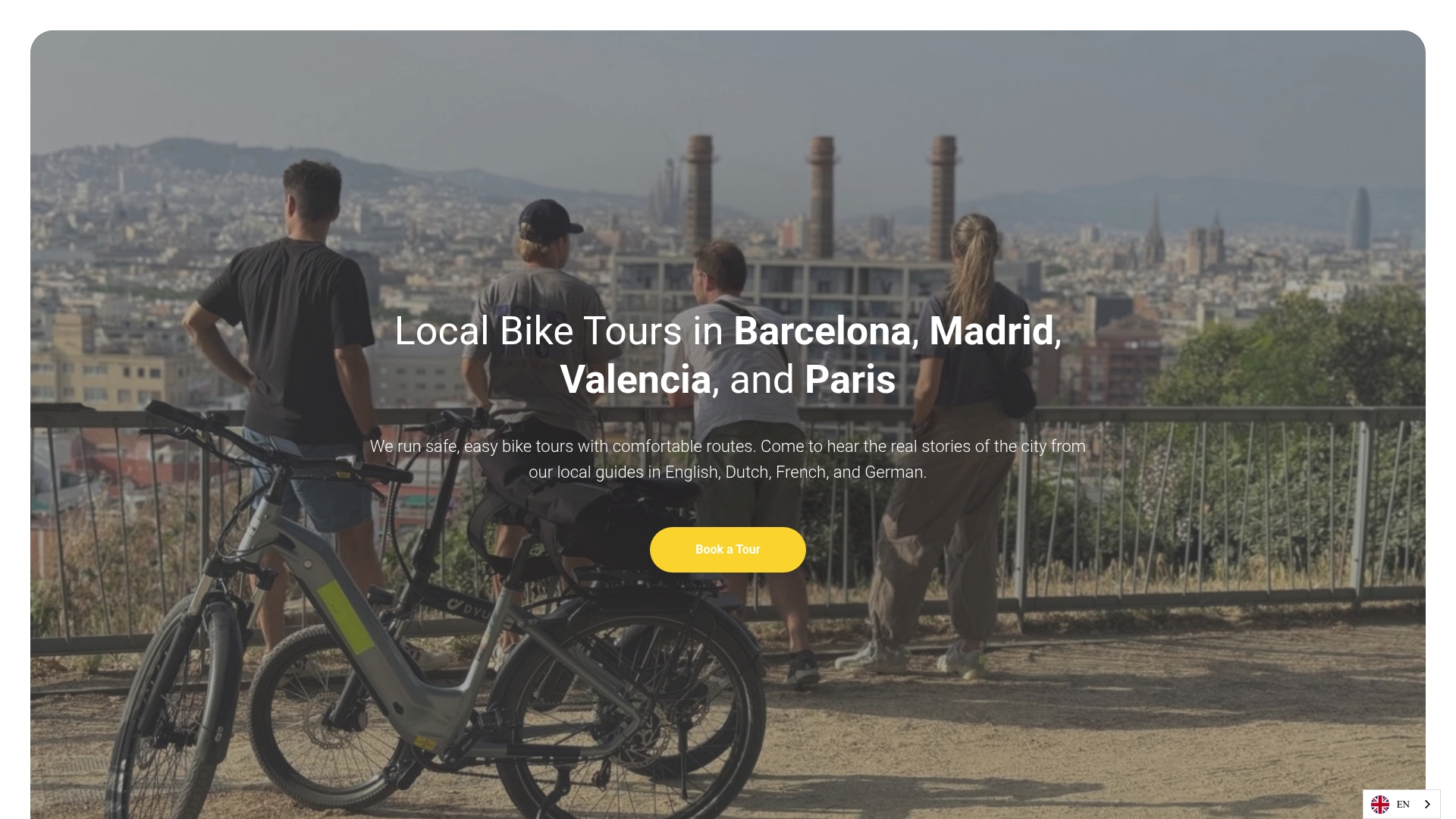
Corporate groups get the same personalized attention that has earned Tresgatos over 1,000 five-star reviews. Routes are carefully selected for safety and engagement, e-bikes are available for mixed-ability groups, and every tour is led by a guide who knows how to keep a group connected and entertained. Whether you're planning a half-day city ride in Barcelona or a full group experience across Paris, you can book your group tour directly and get your team out exploring together.
FAQ
What is a SAG vehicle on a corporate bike tour?
A SAG vehicle is a support van that travels with the group, carrying spare bikes, tools, luggage, and first aid supplies. It also provides pickups for any participant who cannot continue riding, keeping the group moving without leaving anyone behind.
How many people can join a group cycling tour for businesses?
Professional providers scale from 10 to several hundred riders using flexible fleets and support teams. Most corporate half-day tours work best between 15 and 60 participants for a balanced group experience.
Do participants need to be fit for a corporate bike tour?
No. Professional tours accommodate all fitness levels through careful pacing, regroup stops, and e-bike options. E-bikes allow mixed-ability groups to ride together comfortably without anyone feeling left behind or overexerted.
How far in advance should you book a corporate bike tour?
For groups under 30, four to six weeks is typically sufficient. Larger groups or multi-day events benefit from booking two to three months out to secure the right fleet size, guide team, and any accommodation or route customizations.
What makes a guided bike tour better than a self-guided one for teams?
Professional guides manage pace, deliver local storytelling, handle safety protocols, and keep the group together, all of which are critical for corporate groups with diverse fitness levels. Guide-to-guest ratios and head counts prevent group splitting and give planners peace of mind throughout the event.