
Most families assume a city bike tour is just a casual ride around town. Show up, grab a bike, pedal around, done. In practice, understanding how families prepare for a city bike tour makes the difference between a morning everyone talks about for years and one where someone ends up crying at a crosswalk by 10 a.m. The logistics, the pacing, the gear, the route selection — all of it matters more than the cycling itself. This guide covers the practical side that most articles skip.
Table of Contents
- Key takeaways
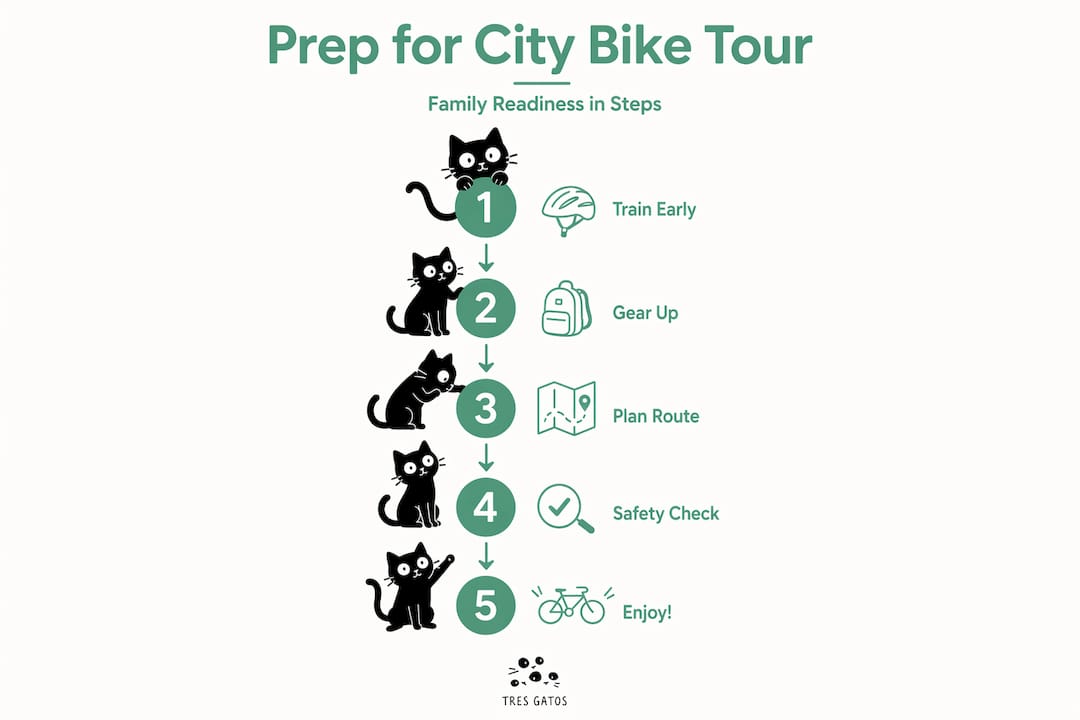
- How families prepare for a city bike tour: the physical side
- Choosing the right bikes and gear
- Route planning for family city cycling
- Family safety and group management on city streets
- Engagement and mindset: the part most guides skip
- My take on what actually prepares a family
- Ready to ride? Let Tresgatos show you the city
- FAQ
Key takeaways
| Point | Details |
|---|---|
| Start training early | Begin building cycling fitness 8 to 12 weeks before your tour to avoid fatigue and keep kids motivated. |
| Match gear to the city | Choose bikes and storage designed for urban terrain, not rural touring, and do a safety check before every ride. |
| Plan routes around kids | Select low-traffic paths with regular stops at parks or ice cream spots to match children's natural pace. |
| Treat safety as a system | Teach hand signals, ride in visible formation, and have a basic emergency plan before you leave the hotel. |
| Let kids set the rhythm | Families who accept a slower, flexible pace consistently have more fun than those who stick to a strict itinerary. |
How families prepare for a city bike tour: the physical side
The most common mistake families make is showing up to a city bike tour with no prior preparation at all. A few kilometers sounds easy until you add city traffic, a seven-year-old who runs out of steam, and summer heat in Barcelona or Paris.
Start training 8 to 12 weeks ahead, increasing your weekly mileage by no more than 10 percent at a time. In the final week before the tour, cut your riding volume roughly in half so everyone arrives fresh rather than worn out. This rhythm works for adults and applies equally to kids, who recover faster but also tire faster than they let on.
A few things worth building into your training:
- Short rides first. Start with 20 to 30 minute loops close to home, two or three times per week. City riding involves more stopping and starting than open road cycling, so practice that rhythm.
- Simulate city conditions. Find roads with traffic lights, pedestrian crossings, and mixed traffic. Flat park paths are not the same as real urban streets.
- Involve the kids in training, not just the day. A child who has done five practice rides before the actual tour is a completely different rider than one stepping onto an unfamiliar bike for the first time.
- Check in on energy levels honestly. Kids will often say they are fine right up until they are not. Build in buffer time, not just buffer distance.
Mental readiness matters just as much as fitness. A stressed, anxious parent transfers that energy directly to their children. Taking a moment before each ride to set a loose intention for the day — "today we ride slowly and stop when something looks interesting" — changes the tone of the whole morning.
Pro Tip: Ride the planned city route solo before bringing your children along. Kids borrow confidence from parents who already know the intersections, the tricky turns, and where to pause. One solo preview ride is worth more than any amount of map study.
Choosing the right bikes and gear
City touring with kids is not the same as a countryside cycling trip, and the gear reflects that. Urban terrain means frequent stops, curbs, cobblestones in older city centers, and the occasional need to walk the bike across a pedestrian zone.
For young children who are not yet independent riders, the main options are:
- Cargo bikes or front-seat setups for toddlers and very young children who need full support
- Tag-along bikes (trailer cycles that attach to an adult's bike) for children aged roughly four to nine who can pedal but lack the stamina or awareness for solo riding in traffic
- Balance bikes or small independent bikes for confident riders aged five and up who are ready to ride short stretches alongside an adult
Beyond the bike itself, immediate-access storage like a handlebar bag is worth its weight. Being able to grab a snack, a wipe, or a light jacket without stopping and unpacking a rear pannier keeps the ride moving and keeps moods stable. A trailer can double as bulky gear storage, but your most-used items should always be within arm's reach.
Safety gear checklist before every ride:
- Helmets fitted and fastened for every rider, no exceptions
- Bright colors or reflective strips for low-light conditions
- A working bell on each bike
- A basic lock for stops at cafes or landmarks
- A small first aid kit in the bag
Pro Tip: Do a pre-ride bike check every morning of the tour. Tires, brakes, and quick-release seats take 90 seconds to check and prevent the kind of mid-route problem that ends the day early.
Route planning for family city cycling
Choosing where to ride matters more than how far. A well-chosen three-kilometer route through a city park and a riverside path will be more enjoyable for a family than a longer ride on a main boulevard, even if the shorter one seems less impressive on paper.
When selecting routes for city cycling with kids, the key factors are not always the obvious ones. Elevation gain is frequently underestimated, especially if you are towing a trailer. A loaded trailer can add up to 30kg, which turns a gentle incline into a real effort. In cities like Lisbon or parts of Barcelona, even short distances involve significant climbing. Always check elevation before you commit to a route.
Here is a quick comparison of route characteristics to look for when planning a family city tour:
| Route feature | Family-friendly | Less suitable for families |
|---|---|---|
| Traffic level | Dedicated bike lanes or parks | Mixed high-traffic streets |
| Terrain | Flat or gently rolling | Repeated steep climbs |
| Stop opportunities | Parks, plazas, cafes, playgrounds | Long uninterrupted stretches |
| Surface quality | Smooth asphalt or packed gravel | Cobblestones over long distances |
| Bail-out options | Multiple exit points | Single-path with no alternatives |
Build the route around stops, not distance. Naming snack stops and routing through parks or ice cream spots gives children a concrete thing to look forward to, which sustains motivation far better than abstract distance goals. A stop at a fountain, a climbing frame, or a good pastry shop is not a delay. It is the point.
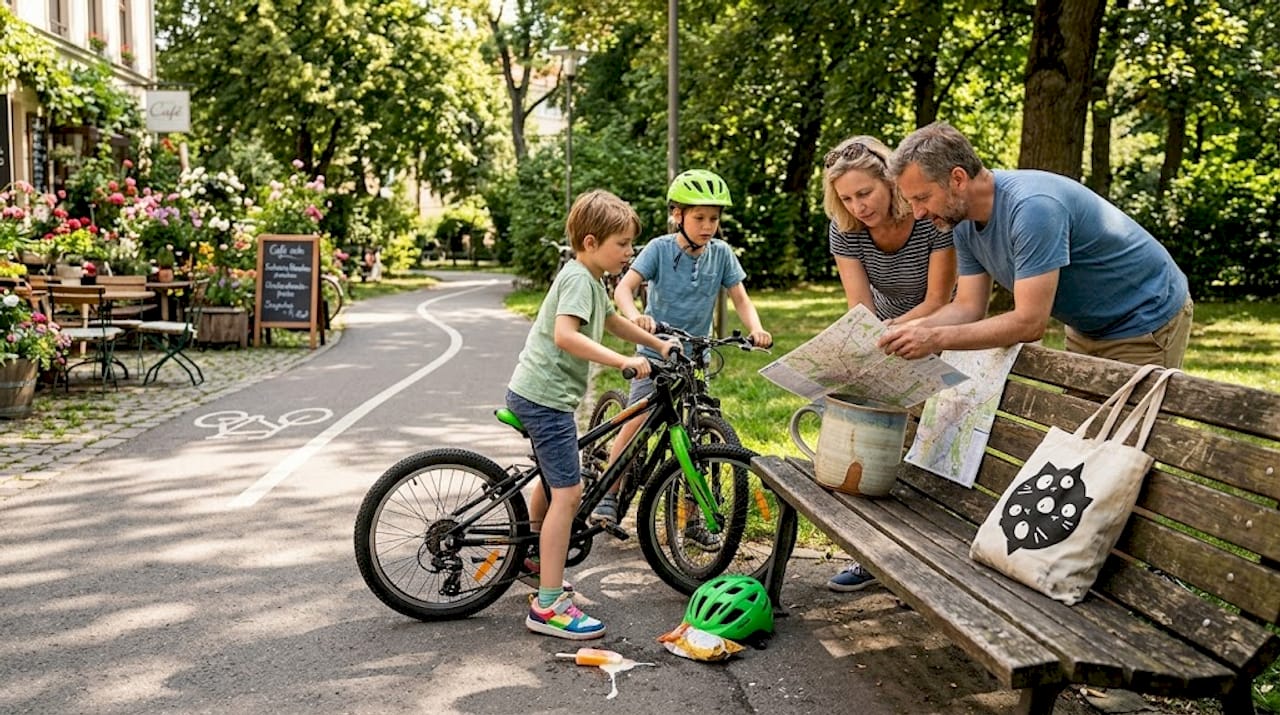
Apps like Google Maps cycling mode or Komoot can show elevation profiles and traffic conditions before you leave. Many cities also have dedicated cycling route maps available from tourist offices or cycle hire shops. Use them. And always identify at least one bail-out option per route segment so that an unexpected tired child or a weather change does not strand you.
Properly planned rest days or lighter cycling days mixed into a longer trip also reset energy and keep morale high for everyone. Not every day needs to be a riding day.
Family safety and group management on city streets
City cycling as a group requires a small amount of structure. Not military precision, just enough coordination so nobody drifts into traffic while looking at a cathedral.
Start with the basics before you leave:
- Teach hand signals. Left arm out, right arm out, arm down for stopping. Even six-year-olds learn these quickly and take enormous pride in using them correctly.
- Establish riding formation. One adult leads, children ride in the middle, and the other adult (if there is one) rides at the back where they can see everyone. This is the single most practical group management approach for city rides.
- Agree on a stopping signal. A simple bell ring or a shouted word works. Everyone stops and waits when they hear it, no exceptions.
- Practice traffic light behavior before you start. Who stops where, who goes first, how far ahead the lead adult rides before waiting. It takes ten minutes to rehearse and eliminates most intersection anxiety.
For families cycling in city traffic, the biggest risk is not speed but unpredictability. Children tend to brake suddenly, swerve toward interesting things, and stop without warning. Building predictable habits in training rides means those habits show up on the real tour.
Keep a charged phone accessible but not in hand. A phone mount on the handlebar for navigation is fine. Scrolling while riding is not. And carry a basic first aid kit: plasters, antiseptic wipes, and a cold compress cover the vast majority of minor incidents.
Pro Tip: Walk through the first intersection or busy crossing of the day on foot with your children before you ride it. Five minutes of walking and observing together is more effective than any amount of verbal instruction.
Engagement and mindset: the part most guides skip
Here is the honest version of family city bike touring: children do not care about the route. They care about the gelato at the fountain stop, the pigeon they nearly ran over, and whether they are allowed to ring the bell at the traffic light.
Families who plan generously and improvise gladly consistently have better experiences than those with a fixed schedule. Build in 30 to 40 percent more time than you think you need. Then add a little more. What looks like inefficiency is actually how children process new experiences — slowly, with frequent tangents.
Practical ways to keep kids engaged and invested:
- Give them a job. "You are the snack monitor" or "you tell me when you see a dog" creates participation rather than passive riding.
- Let them co-navigate. A child holding the paper map (or even just looking at it) feels ownership over the route. It also teaches spatial awareness, which is a useful byproduct.
- Celebrate small landmarks. That unusual fountain, the street musician, the building with the interesting roof. Stop, look, talk about it. These moments are what they remember.
- Accept the pace without resentment. Children set the pace on family bike tours. Accepting that this is the design, not a problem, shifts the whole experience from frustrating to genuinely pleasant.
The primary goal of a family city bike tour is a positive memory, not kilometers covered. Keep that in focus when someone needs their third snack break in forty minutes.
My take on what actually prepares a family
I have watched a lot of families arrive at a city bike tour having done everything right on paper. Helmets fitted, route printed, bikes sized correctly. And I have watched some of them still struggle because nobody had thought about what happens when the plan hits a tired eight-year-old at 11 a.m.
In my experience, the families who enjoy city cycling most are not the ones who trained hardest. They are the ones who arrived with low expectations and high curiosity. A parent who can say "let's stop here for a bit" without any frustration is more valuable than an extra water bottle.
The mental preparation piece is genuinely underestimated. Doing a pre-ride check-in on your own energy and stress level before you start cycling, not just the bike, changes how you respond when things go sideways. And things always go slightly sideways. That is actually part of why people remember the trip.
I also believe strongly in trial rides from home, weeks before travel. Not to get fit. To find out how your family functions on bikes together. You will learn more in one 45-minute neighborhood ride than in any amount of reading.
One thing I have seen repeatedly: the families who push through a difficult moment and find something good on the other side leave with the best stories. The rainstorm, the wrong turn, the accidental discovery of a great cafe. Flexibility is not a consolation prize for poor planning. It is the whole game.
— Evgeny
Ready to ride? Let Tresgatos show you the city
If you want the preparation to feel worthwhile from the first pedal stroke, a local guide makes a real difference. Tresgatos runs city bike tours in Barcelona, Paris, Madrid, and Valencia, all three hours, all capped at nine people, with a guide who actually lives in the city. Bikes, helmets, and insurance are included. No hidden fees.
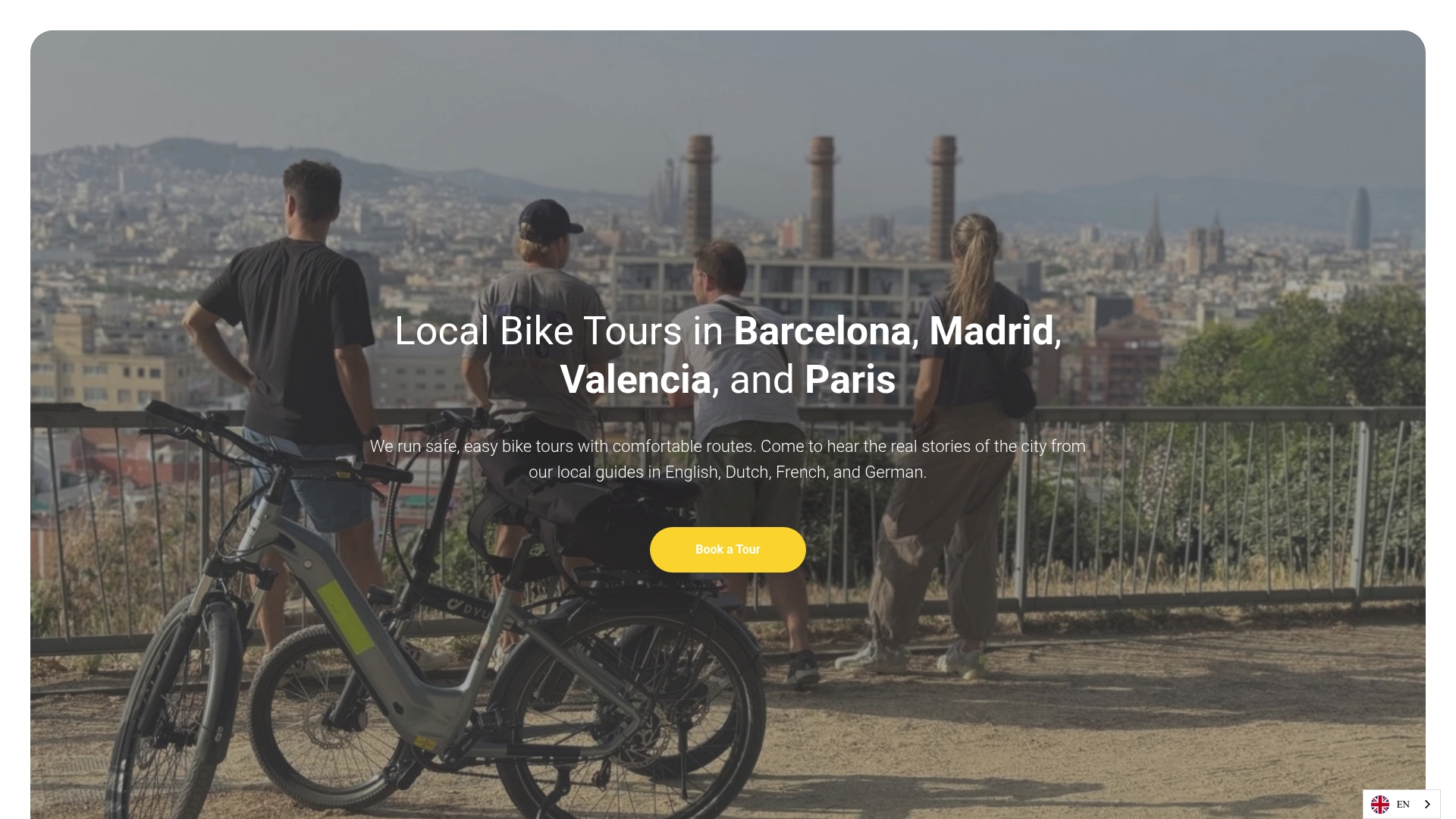
For families specifically, the small group format means your guide can actually adapt the pace and stops to what your group needs on the day. You are not following a script. You are riding with someone who knows which streets are quiet on a Tuesday morning and where the kids can stop and run around for five minutes without anyone minding.
You can start with Barcelona's top sights by bike or browse all available cities. If Paris is on your list, the Paris bike tour guide is worth reading before you go.
FAQ
How far in advance should families start preparing for a bike tour?
Start training 8 to 12 weeks before your tour, with short rides two to three times per week. Taper volume in the final week so everyone arrives rested.
What bikes work best for city touring with young children?
Tag-along bikes suit children aged four to nine who can pedal but are not ready for solo city riding. Cargo bikes and front child seats work well for toddlers. Always check that the setup handles urban stops and starts comfortably before the trip.
What should families pack for a city bike tour?
Keep it light but strategic. Handlebar bag storage for snacks, wipes, and a light layer is more useful than heavy panniers. Add a first aid kit, a lock, and a fully charged phone.
How do you keep kids motivated during a city bike ride?
Named snack stops and routes through parks give children concrete goals to ride toward. Giving kids a role, such as navigator or snack monitor, also keeps engagement high throughout the ride.
Is it safe to cycle with children in major European cities?
Yes, with the right preparation. Stick to dedicated bike lanes where possible, ride in formation with adults front and back, and teach children basic hand signals before the tour. Cities like Barcelona, Paris, and Valencia have well-developed family-friendly cycling routes that avoid the busiest streets entirely.