
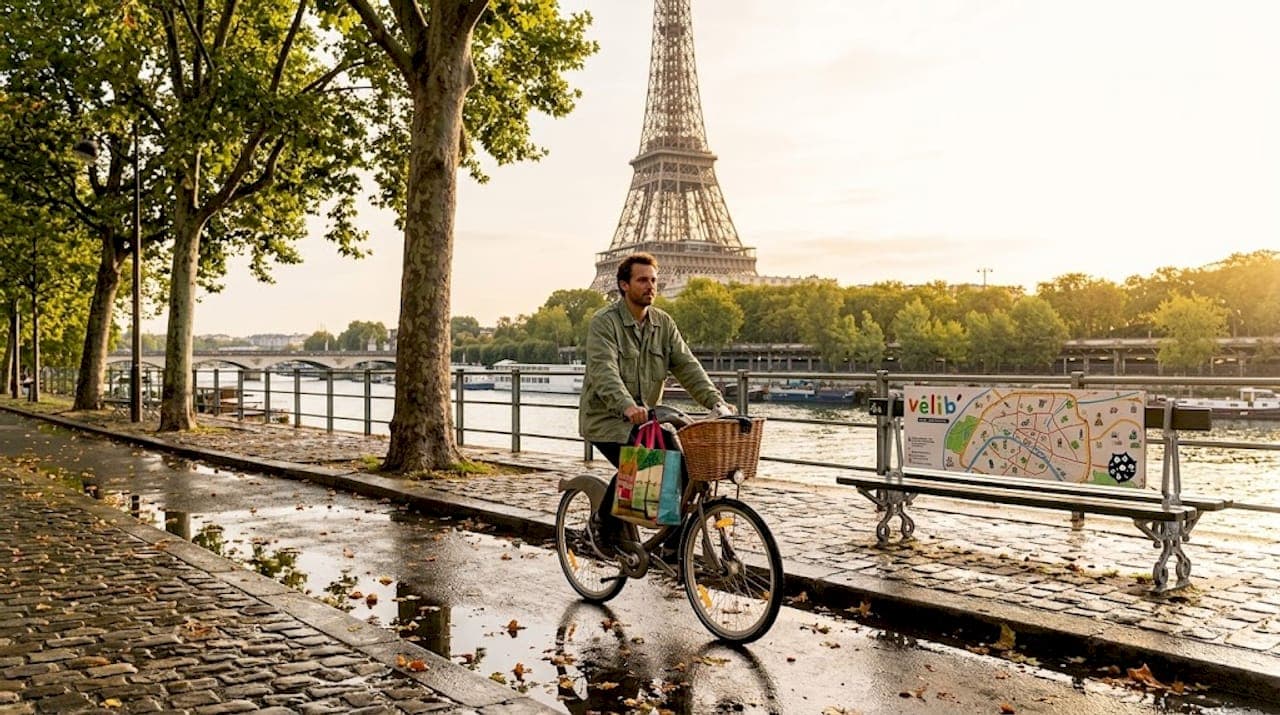
Paris rewards people who slow down. Not café-slow, but moving-at-a-pace-where-you-can-actually-look-up slow. A paris bike tour sits right in that sweet spot: fast enough to cover ground, slow enough to notice the carved stone above a doorway or the smell of bread from a boulangerie you'd never find on foot. The challenge isn't deciding whether to ride. It's figuring out which option actually fits how you travel, what you want to see, and how much you want someone else handling the logistics.
Table of Contents
- Key Takeaways
- What to know before your Paris bike tour
- Guided tours vs. independent bike rentals
- Popular routes and what to expect on them
- Practical tips for riding comfortably and safely
- My honest take on what makes a Paris bike tour worth it
- Ride Paris with Tresgatos
- FAQ
Key Takeaways
| Point | Details |
|---|---|
| Know your bike options | Paris offers both mechanical and electric bikes through Vélib' and private rental operators, each with different costs and effort levels. |
| Guided tours handle the hard parts | Certified operators provide secure parking, bag storage, helmets, and a local guide so you focus on the city, not the logistics. |
| Arrive 15 minutes early | Meeting point timing is strict on guided tours; late arrivals miss the briefing and often the best photo stops. |
| Evening rides offer a different city | Sunset light, thinner crowds, and a glass of wine at the Eiffel Tower make evening tours worth considering over midday rides. |
| Small groups change the experience | Tours capped at 8 or 9 riders let guides tell real stories and adjust pace, rather than herding a crowd through landmarks. |
What to know before your Paris bike tour
Paris has genuinely improved for cyclists over the past decade. The city now has over 1,000 km of bike lanes, and biking in Paris has gone from a minor adventure to a practical way to get around. That said, preparation still matters, especially if you're visiting for a few days and don't know the streets.
Choosing your bike
The city's Vélib' Métropole system offers both mechanical and electric bikes. Blue bikes are electric, green are mechanical. Electric is worth considering if you're covering significant distance or have hills to deal with. For a guided tour, the operator typically provides the bike, so you just show up and ride.
Private bike rental paris shops are scattered across most arrondissements, with concentrations near the Marais, Saint-Germain, and the Canal Saint-Martin area. Prices vary, but expect to pay more for an ebike tour Paris style versus a standard mechanical rental.
What you actually need
- A valid ID or passport for most rental operators
- A credit card for the security deposit on rentals
- Comfortable, layered clothing (Paris weather shifts quickly, especially in spring and fall)
- Closed-toe shoes. Flip-flops on a bike in city traffic are a bad idea
- A small daypack or crossbody bag for water, a camera, and your phone
Helmets are not legally required for adults in France, but most guided tour operators include one and strongly recommend wearing it. Certified operators under the Accueil Vélo label also offer secure parking, bag storage, and repair support. If you're renting independently, check whether those services are included before you book.
Pro Tip: Download the Géovélo app before you arrive. It maps Paris's dedicated cycling infrastructure in real time and is far more useful for cyclists than Google Maps, which still routes you down streets that feel like a car rally.
Guided tours vs. independent bike rentals
This is the real decision. Both options get you on a bike in Paris. What they give you is quite different.
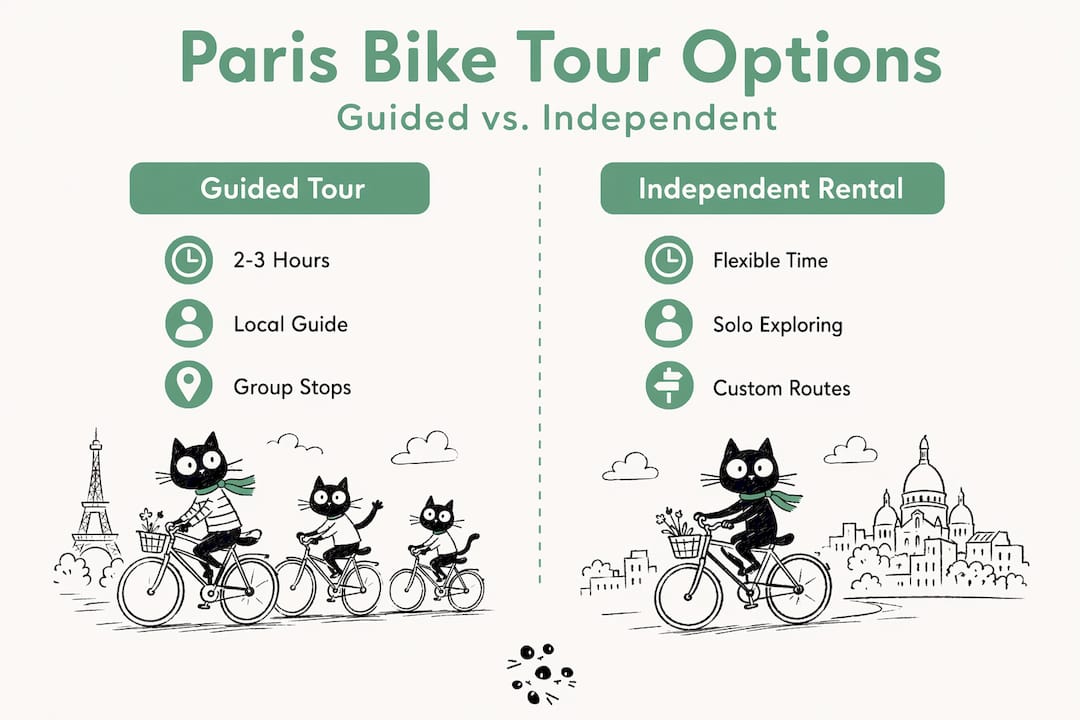
| Guided tour | Independent rental | |
|---|---|---|
| Duration | Typically 2.5 to 3 hours | Flexible, you decide |
| Route planning | Done for you | Your responsibility |
| Local context | Guide tells stories, points out details | You research in advance |
| Bag storage | Usually included with certified operators | Depends on the rental shop |
| Helmet | Included | Often extra or not available |
| Extras | Sometimes wine, food stops, or tastings | None unless you plan them |
| Cost | From around £33 per person | Lower per hour, but adds up |
| Group size | Small groups, often under 10 | Solo or with your own party |
Guided bicycle tours paris style work best when you want context alongside the scenery. A good guide doesn't just point at the Louvre. They tell you why the pyramid caused a national argument when it opened in 1989, or which side entrance to use if you're coming back on your own. That kind of information takes research time to find independently.
Independent rentals suit people who already know Paris reasonably well, have a specific neighborhood they want to wander, or simply prefer to set their own pace. The freedom is real. So is the responsibility for navigation, mechanical issues, and finding somewhere to leave the bike securely.
A few things guided tours consistently handle better:
- Bag logistics. Carrying a day bag while riding in city traffic is annoying. Certified operators let you leave bags at the start point.
- Mechanical problems. If your chain comes off mid-ride, the guide handles it.
- Photo stops. Guides know exactly where to stand for the shot, and they'll wait while you get it.
Popular routes and what to expect on them
Most paris bike tours cover a recognizable circuit of landmarks, but the experience varies a lot depending on timing, group size, and what the guide chooses to linger on.
-
The classic city circuit. This typically covers the Eiffel Tower, the Seine bridges, Notre Dame, the Louvre, and the Marais. A well-routed highlight tour covers Pont Neuf, Place de la Concorde, Hotel de Ville, and Centre Pompidou in roughly 2 hours 45 minutes. The terrain is mostly flat, which makes it accessible for most fitness levels.
-
The evening ride. Evening tours run April through October, last about 2.5 hours, and end at the Eiffel Tower. The light is better for photos, the streets are quieter than midday, and the pace feels more relaxed. Many include a glass of wine at the end, which signals the designed endpoint rather than an abrupt finish.
-
Food-focused rides. Some operators build routes around market stops, a baguette from a specific bakery, or a picnic by the Seine. These are slower and shorter in distance but higher in calorie intake. Worth it.
-
Day trips out of the city. Versailles is about 12 km from the city's southwest edge and reachable by bike along the Seine or by train with a rental at the other end. Giverny, where Monet's gardens are, is further at around 80 km. Most people combine train and bike rather than riding the full distance.
Pro Tip: If you're doing a morning tour, aim to finish before 11:00 a.m. The area around the Louvre and Notre Dame gets significantly more congested after that, and the riding feels less pleasant. Evening tours sidestep this entirely.
Practical tips for riding comfortably and safely
Paris cycling infrastructure has improved, but the city still has plenty of moments that require attention. A few things that make a real difference:
- Arrive early. Arriving 15 minutes before the tour starts is standard practice on guided tours. You'll need to show your voucher, get fitted for a helmet, and hear the safety briefing. Arriving on time means arriving late.
- Dress for movement, not style. You don't need cycling gear, but avoid long loose trousers that can catch in the chain. Layers work well since you warm up quickly once riding.
- Ride on the right. France drives on the right. Bike lanes follow the same logic. Stay in the lane, signal turns with your arm, and don't drift into pedestrian zones.
- Watch for bus lanes. In Paris, some bus lanes are shared with cyclists. Others are not. The markings are clear once you know what to look for.
- Keep your phone accessible but secure. A crossbody bag or jersey pocket beats holding your phone while riding. Theft from cyclists does happen in busy areas.
"The guide is the experience, not the route. A good guide turns a 3 km stretch of Seine riverbank into something you'll remember. A bad one turns the Eiffel Tower into a traffic cone."
For independent riders, GPS navigation via Géovélo or Komoot handles route planning well. Both apps allow offline maps, which matters if your data roaming is unreliable.
My honest take on what makes a Paris bike tour worth it
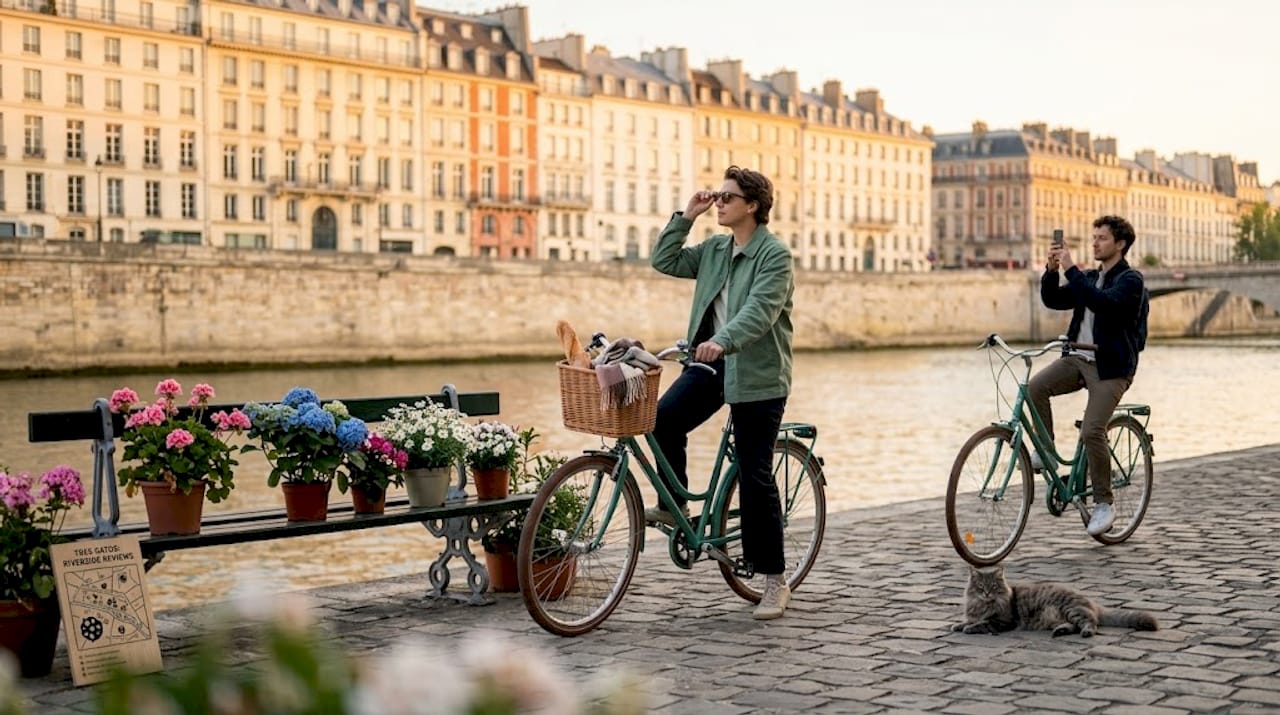
I've seen a lot of bike tours across cities, and the ones people remember share one quality: the guide had something to say. Not scripted facts, but an actual point of view. The kind of thing where you're standing outside a building and the guide says, "This used to be a brothel in the 1920s, and the owner's granddaughter still runs the café on the corner." That's not in any guidebook.
What I've found is that most travelers underestimate the logistics side. They book the tour, show up, and then realize they have a full day bag with them, no idea where to leave it, and 3 km of riding ahead. Certified operators solve this, but not everyone books certified operators.
The other thing people overlook is timing. Midday in July on a bike near the Louvre is a different experience than an evening ride in September. The city looks different. The crowds are different. Evening tours leverage the light in a way that midday rides simply cannot replicate.
For first-timers, my advice is simple: book a small-group guided tour for your first ride. Get the lay of the land, hear the stories, learn where things are. Then rent independently if you want to go back to a specific neighborhood. The two approaches complement each other well.
— Evgeny
Ride Paris with Tresgatos
Tresgatos runs small-group Paris bike tours with a maximum of 9 riders and one guide who actually lives in the city. Three hours, all-inclusive: bike, helmet, insurance, and no surcharges added at checkout. The guide is the product, not the route. Across hundreds of reviews, riders name guides by name. That's not a coincidence.
If you're also heading to Barcelona, Madrid, or Valencia, Tresgatos runs the same format in each city. Same small groups, same local guides, same straightforward pricing. You can browse all city tours and book directly without going through a third-party platform.
For Paris specifically, the tour covers top landmarks with photo stops built into the route and local context that you won't get from a map. Check availability and book your Paris tour to lock in your spot before the good time slots fill up.
FAQ
How long does a Paris bike tour typically last?
Most guided paris bike tours run between 2.5 and 3 hours, covering key landmarks at a relaxed pace with stops for photos and explanations.
Do I need to bring my own helmet for a bike tour in Paris?
Most certified guided tour operators include a helmet in the price. If you're using bike rental paris services independently, check in advance since not all shops provide them.
What is the best time of day for biking in Paris?
Early morning and evening rides offer the best conditions. Evening tours run April through October and benefit from better light, cooler temperatures, and fewer crowds near major landmarks.
Can beginners join a guided Paris bike tour?
Yes. Most routes are flat and designed for casual riders. You don't need cycling experience, just the ability to ride a bike at a comfortable pace for a few hours.
What is the difference between Vélib' and a private bike rental in Paris?
Vélib' Métropole is the city's self-service bike share system with docking stations across Paris, while private bike rentals in paris offer more flexibility, longer rental windows, and often better-maintained bikes suited for tourists.