
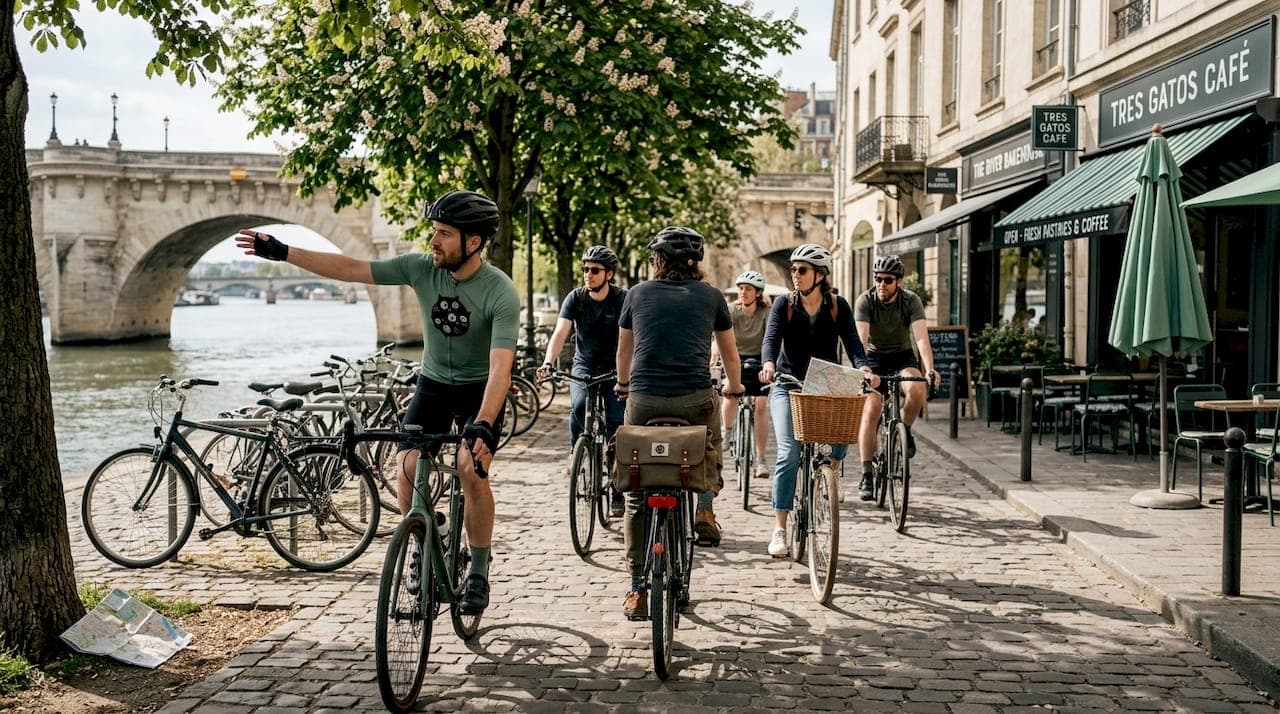
Most people assume a bike tour works one of two ways: you either sprint past landmarks without absorbing anything, or you stop so frequently the ride loses all energy. Neither is quite right. Understanding how city bike tours cover iconic sites reveals something more deliberate. Good tours are engineered around pacing, proximity, and storytelling. Guides aren't just navigating streets; they're running a timed sequence of stops, narratives, and riding segments designed to give you the city in a few dense, satisfying hours. This article explains exactly how that works.
Table of Contents
- Key Takeaways
- How city bike tours cover iconic sites through smart route design
- Pacing model: how stops and riding work together
- Logistics and support that keep tours on schedule
- Thematic tours and how they deepen iconic site coverage
- Bike tour types compared: price, pacing, and site coverage
- My honest take on what makes these tours actually work
- Explore iconic cities by bike with Tresgatos
- FAQ
Key Takeaways
| Point | Details |
|---|---|
| Routes are built around proximity | Landmark selection prioritizes sites close together, reducing transit time and maximizing stop count. |
| Stops are short and intentional | Most landmark pauses run 5 to 15 minutes, with storytelling built in to make each one feel complete. |
| Logistics reduce downtime | Route briefings, GPS guidance, and support staff help groups stay on schedule and cover more ground. |
| Thematic tours add depth | Photography, food, and history-focused tours cover the same iconic sites while adding a personal angle. |
| Group size shapes the experience | Smaller groups move faster, pause more flexibly, and get more personalized time at each landmark. |
How city bike tours cover iconic sites through smart route design
The single biggest factor in how many iconic sites a tour covers is route design. Before anyone gets on a bike, a good guide has already solved a spatial puzzle: which landmarks are close enough to connect efficiently, which streets are safe and comfortable, and how long each segment should take.
The most effective tours prioritize clusters. Rather than crossing a city back and forth, they trace a logical arc through neighborhoods where major sites sit within a few minutes of each other. This is how Central Park bike tours manage to include Bethesda Terrace, Bow Bridge, and Strawberry Fields in a single loop without feeling rushed. Each stop feeds naturally into the next.
Beyond landmark selection, route design also accounts for rider comfort. The best city cycling tours for tourists favor:
- Separated bike lanes that reduce exposure to traffic
- Coastal paths or riverfront roads that allow groups to ride side by side
- Routes that avoid steep climbs or confusing intersections mid-tour
- A clear start and finish point that minimizes dead-end returns
Quiet, separated routes allow riders to focus on sightseeing rather than survival. When you're not anxious about traffic, you actually see things.
Route length matters too. Most city bike tours run between two and four hours, covering somewhere between 8 and 20 kilometers depending on the city. Within that window, guides build in enough riding to feel like real movement, and enough stops to feel like genuine exploration.
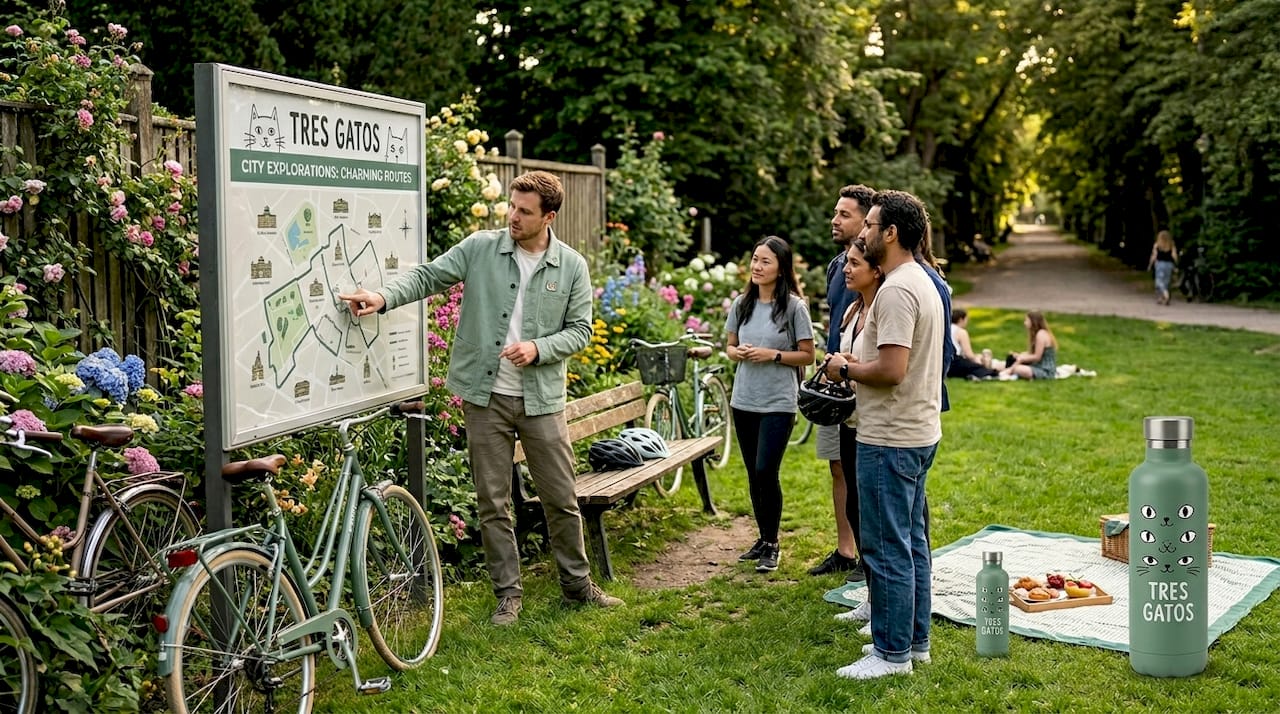
Pro Tip: Before booking any tour, ask for a rough map of the route. If the landmarks are scattered across opposite ends of a large city, expect a lot of riding and fewer meaningful stops.
Pacing model: how stops and riding work together
Knowing which sites to visit is one thing. Getting the timing right is where tours succeed or fall apart. The best guides operate on a pacing model that allocates riding time and stop time in predictable, repeatable cycles.
Here is how a typical stop sequence works across most well-run city bike tours:
- Arrive at the landmark. The guide positions the group with a clear sightline and, if needed, space to set bikes aside safely.
- Give context first. Before anyone pulls out a phone, the guide offers a short narrative. This might be 90 seconds of history, a local anecdote, or an observation most visitors miss entirely.
- Open for photos and exploration. With context established, the stop becomes more meaningful. Riders know what they're looking at and why it matters.
- Set a clear departure time. Guides typically announce the next departure point with a two-minute warning. This keeps groups from drifting and prevents bottlenecks.
- Ride to the next site. The riding segment between stops gives people time to process what they just saw before the next landmark begins.
Stop durations typically run 5 to 15 minutes at each landmark, repeated across multiple sites within the tour duration. This rhythm prevents the tour from stalling at one location while keeping each stop long enough to feel worthwhile.
What separates a memorable stop from a forgettable one is the story. Local guides who connect history and anecdotes to each site make the experience feel richer than any guidebook. You remember the story more than the landmark itself. That's the point.
Pro Tip: If your guide launches straight into photo time without offering any context, don't be shy about asking a question. Good guides light up when someone wants to know more.
Logistics and support that keep tours on schedule
Route design and pacing are only as good as the logistics behind them. This is the part of bike tour experiences that most travelers never see or think about until something goes wrong.
Preparation starts before the tour does. Most operators run a pre-ride briefing that covers the route, safety basics, and what to expect at each stop. This sounds minor, but it dramatically reduces the confusion and hesitation that slow groups down mid-tour.
Key support mechanisms that well-organized city cycling tours for tourists typically offer:
- GPS guidance or printed route cards so participants don't rely entirely on staying glued to the guide
- Support vans or staff positioned along the route to assist with mechanical issues or rider fatigue
- Pre-inspected bikes to eliminate mechanical stops that eat into sightseeing time
- Multilingual guides who can address different riders' questions simultaneously
LifeCycle Adventures, for example, provides personalized GPS devices and keeps support vehicles nearby so mechanical issues don't strand riders or cut the route short. The result is a smoother ride with less lost time.
Here's a quick comparison of how logistics differ between tour formats:
| Support element | Small group guided tour | Self-guided rental |
|---|---|---|
| Pre-ride briefing | Yes, typically 10 minutes | Usually a paper map |
| Navigation support | Guide leads, GPS backup available | You navigate independently |
| Mechanical assistance | Guide or support staff nearby | You find a bike shop |
| Emergency help | On-call support or van | On your own |
| Pacing structure | Built in | Entirely self-managed |
The takeaway is clear. A guided tour trades flexibility for reliability. When you want to cover specific iconic landmarks in a fixed window, reliability wins.
Thematic tours and how they deepen iconic site coverage
Not all city bike tour highlights look the same. Thematic tours build a specific lens over the same iconic sites, which changes how you experience each stop without reducing the number of landmarks you see.
Photography bike tours are a good example. The Florence Photography Bike Tour runs about two hours, stopping at the most photogenic angles of the city's landmarks with a guide who offers composition tips alongside the history. You're still covering the same iconic streets and piazzas. You're just doing it with your camera in hand and a professional helping you get the shot.
Food and cultural tours work similarly. The Amsterdam bike and food tour combines cycling through historic neighborhoods with tastings at local spots, weaving culinary stops into a route that still passes the city's most recognized sites. You cover ground. You also eat well.
Other popular thematic variations include:
- History-focused tours that trace significant events through the physical layout of a city
- Architecture tours that use landmarks as case studies in urban design
- Neighborhood tours that prioritize character over monument count, visiting fewer global icons but more lived-in local spots
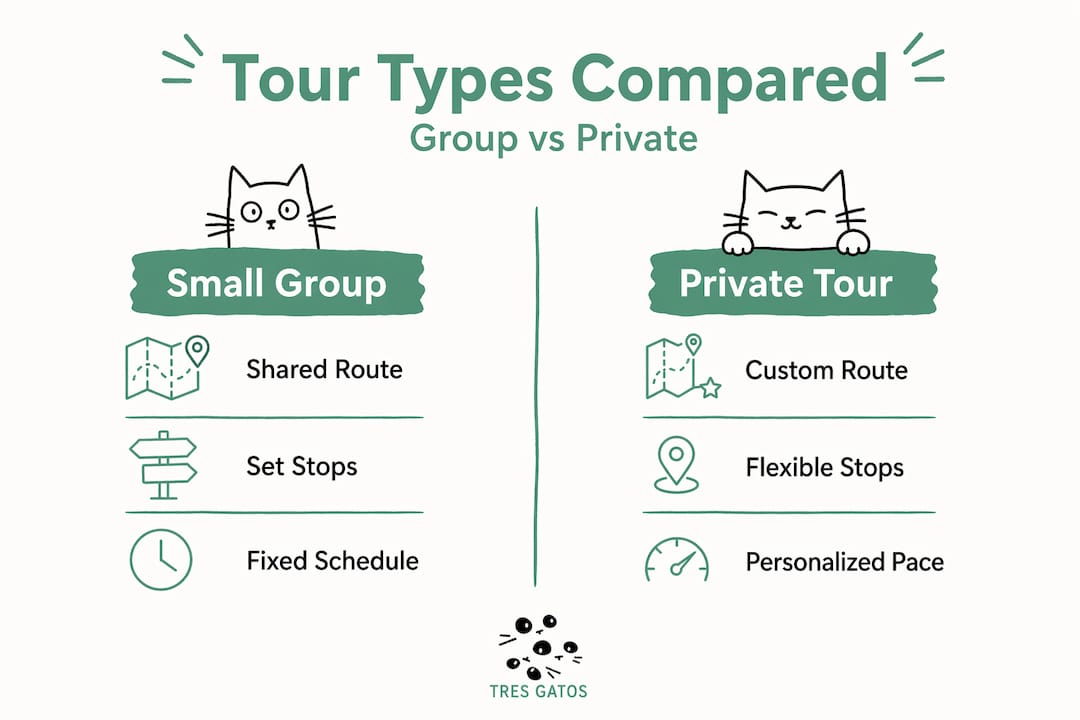
Small group sizes make thematic tours work. When you have nine people or fewer, a guide can slow down at one spot for a longer conversation without leaving half the group waiting and bored. Flexibility is harder to offer a group of thirty.
Bike tour types compared: price, pacing, and site coverage
How you book a tour shapes how much of the city you actually see. Here is a straightforward look at how different formats compare when it comes to covering popular bike tour routes and iconic landmarks.
| Tour type | Typical duration | Price range (per person) | Group size | Coverage scope |
|---|---|---|---|---|
| Shared group tour | 2 to 3 hours | €20 to €70 | 10 to 25 people | 5 to 10 landmarks |
| Small group tour | 2 to 4 hours | €40 to €90 | Under 10 people | 5 to 12 landmarks |
| Private custom tour | 2 to 5 hours | €150 to €400+ per group | 1 to 4 people | Flexible, up to 15+ landmarks |
| Self-guided rental | Half to full day | €10 to €30 | Just you | Unlimited but unstructured |
Shared group pricing in New York City runs roughly €41 to €69 per person, while private sightseeing tours start around €335 per group. The price gap reflects real differences in pacing, route customization, and guide attention.
Private tours cover more sites because the itinerary bends around your interests. But shared small-group tours often deliver the better overall experience, because you're moving with a group of people who share your pace and curiosity, and a good guide plays to the room.
My honest take on what makes these tours actually work
I've been running and refining bike tours in Barcelona and Paris for years, and I'll say something that most tour companies won't: the route is almost secondary.
You can design the most geographically efficient path through a city and still produce a mediocre experience. What carries a tour is the guide knowing why each stop matters and being able to say it in a way that lands. A good stop at Bow Bridge in Central Park isn't about the bridge. It's about what the guide says while you're standing there. Same with the Passeig de Gràcia in Barcelona, or the Seine in Paris. The landmark is the setting. The story is the experience.
What I've also learned is that logistics matter more than most travelers realize. Groups that get a clear pre-ride briefing ride faster, ask better questions, and leave more satisfied. The five minutes spent explaining the route at the start saves twenty minutes of confusion in the middle.
My advice: when choosing a tour, look at how small the group is and whether the guide has a name you can find in reviews. In my experience, tours where customers write "ask for Igor" or "Pierre was the highlight of the trip" are run completely differently from tours where the guide is anonymous. The guide is the product. Find the one worth riding with.
— Evgeny
Explore iconic cities by bike with Tresgatos
Tresgatos runs city bike tours in Barcelona, Paris, Madrid, and Valencia. Three hours, max nine people, one local guide who actually knows the city. Bikes, helmets, and insurance are included. No hidden fees.
In Barcelona, the route passes through the Gothic Quarter, along the waterfront, and through neighborhoods most visitors never reach on foot. In Paris, you ride past the Seine, through Marais, and stop at angles of the city that don't show up in travel photos. Every Tresgatos guide is someone who lives in the city year-round, not a seasonal hire.
If you want to see iconic sites without staring at the back of a tour bus, the Barcelona bike tour is a good place to start. The Valencia tour through Turia Park is another one worth your afternoon. Book your spot at tresgatos.es/book-tours.
FAQ
How do bike tours manage to cover so many sites in a few hours?
Most city bike tours use clustered route designs that connect nearby landmarks efficiently, with stop durations of 5 to 15 minutes per site. Riding between stops is typically short, which allows guides to include 6 to 12 landmarks within a two to four hour window.
Is cycling through iconic sites better than walking?
Walking vs biking city tours comes down to distance covered. On foot, you might reach three or four landmarks in two hours. A bike tour in the same time can cover two to three times as many sites, while still allowing meaningful stops at each one.
What is typically included in a city bike tour?
Most guided city cycling tours for tourists include a rental bike, helmet, and a guide. Higher-end and small-group tours often add insurance, route briefings, and sometimes food or drink tastings, depending on the tour theme.
How large are typical bike tour groups?
Group sizes vary widely. Shared tours often run 15 to 25 people, while small-group operators like Tresgatos cap at 9 riders. Smaller groups move faster through streets, stop more flexibly, and allow the guide to give more individual attention at each landmark.
Can a thematic bike tour still cover major iconic landmarks?
Yes. Photography, food, and history-focused tours are built around the same iconic sites as standard tours. They simply add a specific lens to each stop, such as photography composition tips or food pairings, without reducing the number of landmarks on the route.