
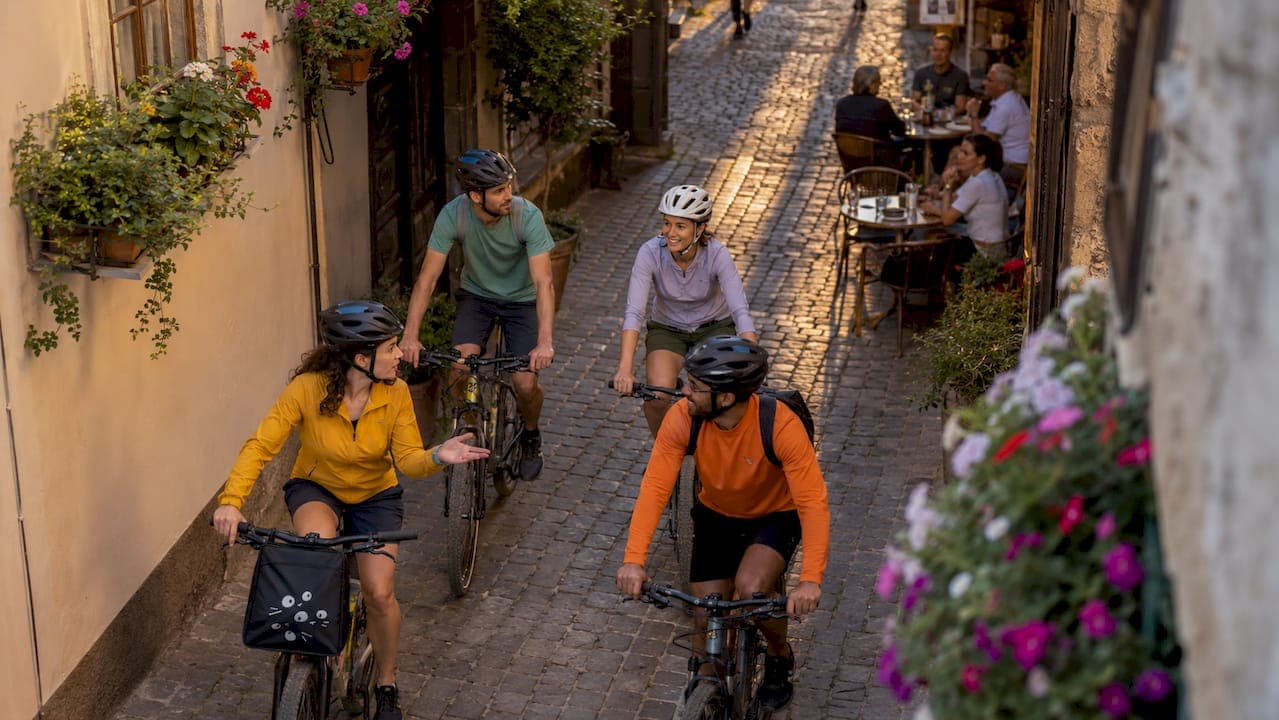
Guided bike tours for beginners are the most reliable way to start cycling in a new city without stress, wrong turns, or the quiet panic of not knowing which lane you belong in. A guided cycling tour pairs you with a local expert who manages the route, coaches group riding skills, and keeps the pace comfortable for everyone. Tours typically cover 5–8 miles over 2.5–3 hours at a conversational pace, with regular stops built in. The benefits of guided bike tours for beginners go well beyond just not getting lost.
1. the core benefits of guided bike tours for beginners
Guided bike tours for beginners deliver three things at once: safety coaching, route management, and a social experience that makes cycling feel approachable rather than intimidating. You are not just following someone on a bike. You are getting real-time instruction on how to ride in a city, from someone who does it every day.
The structure matters. A guide handles decisions you did not know you needed to make, like which side of the street to take near a tram stop, or when to hold position versus move through an intersection. Guided tours reduce decision fatigue by managing those small, high-stakes choices in real time. That frees you to actually look at the city.
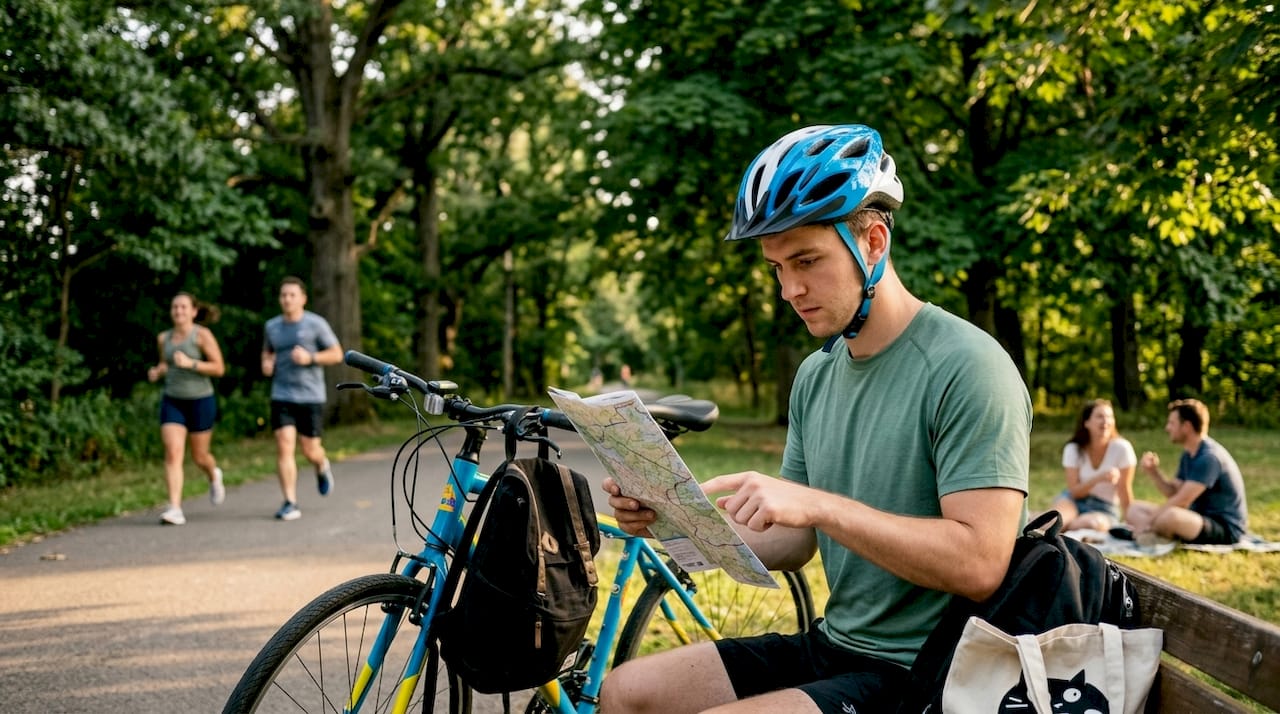
2. safety coaching and confidence building
Safety is the clearest advantage of guided cycling for novices. Guides coach beginners on hand signals, group spacing, and hazard communication before the group moves an inch. That pre-ride briefing alone changes how the first 20 minutes feel.
Here is what a good guide covers before you leave the starting point:
- Hand signals for stopping, turning, and alerting riders behind you
- Group positioning: single file on narrow streets, two abreast where safe
- Overtaking etiquette: how to pass without cutting off the rider ahead
- Regrouping protocol: where to stop and wait if the group separates
- Hazard calls: verbal and hand signals for potholes, tram tracks, and parked car doors
Group riding mechanics like single-file positioning and regrouping are the skills most beginners never learn on their own. Learning them in the first 15 minutes of a tour changes the whole ride. Riders who know the protocol feel less anxious and ride more predictably, which makes the group safer as a unit.
Guides select calmer routes and coach intersection behavior to lower stress for anyone unfamiliar with local traffic patterns. That route selection is invisible to you as a rider, but it is doing a lot of work.
Pro Tip: If you are nervous about city traffic, tell your guide before the tour starts. A good guide will position you near the front of the group where you can follow their line directly, rather than reacting to five riders ahead of you.
3. navigation and logistical support
Getting lost on a bike in an unfamiliar city is not just frustrating. It is exhausting. Guided tours handle navigation, pacing, and mechanical support, so you spend zero mental energy on logistics and all of it on riding.
Here is how guided and self-guided tours compare on the logistics that matter most to beginners:
| Factor | Guided Tour | Self-Guided Tour |
|---|---|---|
| Route planning | Guide handles it entirely | Rider plans and navigates alone |
| Mechanical support | On-site, immediate | Rider troubleshoots independently |
| Bike setup and fit | Guide adjusts before departure | Rider self-manages |
| Traffic decisions | Guide leads in real time | Rider decides at each junction |
| Cost | 20–35% higher | Lower, but no support included |
Self-guided tours cost 20–35% less because there is no guide or support vehicle. That price difference is real, but so is what you give up. For a beginner in an unfamiliar city, the support is not a luxury. It is the product.
Guides also handle bike setup before departure, including saddle height, handlebar position, and helmet fit. Small tour groups around 18 riders allow for personal attention on equipment setup and individual coaching. At Tresgatos, groups cap at 9 people, which means your guide actually notices if your saddle is too low or your helmet is sitting wrong.
For a deeper look at how guides manage city streets in real time, the Tresgatos guide to city street navigation covers the specific decisions that happen on every ride.
4. social and educational value in small groups
Small groups create a different kind of experience than solo riding or a large bus tour. You hear stories. You stop at a square and someone explains what happened there in 1936. You ask a question and get a real answer, not a recorded audio clip.
The educational benefits of guided cycling tours for novices are easy to underestimate. A good guide builds a mental map for you as you ride. They connect neighborhoods, explain why a street bends the way it does, and point out things you would cycle past without noticing. After a 2–3 hour guided tour, many travelers feel ready to explore independently with far less friction. The tour does double duty: it is orientation and experience at the same time.
Here is what small-group guided tours offer that larger formats cannot:
- Personal attention: your guide notices your pace, your comfort level, and adjusts
- Real conversation: stops become actual exchanges, not just photo opportunities
- Local context: neighborhood history, food recommendations, and current events
- Flexible pacing: the group moves at the speed of its least confident rider, not a fixed schedule
- Confidence transfer: watching other beginners manage the same streets you are nervous about is genuinely reassuring
Guides keep mixed-ability groups cohesive by matching pace and route choices to varying skill levels. That means faster riders stay engaged and beginners never feel like they are holding everyone up.
5. cost considerations: is the price worth it?
Guided tours cost more than renting a bike and heading out alone. That is simply true. The question is what you are paying for.
The price premium for guided tours is payment for real-time navigation, problem solving, and logistics support that reduce time lost and mistakes made. For a beginner on a three-day city trip, one wrong turn that costs 45 minutes, or a mechanical issue with no one to help, can derail the whole afternoon.
- Guided tours include bike, helmet, and insurance in most cases
- No hidden fees for route maps, GPS rentals, or roadside assistance
- The guide's local knowledge replaces hours of pre-trip research
- Group dynamics keep you motivated and moving, which matters more than it sounds
Guided travel saves time and stress by pre-arranging itinerary and logistics, which means participants spend more time enjoying the ride and less time troubleshooting. For a beginner, that trade is almost always worth it.
Pro Tip: Compare the total cost of a guided tour against renting a bike plus buying a city cycling map plus the time you will spend planning a safe route. The gap is usually smaller than it looks.
6. when guided tours make the most sense
Guided tours are not the right choice in every situation. Knowing when they fit and when they do not saves you money and frustration.
- First visit to a city: You do not know the streets, the traffic culture, or where the cycling infrastructure actually is. A guide solves all three at once.
- Limited time: Two or three days in a city means you cannot afford to spend a morning getting oriented on your own. A guided tour does that in three hours.
- Mixed-ability travel group: One confident cyclist and two nervous ones. A guide keeps the group together without the confident rider having to slow down and manage everyone else.
- Unfamiliar traffic rules: Cycling in Barcelona, Paris, or Amsterdam follows different unwritten rules. A local guide teaches those rules by example, not by lecture.
- You want stories, not just streets: Self-guided tours give you freedom. Guided tours give you context. If you want to understand a city, not just cover distance, the guide is the point.
For riders who already feel comfortable on a bike and want flexibility, self-guided options make sense on a second or third visit. A practical combination: take a guided tour on day one to build your mental map of the city, then rent a bike independently for the rest of the trip. A guided tour used as city orientation is one of the most efficient ways to start any cycling trip.
Key takeaways
Guided bike tours give beginners the safety coaching, route management, and local knowledge they need to enjoy city cycling from the first hour, not after several stressful attempts on their own.
| Point | Details |
|---|---|
| Safety comes first | Guides teach hand signals, group positioning, and hazard calls before the ride starts. |
| Navigation is handled | Guides manage routes, intersections, and mechanical issues so beginners focus on riding. |
| Small groups matter | Groups of 9 or fewer allow personal coaching and real conversation, not just sightseeing. |
| Cost reflects value | The price premium covers real-time support that saves time and prevents costly mistakes. |
| Orientation accelerates independence | A single guided tour builds the mental map beginners need to ride confidently on their own. |
What i have seen after hundreds of beginner rides
I have watched a lot of people get on a bike for the first time in years. The pattern is consistent. The first five minutes are tense. By the 20-minute mark, most riders have stopped gripping the handlebars like they are trying to break them. By the end of the tour, a few are already asking where they can rent a bike tomorrow.
What changes is not fitness or skill. It is information. Once you know which streets are calm, how to signal, and where to regroup if the group splits, the city stops feeling hostile. That shift happens fast when someone who actually lives here is showing you how they move through it.
The guides I have worked with, Igor in Barcelona, Pierre in Paris, do not recite facts at you. They ride with you. They notice when someone is falling behind and adjust without making it awkward. They stop at a square because they want to, not because it is on a script. That is the difference between a tour and a transfer.
The riders who get the most out of a guided tour are not the ones who already know how to cycle. They are the ones who show up curious and willing to follow someone else's lead for three hours. That is a reasonable thing to ask of anyone visiting a new city.
— Evgeny
Try a guided bike tour with Tresgatos
If you are planning a trip to Barcelona or Paris and want to start on two wheels without the stress of figuring it out alone, Tresgatos runs three-hour tours with a maximum of 9 people and one guide who actually lives in the city. Bike, helmet, and insurance are included. No surcharges, no surprises.
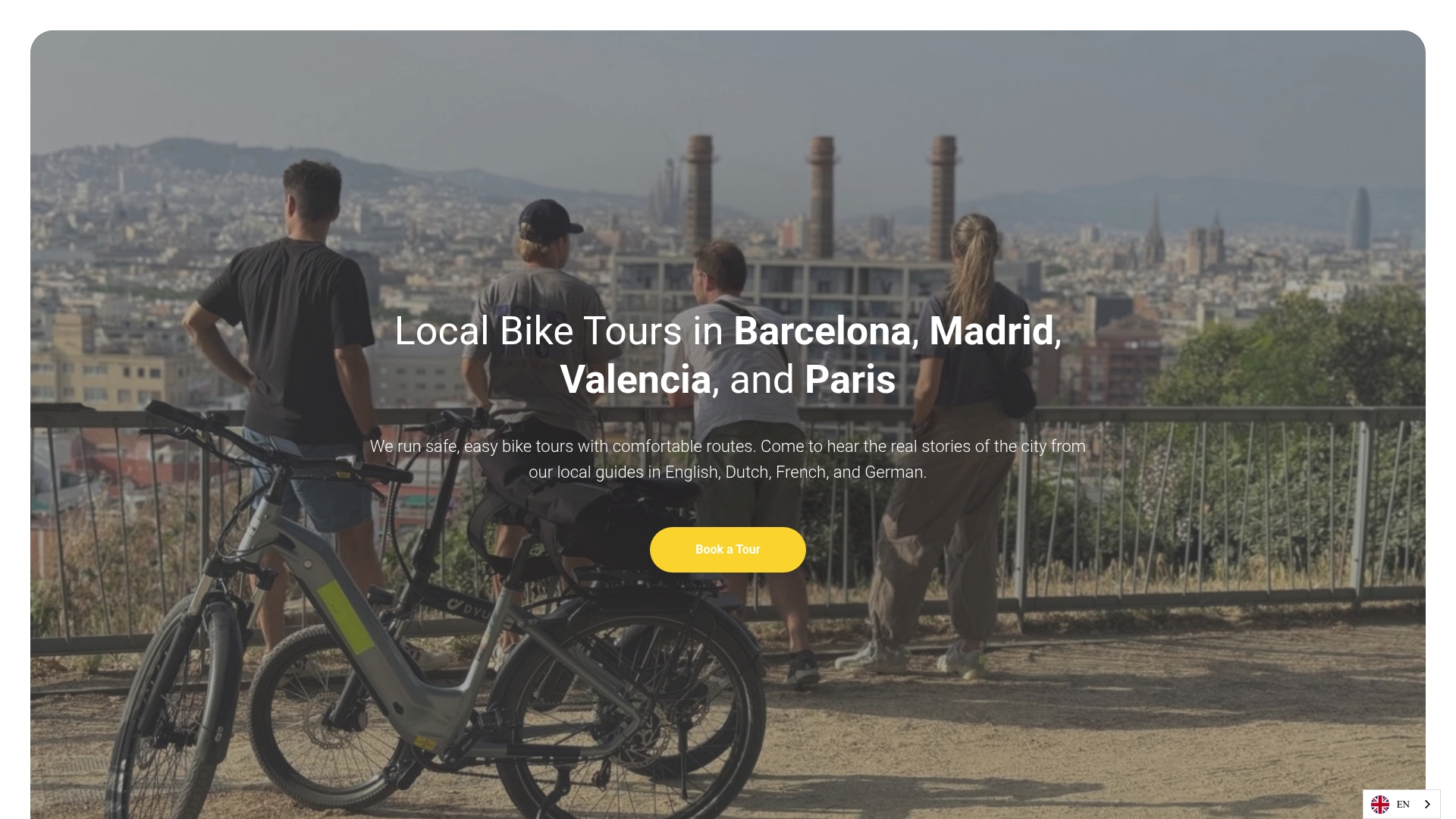
The guide is the experience. Not the route, not the gear, not the app. If you want to see Barcelona the way someone who lives there sees it, book a Barcelona bike tour and show up ready to ride. You can also browse all Tresgatos tours across Barcelona, Paris, Madrid, and Valencia to find the right fit for your trip.
FAQ
How far do beginner guided bike tours typically go?
Most beginner tours cover 5–8 miles over 2.5–3 hours at a relaxed, conversational pace with frequent stops for sightseeing and regrouping.
Do i need cycling experience to join a guided bike tour?
No prior experience is required. Guides brief all riders on group riding basics before departure, including hand signals, spacing, and how to handle intersections safely.
Are guided bike tours worth the extra cost for beginners?
Yes. The price premium covers real-time navigation, mechanical support, and logistics that save beginners significant time and stress, especially on a first visit to an unfamiliar city.
How quickly can a beginner feel confident after a guided tour?
Beginner confidence typically rises within 2–3 hours as riders build a mental map of the city's cycling-friendly streets, making independent riding afterward much easier.
What is included in a typical guided bike tour for beginners?
Most guided tours include the bike, helmet, and insurance, along with route management, mechanical support, and coaching on group riding skills throughout the ride.