
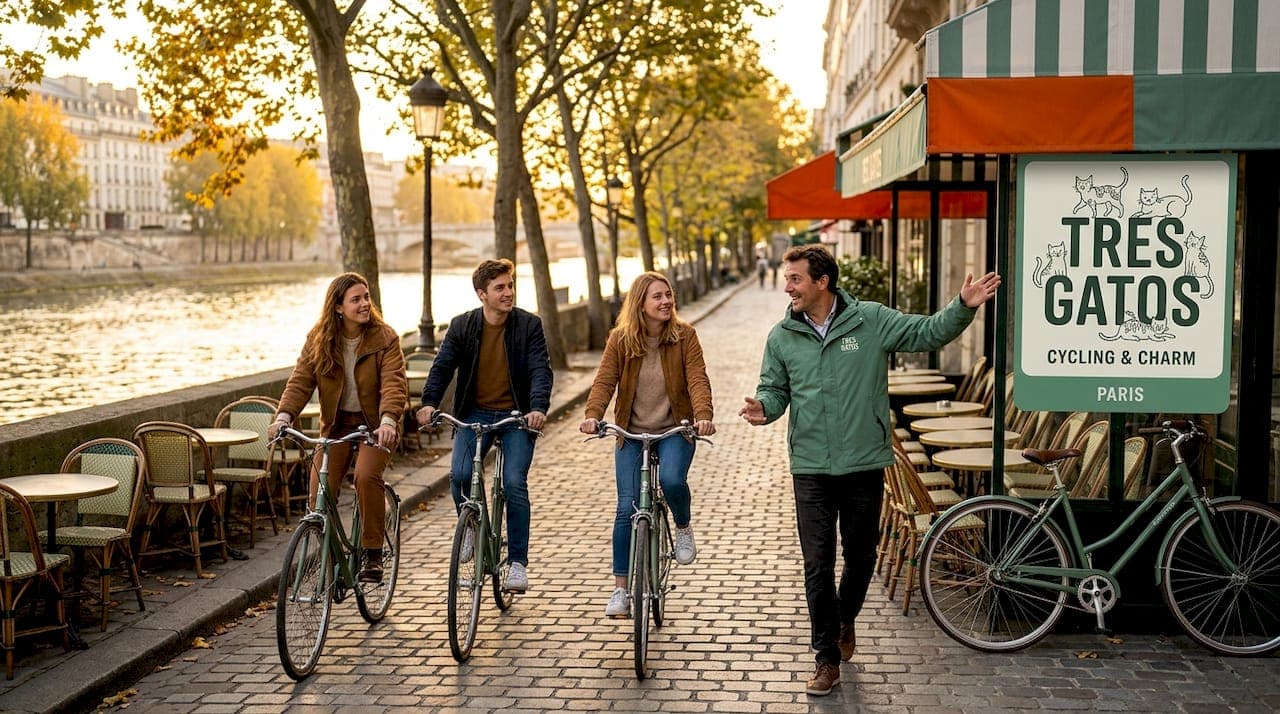
Paris is a bigger city than most first-time visitors expect. The Eiffel Tower is nowhere near the Louvre. The Marais is nowhere near either. Walk it all and you'll spend half your trip on your feet, slightly lost, wondering why your map app sent you through a construction zone. That's exactly why guided bike tours have become the go-to format for newcomers. Why Paris bike tours suit first-timers so well comes down to a simple equation: you cover more ground, with less effort, and you actually understand what you're looking at. This article lays out the case honestly, section by section.
Table of Contents
- Key takeaways
- Why Paris bike tours suit first-timers so well
- Why guides change the experience for newcomers
- Practical details: choosing the right tour for you
- Beyond landmarks: neighborhoods, markets, and pace
- My honest take on Paris by bike
- Explore Paris with Tresgatos
- FAQ
Key takeaways
| Point | Details |
|---|---|
| Cover more, walk less | A 3-hour guided tour covers 15-20 km, far more than any walking tour in the same time. |
| Guides replace navigation | You follow someone who lives here, so your brain is free to notice the city instead of decipher it. |
| Flat terrain, frequent stops | Paris is surprisingly flat, and stops every 10-15 minutes keep the pace comfortable for any fitness level. |
| Small groups stay personal | Groups capped at 8-12 riders mean the guide can actually talk to you, not broadcast at you. |
| E-bikes remove the last excuse | If pedaling feels like too much, an e-bike handles the effort while you handle the scenery. |
Why Paris bike tours suit first-timers so well
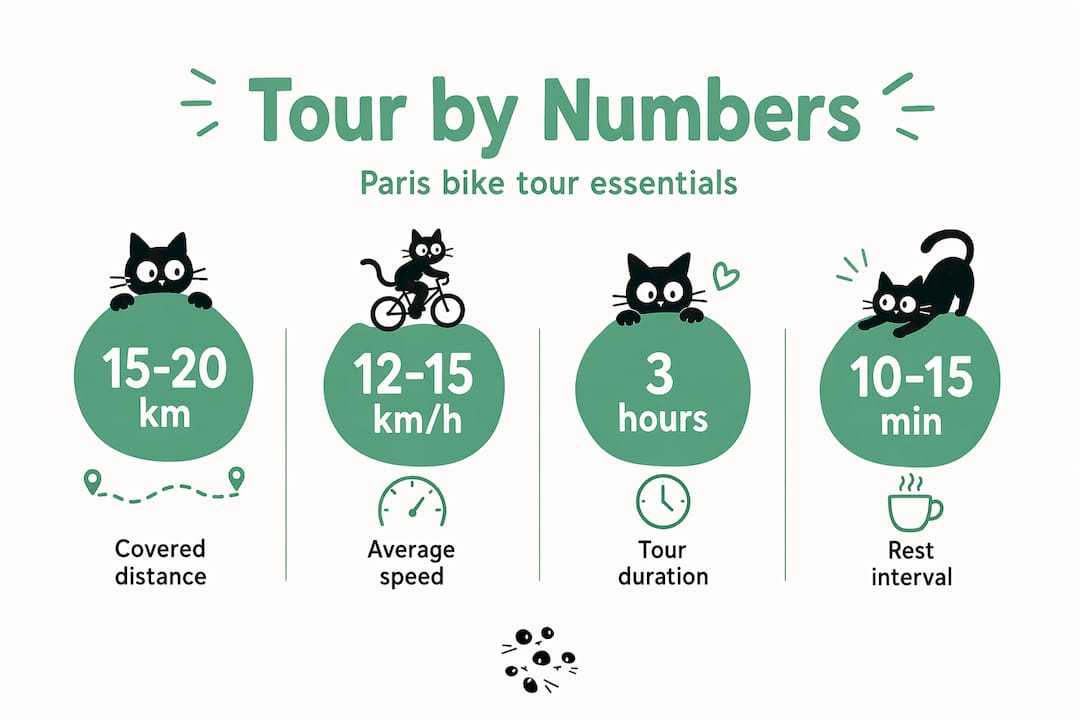
Let's put numbers to it. A typical 3-hour guided tour covers 15 to 20 km with rest stops every 10 to 15 minutes. In that same window, a walking tour covers maybe 4 to 5 km, which means you're choosing between two or three sights on foot versus eight or ten by bike. Nobody comes to Paris for two sights.
The route on a well-designed tour threads through the places that matter most to a newcomer. The Eiffel Tower, Notre-Dame, the Louvre, Saint-Germain-des-Prés. You're not rushing between them. You're riding along the Seine at a pace where you can actually look up. The bike paths added along the river in the past decade make this feel genuinely pleasant, not like surviving traffic.
What makes the format work for first-timers specifically:
- Frequent stops every 10 to 15 minutes give you time to photograph, catch your breath, and hear the story behind what you're looking at.
- Protected bike lanes keep you off main roads for most of the route, so the experience feels relaxed rather than harrowing.
- You arrive oriented. After three hours on a bike with a guide, you understand how Paris is laid out in a way that two days on the Métro simply doesn't give you.
The tour pace averages 12 to 15 km/h with regular breaks. That's slower than you'd ride to work and faster than you'd walk to the market. It's a genuinely easy physical ask.
Pro Tip: Book a morning tour for your first or second day in Paris. Arriving at the Eiffel Tower by bike at 8 a.m., before the crowds form, is one of those experiences that actually meets expectations.
Why guides change the experience for newcomers
The biggest anxiety for a first-timer isn't the cycling. It's not knowing where to go, what to skip, or what anything means. A good guide handles all of that before you even think to ask.
Guided bike tours remove decision fatigue in a way that self-guided options simply can't. You don't study a map the night before. You don't argue about which direction to turn. You follow someone who lives in the city, and your attention goes entirely to what's around you. That shift is more valuable than it sounds when you're jetlagged and slightly overwhelmed.
What a guide actually adds:
- Context you can't Google. The Pont Neuf is the oldest bridge in Paris, not the newest, despite the name. A guide tells you this while you're standing on it. You remember it.
- Local pace. Parisian rhythms are slower than the tourist track suggests. A good guide reflects that, stopping for coffee, pointing out a bakery, letting a scene settle.
- Spotted details. The carved faces on a building on Île de la Cité. The reason one neighborhood smells of chocolate every Thursday morning. These are the things that make a city feel real.
"The value of the guide isn't knowing the streets. It's the stories that make the streets mean something." — from a first-timer's account of a hidden Paris ride
Group size matters too. Small groups of 8 to 15 riders create a dynamic where the guide can read the room, adjust the pace, and actually answer questions without losing half the group around a corner. Compare that to a 40-person walking tour where the guide needs a megaphone, and the difference is obvious.
Pro Tip: If you're traveling as a couple or small family, the guide will naturally fall into conversation with you at stops. Don't hesitate to ask about a restaurant recommendation or a neighborhood to walk in the evening. That's part of what you're there for.
Practical details: choosing the right tour for you
Most Paris cycling tours for newcomers run three hours and cover flat terrain at a relaxed pace. Here's a quick breakdown to help you choose:
| Tour type | Best for | Physical effort | Approximate cost |
|---|---|---|---|
| Standard city bike | Regular cyclists, any age in reasonable shape | Low to moderate | ~$44 |
| E-bike tour | Older visitors, non-regular cyclists, heat days | Very low | ~$76 |
| Food and culture tour | First-timers wanting local immersion | Low | Varies |
E-bikes amplify your pedaling 2 to 3 times and handle any incline without drama. The price difference between a standard and electric option is real but modest, and for anyone who hasn't ridden regularly or wants to arrive at every stop looking composed, it's worth it.
A few practical details worth knowing before you book:
- Helmets are recommended and usually provided, though not legally required for adults in France.
- Paris has added over 1,000 km of bike lanes since 2020, and most guided tours use protected riverside routes where possible.
- Children aged 8 to 10 and up can typically join standard tours, but check each operator's policy directly.
- If you want more guidance on preparing for your first city tour, it's worth reading before you arrive.
If you're weighing distance versus comfort when planning, the guide to Provence bike tours for different fitness levels applies similar logic to what works in Paris. Flat, short, and guided is almost always the right starting point.
Beyond landmarks: neighborhoods, markets, and pace
There's a version of a Paris trip where you photograph 14 monuments and come home feeling like you missed something. Bike tours, when well-designed, push back against that tendency.
Some of the best first-timer bike tour Paris experiences include stops that have nothing to do with famous buildings. Here's what those additions look like in practice:
- Morning market stops. A guide who takes you past a Marché d'Aligre on a Saturday morning is showing you how people in Paris actually eat. The cheese counter is worth the detour alone.
- Neighborhood texture. The Latin Quarter, the Marais, Île Saint-Louis. Riding through them at 13 km/h is different from walking through in a hurry. You notice the light on the facades, the way streets narrow, the café tables facing outward.
- A picnic with intention. Some tours build in a wine and cheese stop at Place des Vosges in a group capped at 8. That's not a tour stop. That's a Sunday afternoon.
- The right time of day. Morning tours offer cooler air and quieter plazas. Late afternoon tours offer golden light that makes the Seine look like a painting. Neither is wrong. Both beat midday.
The social pace of a small-group tour also does something useful: it slows you down. You hear someone else ask a question you hadn't thought to ask. The guide digresses into a story about a restaurant that closed twenty years ago and you're suddenly very happy you're not walking alone with headphones in.
Pro Tip: Check whether your tour visits the Marais on a weekday. Many shops and galleries there are closed on Mondays. A guide who lives in the city will route around the closures without you having to think about it.
My honest take on Paris by bike
I've spent time in Paris both as a visitor and as someone who's worked with guides in multiple cities. The thing I keep coming back to is this: the bike tour format doesn't just show you Paris more efficiently. It gives you a framework for understanding it.
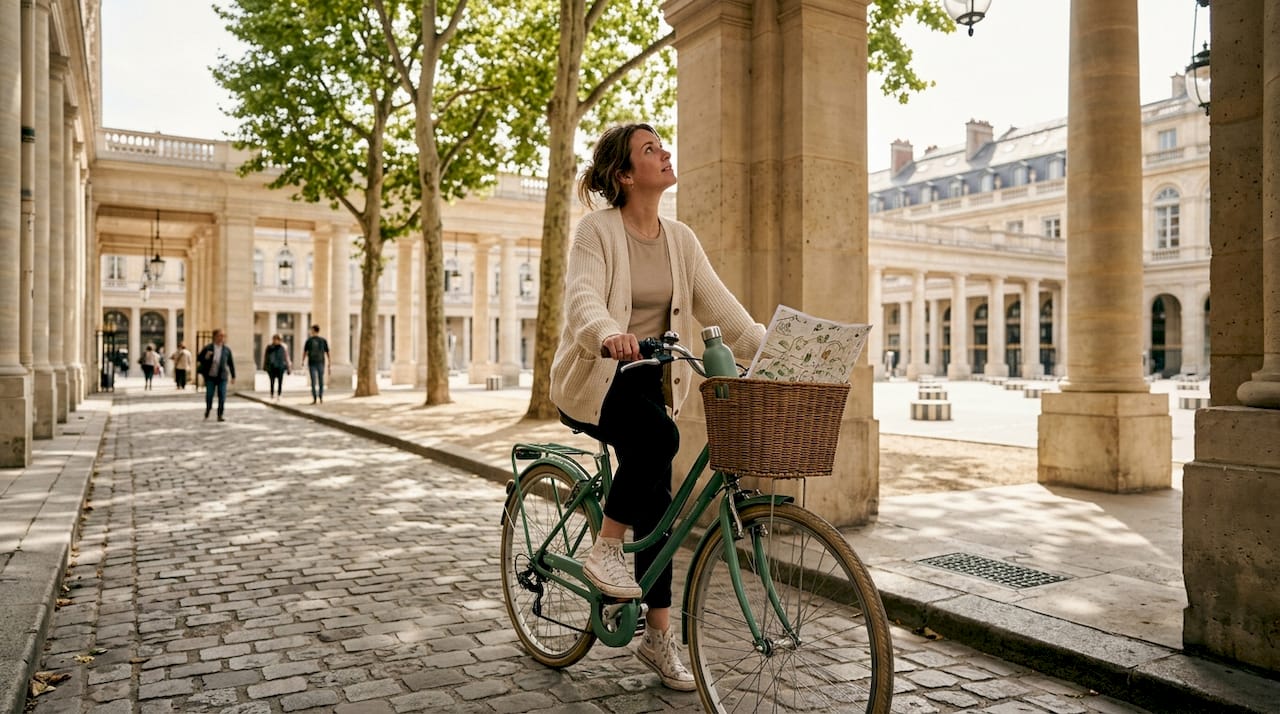
The first time I rode past the Palais Royal on a bike with a guide, I'd already walked past it twice without really registering it. The guide stopped, told us two things about it we hadn't heard, and it became the place I remember most clearly from that trip. That's not the bike. That's the guide. The stories that connect you emotionally to Paris neighborhoods are what make the difference between visiting a city and actually encountering it.
My practical advice: don't treat the tour as a checklist. The Eiffel Tower stop is great for a photo, but the conversation the guide starts during the ride from there to the Louvre is where you learn something. Let those moments happen. The local's guide to riding Paris puts it well: the route is the skeleton, but the guide is the actual experience.
Bike tours also suit newcomers because they match the city's real scale. Paris is not a walking city in the way that, say, Florence is. It's spread out, sometimes confusing, and deeply satisfying once you understand its geography. A three-hour bike ride gives you that understanding in a way a week on the Métro doesn't.
Keep your expectations simple. You are not trying to see everything. You are trying to understand one city well enough that you'll want to come back.
— Evgeny
Explore Paris with Tresgatos
Tresgatos runs Paris bike tours in groups of no more than 9 people. One guide who actually lives in the city. Three hours. Bike, helmet, and insurance included. No surcharges added at checkout. The guides you'll find in reviews by name, Pierre or Kevin or Marina, are the same ones who will ride with you. That's the point. You're not booking a tour. You're spending a morning with someone whose city this is.
Standard and e-bike options are available, and the route covers the iconic sights while moving at a pace that lets them land. If you want a look at what the Paris tour covers before booking, it's all there. Ready to go? You can book your spot directly with flexible cancellation.
FAQ
Why are Paris bike tours good for first-time visitors?
Guided bike tours cover 15 to 20 km in three hours, giving first-timers a clear mental map of the city while a local guide handles all navigation and storytelling. It's a far more efficient introduction than walking or public transit.
Do I need to be an experienced cyclist for a Paris bike tour?
No. Most Paris cycling tours for newcomers use flat routes at 12 to 15 km/h with frequent rest stops, and e-bike options are available for those who want minimal physical effort.
How long does a typical first-timer bike tour in Paris last?
Most guided bike tours run three hours, which is enough to cover major landmarks like the Eiffel Tower, Louvre, and Notre-Dame without fatigue.
Are bike tours safe for first-timers in Paris?
Yes. Paris now has over 1,000 km of bike lanes, most tours route along protected riverside paths, and guides manage any shared-road segments. Helmets are provided and strongly recommended.
What is the best time of day for a Paris bike tour?
Morning tours offer cooler temperatures and fewer crowds at major sights. Late afternoon tours have better light for photography. Both are good choices depending on your priorities.