
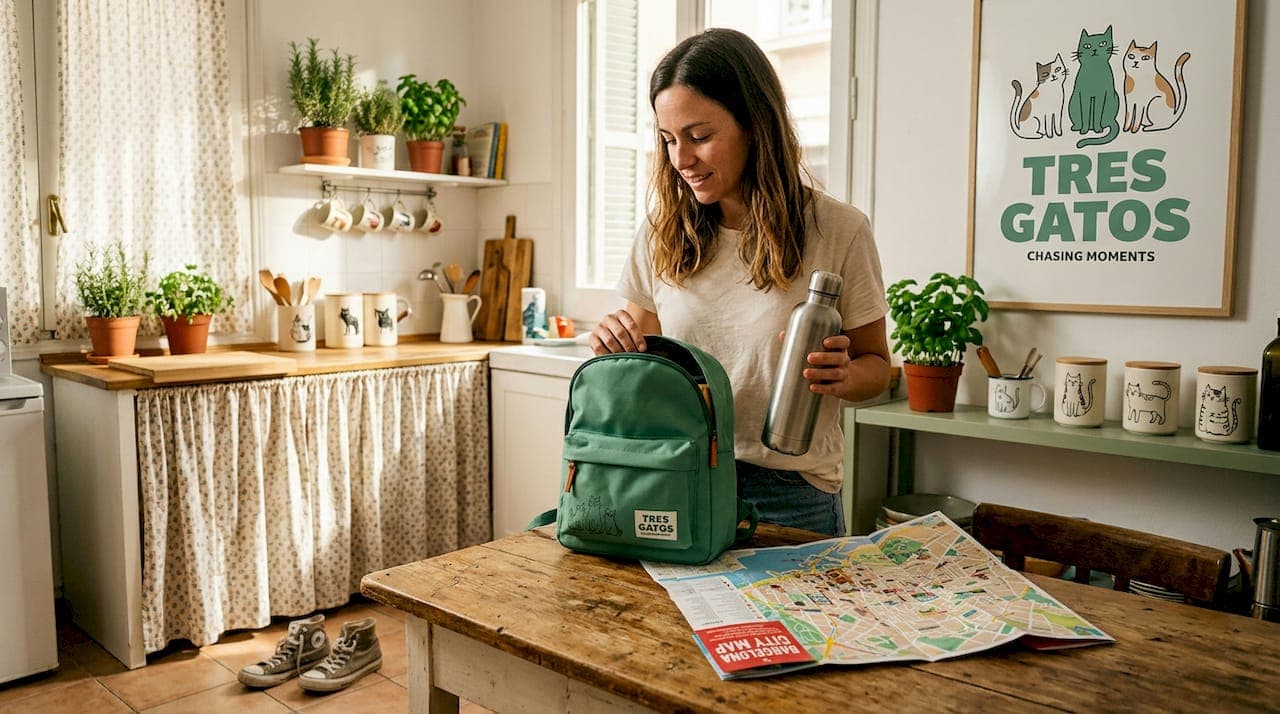
Your first guided city tour is one of those experiences that sounds simple on paper but catches a surprising number of travelers off guard. You book the tour, show up excited, and then spend the first two hours wishing you'd worn different shoes or brought more water. To prepare first guided city tour experiences properly, you need to think beyond just showing up. This guide covers physical readiness, smart packing, safety awareness, and how to stay engaged from the first stop to the last, so you get the most out of every minute.
Table of Contents
- Key takeaways
- How to prepare first guided city tour body and mind
- Your guided city tour checklist for packing
- Safety tips and tour logistics
- Getting the most from your first tour experience
- What I've learned from watching first-timers on guided tours
- Ready to explore the city your way?
- FAQ
Key takeaways
| Point | Details |
|---|---|
| Start training early | Begin walking and stair practice 6 to 8 weeks before your tour to build real endurance. |
| Pack light and smart | Keep your daypack under 10 pounds to avoid fatigue during long standing and walking stretches. |
| Arrive early | Reach the meeting point 15 to 30 minutes before start time to avoid missing the group. |
| Hydrate consistently | Sip water every 15 to 20 minutes and carry at least 1 liter per 2 hours of walking. |
| Engage actively | Ask your guide questions and use the tour as a launchpad for deeper exploration afterward. |
How to prepare first guided city tour body and mind
Most first-timers underestimate how physically demanding a guided city tour actually is. You are not just walking. You are walking on uneven cobblestones, climbing steps at historic sites, standing still while listening to your guide explain a 500-year-old cathedral, and then doing it all over again for three to five hours. That combination of movement and stillness is genuinely tiring in a way that a gym session rarely is.
Travel fitness specialists agree that endurance over speed is the right goal. You want to stroll comfortably through a city without hesitating or needing to sit down every 20 minutes. The best way to build that capacity is through consistent, daily activity in the weeks before your trip.
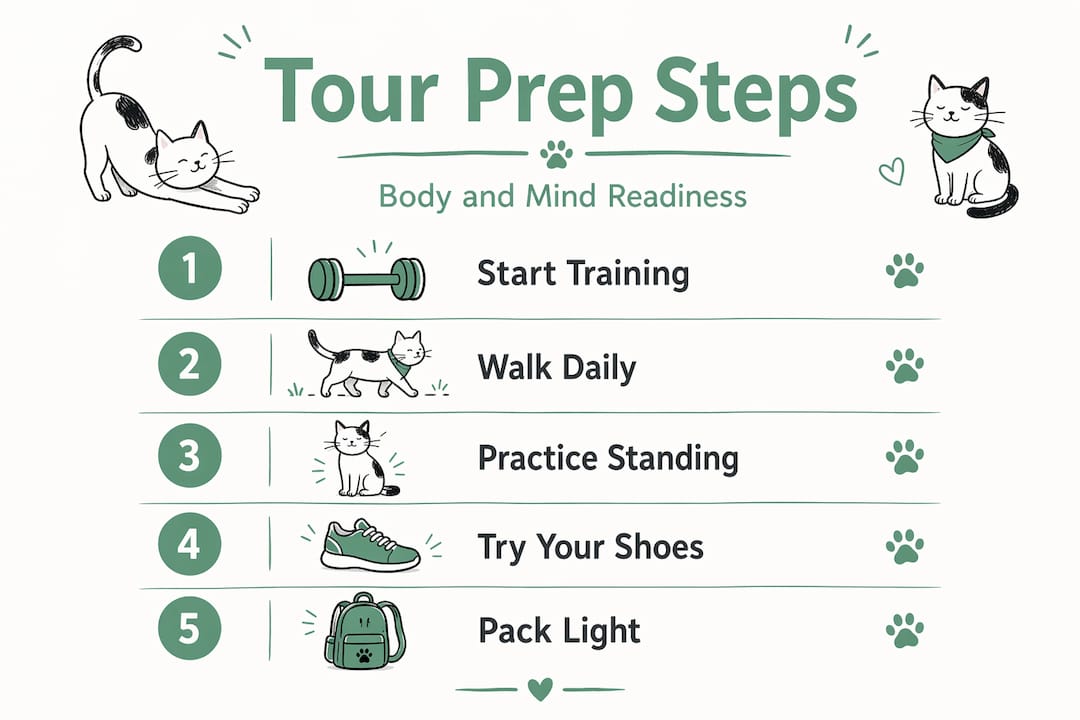
Here is a practical training progression to follow:
- Weeks 1 and 2: Take 30-minute neighborhood walks every day. Focus on steady pace, not distance.
- Weeks 3 and 4: Add stair climbing to your walks. Historic sites in cities like Rome, Paris, and Barcelona involve a lot of steps, and stair practice builds core strength for balance and carrying gear.
- Weeks 5 and 6: Extend walks to 45 to 60 minutes and increase activity by 10 to 20% weekly. Add back-to-back walking days to simulate the consecutive activity of a multi-day trip.
- Week 7: Do a full dress rehearsal. Wear your tour shoes, carry your packed daypack, and walk for two to three hours without stopping to rest.
- Week 8: Taper down. Light walks only. Let your body consolidate the gains.
One thing most guides skip: practice standing still. Standing for 15 to 20 minutes while listening is often more tiring than walking the same amount of time. Try standing in your kitchen or living room for 20 minutes while listening to a podcast. It sounds silly, but it trains your legs and attention span for exactly what a tour requires.
Pro Tip: Wear your actual tour shoes during every training walk, not just the final rehearsal. Blisters from brand-new footwear have ruined more first guided tour experiences than bad weather ever has.
Your guided city tour checklist for packing
Packing for a city tour is not about bringing everything you might need. It is about bringing exactly what you will need and nothing more. The difference matters because you carry that bag for hours.
| Item | Why it matters |
|---|---|
| Water bottle (1 liter minimum) | Dehydration causes fatigue and headaches faster than most people expect |
| High-energy snacks | Nuts, dried fruit, or a granola bar for energy between stops |
| Sunscreen and lip balm | Essential for outdoor tours in sunny cities like Valencia or Madrid |
| Comfortable walking shoes | Already broken in, with good arch support |
| Light rain layer | Compact and packable for unpredictable weather |
| Personal medications | Always carry what you need, including pain relievers |
| Portable phone charger | Maps, photos, and translation apps drain batteries fast |
| Small amount of local cash | Some sites and vendors do not accept cards |
The target weight for your daypack is 8 to 12 pounds maximum. Beyond that, the shoulder and back strain compounds over hours and significantly increases fatigue. A 20-liter daypack with a padded back panel and hip strap is the sweet spot for most city tours.
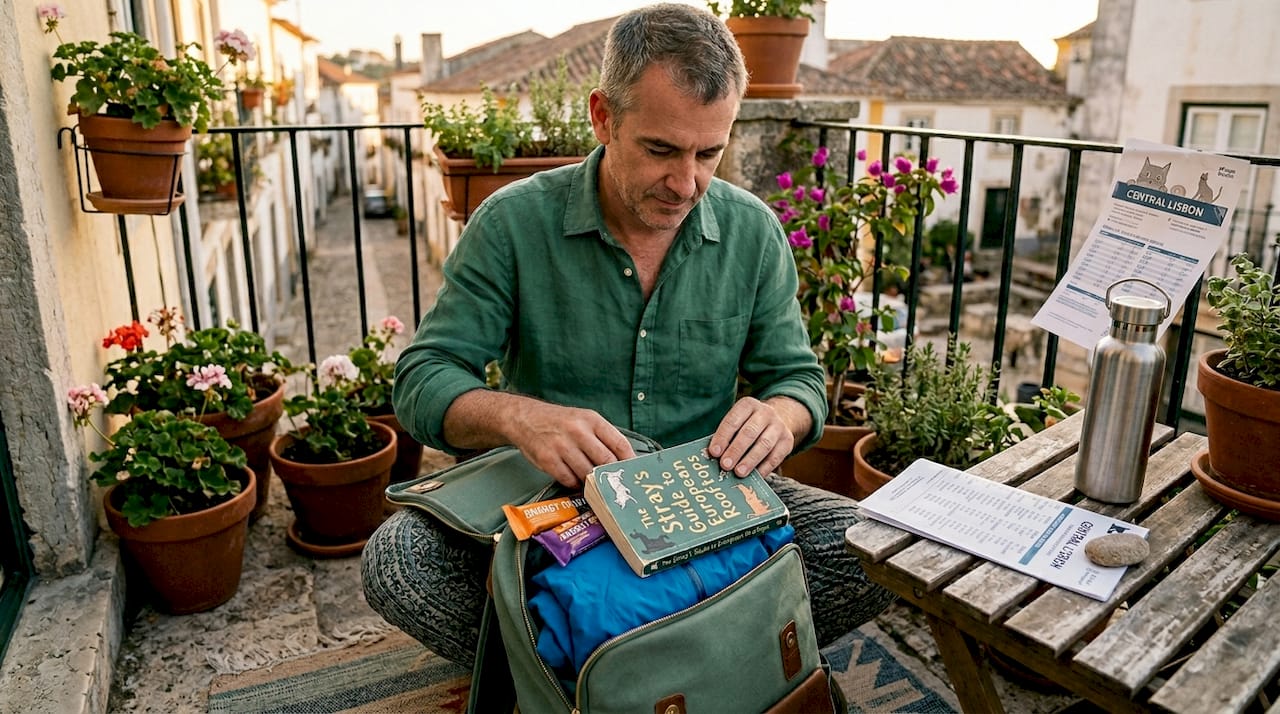
Hydration deserves its own attention. Carry 1 liter of water per 2 hours of walking, plus a 0.5-liter buffer. In hot weather, increase that to 1 liter per hour. Sip every 15 to 20 minutes rather than waiting until you feel thirsty. For tours lasting longer than 90 minutes, electrolyte tablets or a sports drink can prevent the energy crash that often hits around the two-hour mark.
What to leave behind: a full-size umbrella (get a compact one), heavy camera equipment (your phone is enough for most shots), and multiple outfit changes. You are on a tour, not a photoshoot. Every extra pound matters.
Pro Tip: Pack your snacks and water at the very top of your bag so you can access them quickly during short stops without holding up the group.
Safety tips and tour logistics
Feeling safe and organized on your first guided city tour starts well before the tour itself begins. The logistics side of things trips up more first-timers than any physical challenge.
- Arrive early. Arrive 10 to 30 minutes early to the meeting point. Many tours depart exactly on time, and late arrivals may forfeit their spot with no refund. Confirm the exact meeting point in advance because it often differs from the main entrance of an attraction.
- Understand skip-the-line realities. Skip-the-line tickets provide a reserved time slot, but they do not guarantee walking straight in. Security and group check-ins still cause delays, so allow an extra 15 to 30 minutes for validation and group assembly. Check fast-track entry options before your trip to understand what is actually included.
- Protect against pickpockets. Pickpocketing is the primary safety concern for tourists at crowded city sites. Keep valuables in front pockets, wear your bag on your chest in crowded spaces, and never hang a bag on a chair back at a café stop.
- Know your group size. Smaller groups give you better access to your guide and reduce the crowd-related fatigue that comes from trying to hear someone speak over 40 other people.
- Respect local etiquette. In many European cities, speaking loudly in churches or historic spaces is considered disrespectful. Follow your guide's lead on when to talk, photograph, and move.
"Guided tours offer significant logistical freedom by handling navigation and access, making them ideal for first-timers looking for a safe and informed experience." — NZ Herald Travel
One often overlooked detail: save your guide's phone number before the tour starts. If you get separated or arrive late to the meeting point, that contact is worth more than any app.
Getting the most from your first tour experience
Showing up prepared physically and logistically is only half the equation. How you engage during the tour determines whether you walk away with a few Instagram photos or a genuine understanding of the city you just explored.
Here is how to stay actively involved:
- Ask questions freely. Your guide's job is to share knowledge, and good guides genuinely enjoy thoughtful questions. If something sparks your curiosity, ask. You will get a more personal answer than anything you could find online.
- Use the tour as an orientation. Think of your guided city tour as a curated introduction to the city, not a complete experience. Note the neighborhoods, streets, and spots that interest you most, and revisit them independently afterward.
- Manage your energy at standing stops. Shift your weight, stretch your calves, and stay hydrated during longer explanations. Small physical adjustments prevent the fatigue that makes the last hour feel like a chore.
- Take selective photos. Photographing everything means experiencing nothing. Choose a few meaningful shots at each stop and spend the rest of the time actually listening and looking.
- Write brief notes. A few words jotted in your phone after each stop help you remember context and stories that photos alone cannot capture.
Most first-time visitors do better with half-day tours in smaller groups. They balance engagement and stamina more effectively than full-day options, and they leave you with enough energy to explore on your own afterward. For cities like Barcelona, Madrid, Valencia, or Paris, a well-designed Barcelona travel guide can help you plan what to prioritize after the tour ends.
Pro Tip: Tell your guide at the start if you have a particular interest, whether that is architecture, food history, or street art. Many guides will tailor their commentary on the fly when they know what genuinely excites you.
What I've learned from watching first-timers on guided tours
I have seen hundreds of first-time travelers walk into a guided city tour with the best intentions and still struggle to enjoy it fully. The reason is almost never the tour itself. It is almost always something they underestimated in the preparation phase.
Physical fatigue is the biggest culprit. People assume that because they walk to work or hit the gym regularly, they are ready. But a gym session does not prepare your feet for four hours on cobblestones, and a treadmill does not replicate the mental effort of staying attentive while standing still. The travelers who train specifically for the tour, even just six weeks of consistent walking, have a noticeably better time.
The other thing I have seen catch people off guard is the skip-the-line expectation. They paid for priority access and still waited 25 minutes. That gap between expectation and reality creates frustration that colors the rest of the experience. Go in knowing that early arrival and some procedural waiting is normal, and it stops being a problem.
My strongest recommendation for first-timers: choose a small group tour. The difference in experience is significant. You hear the guide clearly, you can ask questions without feeling self-conscious, and the pace feels personal rather than rushed. It is a genuinely different kind of experience compared to a large coach tour, and for a first time, that intimacy makes everything click faster.
Balance your planning with flexibility. Have your checklist ready, your shoes broken in, your water packed. Then let go and let the guide do their job. The best moments on any city tour are the ones you did not plan for.
— Evgeny
Ready to explore the city your way?
Once you have your preparation locked in, the next question is which tour experience actually fits your style. At Tresgatos, we design our tours around exactly the kind of first-time traveler this guide is written for. Our bike tours in Barcelona, Madrid, Valencia, and Paris are built on easy, safe routes that let you cover more ground with less fatigue than a walking tour, and every route is guided by a local expert who knows the stories behind the landmarks, not just the names.
Whether you want to glide past the Eiffel Tower at sunrise, explore Valencia's Turia Park, or discover Barcelona's Gothic Quarter at a relaxed pace, you can book your city bike tour directly through our site. All skill levels are welcome, tours run in multiple languages, and over 1,000 five-star reviews speak to what happens when preparation meets the right guide. We host, we do not serve.
FAQ
How far in advance should I prepare for a guided city tour?
Start physical preparation 6 to 8 weeks before your tour, gradually increasing your daily walking time and adding stair training to build the endurance you will need.
What should I carry in my bag on a guided city tour?
Pack water, snacks, sunscreen, a compact rain layer, personal medications, a portable charger, and a small amount of local cash. Keep your bag under 10 pounds to reduce fatigue during long walking and standing stretches.
Do skip-the-line tickets mean I won't wait at all?
No. Skip-the-line tickets reserve your entry time but security and group check-ins still cause delays. Arrive 15 to 30 minutes early to allow time for ticket validation and group assembly.
How early should I arrive at the tour meeting point?
Arrive 10 to 30 minutes early and confirm the exact meeting location in advance, as it often differs from the main entrance of the attraction.
Are small group tours better for first-timers?
Yes. Smaller groups give you better access to your guide, a more personal pace, and significantly less crowd-related fatigue, making the first guided tour experience more enjoyable and easier to absorb.