
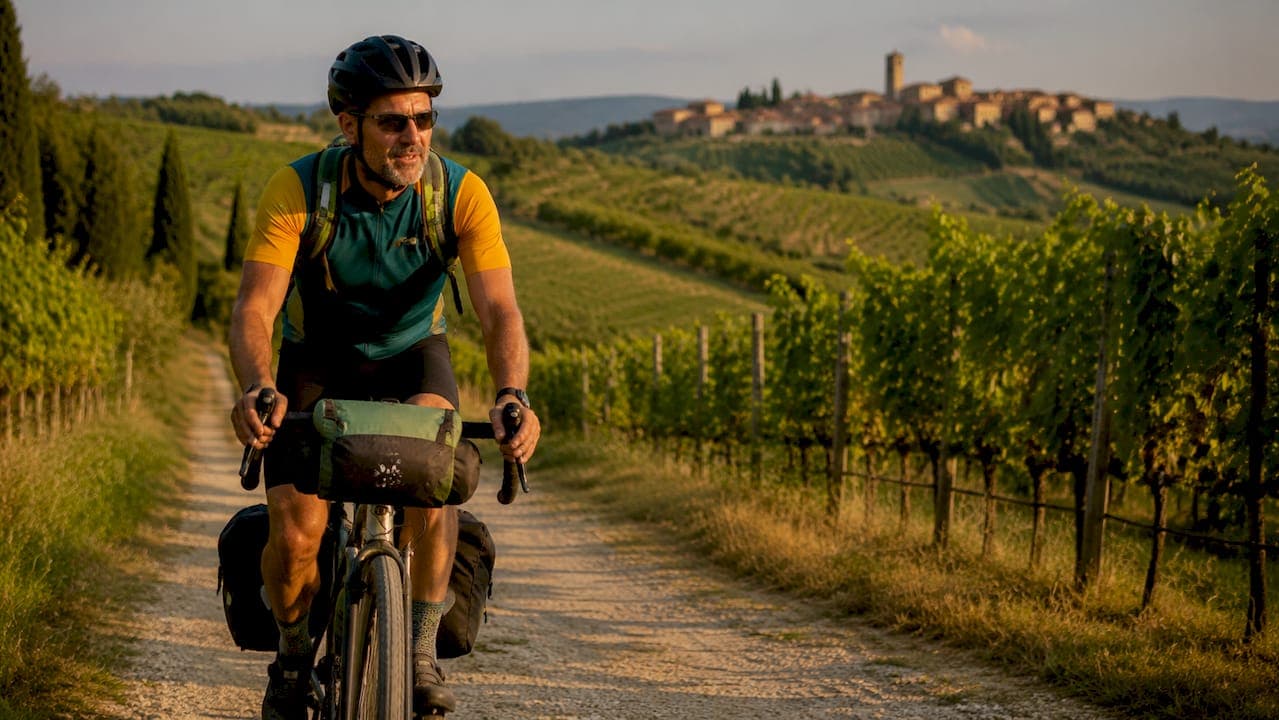
A multi-city bike tour in Europe is the most efficient way to combine physical activity, cultural depth, and cross-border travel into a single trip. Europe now accounts for nearly 40% of global cycling tourism revenue, with growth projected above 13% annually through 2033. That number reflects a real shift: travelers are choosing slow, self-powered movement over passive transit. Routes like the Danube Cycle Path (Passau to Budapest), the Prague to Vienna corridor, and the Loire Valley draw tens of thousands of riders each year precisely because they connect cities, not just scenery. This guide covers every meaningful advantage of multi-city cycling trips across Europe, from the physical to the logistical, so you can decide whether this format fits how you actually want to travel.
1. What are the real benefits of a multi-city bike tour in Europe?
A multi-city bike tour in Europe delivers something most travel formats cannot: a continuous, human-scale experience of how cities relate to each other. You leave Vienna in the morning, follow the Danube through small Austrian towns, and arrive in Bratislava by afternoon. The geography makes sense in a way it never does from a train window or a flight map. You feel the distance. That feeling is the point.
The format also solves a common problem with European city breaks: you see the monuments but miss the texture. Cycling forces you to slow down at the right moments, not because you planned to, but because a canal path or a market square simply stops you. That kind of spontaneous engagement is what most travelers say they remember longest.
2. Physical and mental health benefits of cycling across Europe
Regular cycling at touring pace works the cardiovascular system, legs, and core without the joint impact of running. On a 7-day Danube route, riders cover 250 to 400 km total, averaging 40 to 65 km per day. That daily distance is accessible for most moderately active adults and leaves time for sightseeing, meals, and rest.
The psychological rewards are less obvious but arguably more significant. Arriving in a new city under your own power produces a specific kind of satisfaction that a bus transfer simply does not. You earned the view. Researchers and long-distance cyclists consistently describe this as one of the most memorable aspects of the format: the sense of accomplishment compounds across the trip, city by city.
Mental well-being also benefits from the rhythm of cycling. Sustained, moderate effort reduces cortisol, quiets repetitive thinking, and creates a meditative state that many riders describe as the best mental reset they have had in years. The road handles the thinking for you.
- Cardiovascular fitness improves measurably over a 7-day tour
- Muscle groups used: glutes, quads, hamstrings, core stabilizers
- Psychological benefit: earned arrival, reduced anxiety, improved sleep
- Sensory engagement: smell, sound, and temperature of each region
Pro Tip: Experienced guides recommend scheduling rest days every 5 to 7 days on multi-city tours. Use those days for bike maintenance, laundry, and longer meals. They prevent cumulative exhaustion and often become the most memorable days of the trip.
3. How European infrastructure makes multi-city cycling unusually practical
Europe's cycling infrastructure is the single biggest practical advantage for multi-city trips. The EuroVelo network covers more than 90,000 km of mapped trails across the continent, connecting coastlines, river valleys, mountain passes, and city centers with consistent signage and surface quality. You do not need to improvise a route. The work has been done.
The Schengen Area adds another layer of convenience that is easy to underestimate. Seamless border crossings across 29 countries mean you ride from Germany into Austria into Slovakia without stopping, showing documents, or adjusting your pace. For a multi-country cycling trip, this is a genuine operational advantage that no other continent currently offers at this scale.
Accommodation infrastructure has also matured significantly. Bike-friendly hotels and guesthouses now advertise secure storage and washing facilities as standard features, particularly along established routes. Booking platforms like Bett+Bike in Germany and similar networks in the Netherlands and France let you filter specifically for cyclist-friendly properties.
| Region | Cycling infrastructure | Border crossings | Terrain |
|---|---|---|---|
| Western Europe (Netherlands, Germany, France) | Extensive dedicated lanes, excellent signage | Schengen, no stops | Mostly flat to rolling |
| Central Europe (Austria, Czech Republic, Slovakia, Hungary) | Well-marked river routes, good surfaces | Schengen, no stops | Flat along rivers, hilly inland |
| Eastern Europe (Poland, Romania, Bulgaria) | Developing, variable quality | Schengen (most), occasional checks | Mixed, more rural |
| Southern Europe (Spain, Italy, Portugal) | Urban lanes improving, rural routes varied | Schengen, no stops | Hilly to mountainous in places |
Western and Central Europe remain the strongest choices for first-time multi-city riders. The Prague to Vienna and Vienna to Budapest routes are flat, scenic, and well-supported, with reliable infrastructure and a dense network of cyclist-friendly towns along the way.
4. Cultural encounters that only happen at cycling pace
Cycling pace, roughly 15 to 20 km/h, is fast enough to cover ground and slow enough to notice everything. You pass through villages that do not appear on tourist maps. You stop at a bakery because the smell reaches you before the sign does. These are not planned experiences. They happen because you are moving at a human speed through a human-scale environment.
"Travelers moving at cycling pace experience higher sensory engagement with local culture and environment, including small towns and rural areas rarely visited by motorized tourists." — Is a bike tour worth it?
Group tours add a social dimension that solo travel cannot replicate. A small group of eight or nine riders develops its own rhythm over several days. You share meals, compare observations, and occasionally get lost together. Those shared moments tend to produce the stories people tell for years afterward.
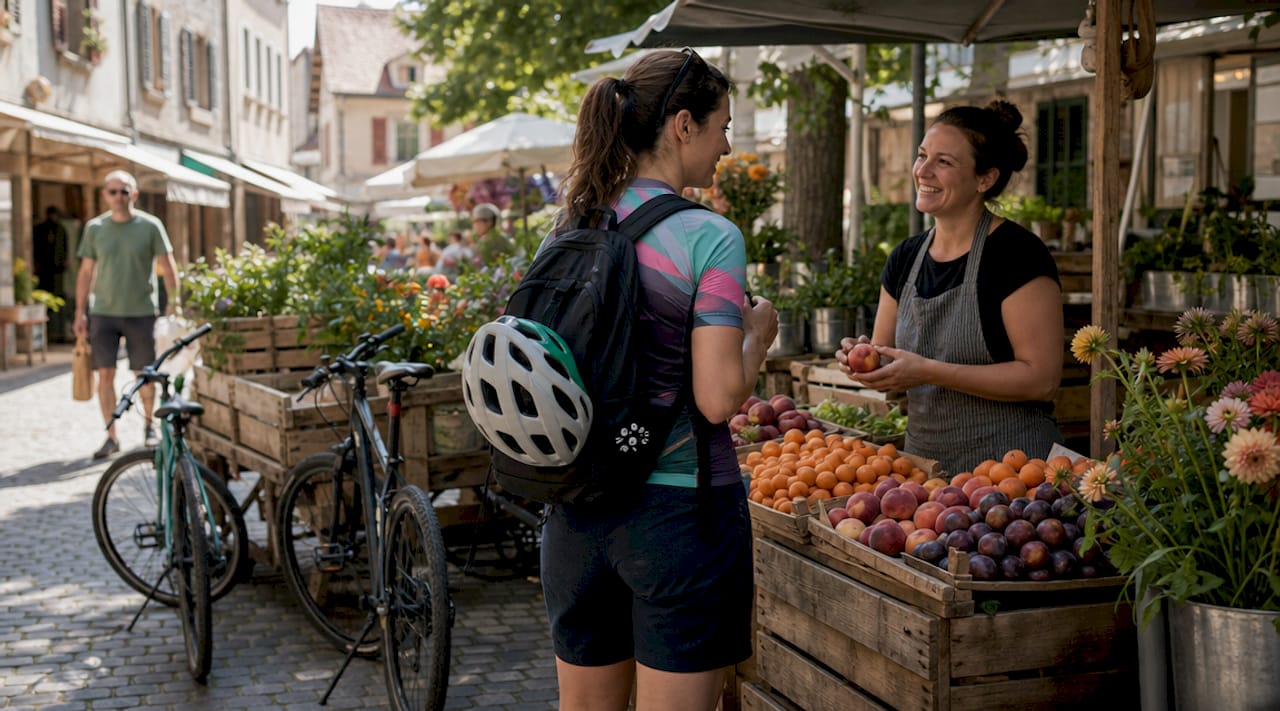
The cultural encounters that stick are rarely the ones you planned. They are the winemaker in Alsace who waves you into his courtyard, the elderly man in a Slovak village who wants to practice his English, the market in Bruges that happens to be running the morning you arrive. These moments are available to cyclists in a way they are not available to passengers.
- Access to villages and rural areas off standard tourist routes
- Regional food at the source: charcuterie in Lyon, pastries in Vienna, pintxos in San Sebastián
- Spontaneous local interactions that guided itineraries cannot schedule
- Community formed within small group tours over shared daily distances
5. How multi-city bike tours compare in cost and flexibility
Cost is one of the more surprising advantages of multi-city cycling trips. Self-guided tours on routes like Prague to Vienna typically run EUR 900 to 1,400 for seven days, compared to EUR 1,400 to 2,200 for a fully guided version of the same route. That 20 to 35% saving covers a meaningful portion of flights or additional nights. A 7-day organized bike tour costs roughly the same as a week's city break in London or Paris, but you cover multiple cities and arrive with a physical sense of the geography between them.
The flexibility comparison is more nuanced. Self-guided tours give you full control over pace, stops, and rest days. Guided tours remove logistical decisions entirely: luggage transfer, route navigation, and bike maintenance are handled for you. Neither format is objectively better. The right choice depends on how much you want to manage.
Pro Tip: If you are doing your first multi-city cycling trip, choose a guided tour for the first leg and self-guide the second. You learn the rhythm of the format with support, then apply that knowledge independently.
| Format | Typical cost (7 days) | Flexibility | Logistics handled |
|---|---|---|---|
| Self-guided bike tour | EUR 900 to 1,400 | High | Navigation, accommodation booking |
| Guided bike tour | EUR 1,400 to 2,200 | Moderate | Everything including luggage transfer |
| Train travel (equivalent cities) | EUR 600 to 1,000 | High | Transport only |
| Car rental (equivalent route) | EUR 700 to 1,200 | Very high | Transport only |
Bike touring beats car rental on one specific metric: you arrive in city centers, not parking lots. You also skip the fuel, tolls, and parking costs that accumulate quickly in Western European cities. And unlike train travel, you see everything between the stations.
For city-by-city cycling, the hybrid approach works well: use trains for long inter-city legs, then rent or join a local bike tour for each city. This keeps daily distances manageable and lets you go deeper in each place rather than rushing through.
Key takeaways
Multi-city bike tours in Europe deliver better value, deeper cultural access, and stronger health benefits than almost any other format of European travel.
| Point | Details |
|---|---|
| Physical and mental health | Daily distances of 40 to 65 km build fitness and produce measurable psychological benefits. |
| Infrastructure advantage | EuroVelo's 90,000+ km network and Schengen border-free travel make multi-country routes practical. |
| Cultural depth | Cycling pace enables spontaneous local encounters that planned itineraries cannot replicate. |
| Cost comparison | Self-guided tours cost 20 to 35% less than guided options on the same routes. |
| Rest day strategy | Scheduling rest days every 5 to 7 days prevents burnout and improves overall enjoyment. |
Why I think most people underestimate what cycling between cities actually does to you
I have watched a lot of travelers come back from multi-city bike tours and say some version of the same thing: "I didn't expect to feel that way about it." What they mean is that the physical act of moving between cities changes how you experience them. You arrive with context. You know what the land between Vienna and Budapest looks like because you rode through it. That knowledge is not available from a train seat.
The part most people underestimate is the mental shift that happens around day three. The logistical anxiety of the first day settles. You stop worrying about whether you packed the right gear and start noticing the light on the river at 7 a.m. That shift is what flexible, positive travel actually means in practice. It is not an attitude you bring. It is one the road gives you.
My honest recommendation: do not start with an ambitious route. The Danube from Passau to Vienna is four to five days, mostly flat, and genuinely beautiful. It gives you the format without overwhelming you. Once you have done it, you will understand why people keep coming back to this way of traveling. And you will probably start planning the next one before you are home.
— Evgeny
See a city the way a local does
If a multi-city cycling trip is on your list, the individual city legs matter as much as the route between them. Tresgatos runs bike tours in Barcelona, Paris, Madrid, and Valencia with small groups of nine people maximum, one guide who actually lives in the city, and no hidden costs. The bike, helmet, and insurance are included.
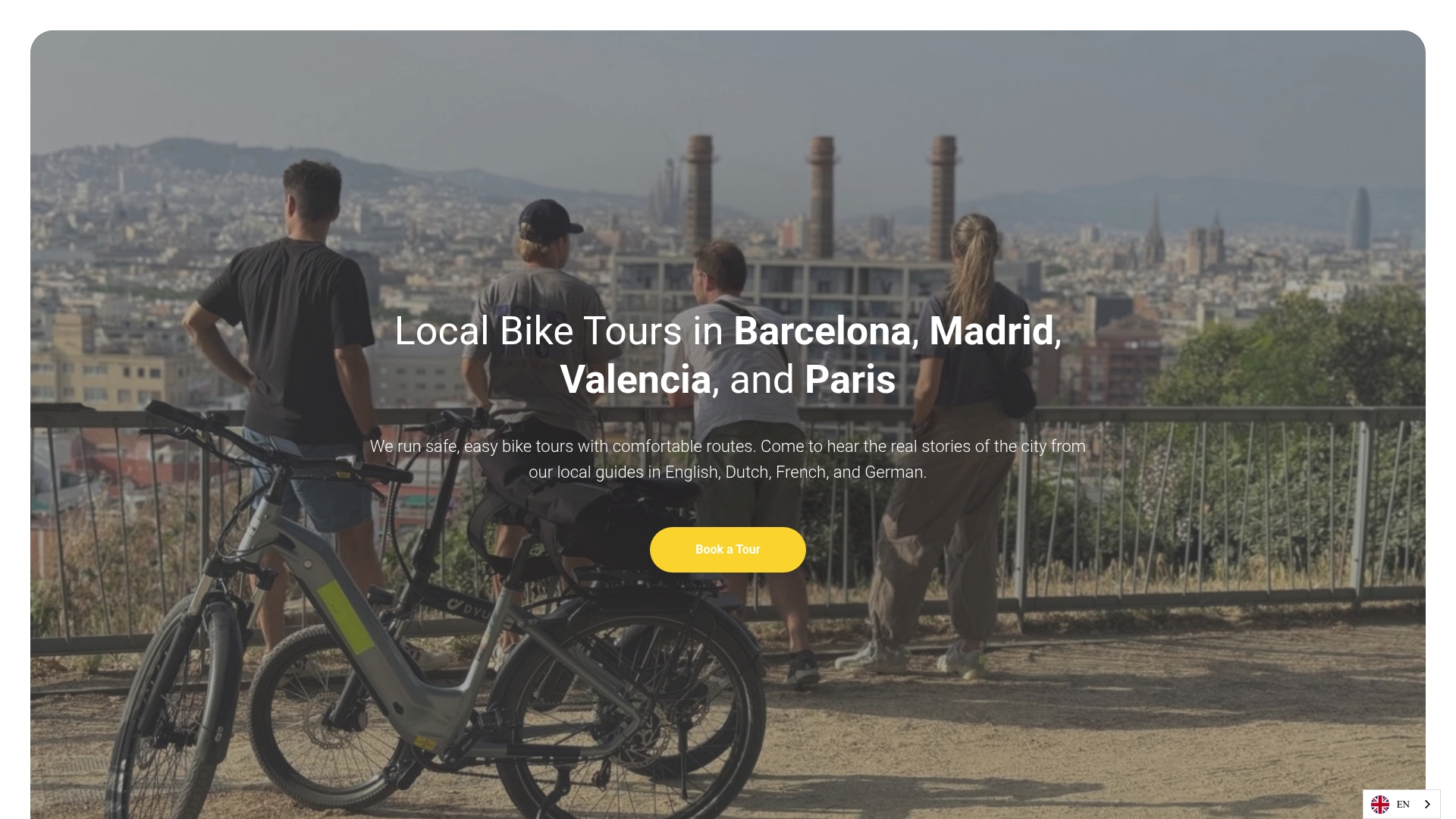
Guides like Igor in Barcelona and Pierre in Paris know the streets the way you know your own neighborhood. They show you what is worth stopping for and what is not. If you are building a multi-city European itinerary and want to go deeper in each city, the Barcelona bike tour or the Paris highlights tour are strong starting points. Three hours, real stories, a pace that lets the city land.
FAQ
What are the main benefits of a multi-city bike tour in Europe?
Multi-city bike tours combine cardiovascular exercise, cultural immersion, and cost-effective travel across multiple countries. The cycling pace enables access to small towns and spontaneous local encounters that other travel formats miss.
How much does a multi-city cycling trip in Europe cost?
Self-guided tours on popular routes like Prague to Vienna typically cost EUR 900 to 1,400 for seven days. Guided tours on the same routes run EUR 1,400 to 2,200, covering logistics like luggage transfer and route support.
Which European routes are best for first-time multi-city riders?
The Danube Cycle Path (Passau to Vienna or Vienna to Budapest) and the Prague to Vienna route are flat, well-marked, and well-supported, making them ideal entry points for riders new to multi-day touring.
Do I need to be very fit to do a multi-city bike tour in Europe?
Most multi-city routes average 40 to 65 km per day, which is accessible for moderately active adults. Hybrid or touring bikes are recommended over racing bikes to maximize comfort over longer distances.
How does the Schengen Area help multi-city cyclists?
The Schengen Area covers 29 European countries and eliminates border formalities entirely, so cyclists can ride from Germany into Austria into Slovakia without stopping. This makes multi-country routes logistically straightforward.