
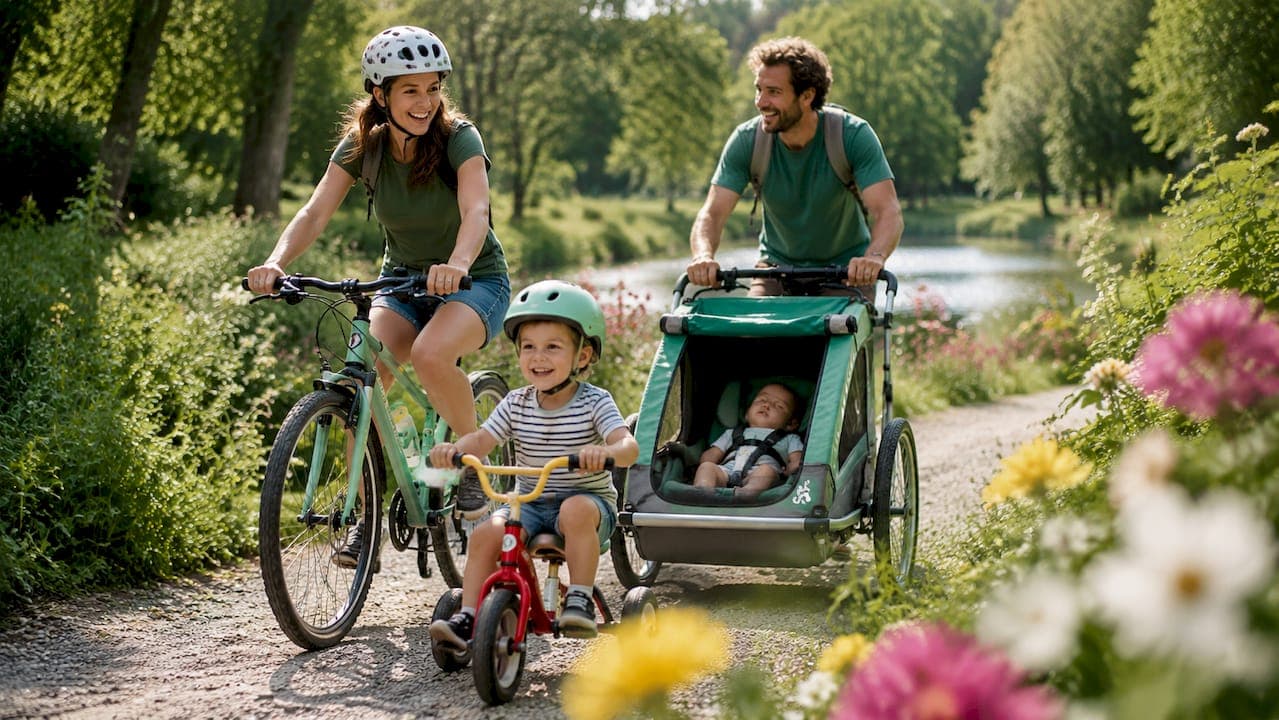
Bike tours are one of the most naturally child-compatible travel formats available to families today. They match how young children actually move through the world: slowly, with frequent stops, drawn to whatever catches their eye. A well-designed family cycling trip covers 6–10 km at a gentle pace, which sits squarely within a young child's stamina range. The result is a format that feels like play rather than transportation, and that is exactly why bike tours suit young children so well.
Why bike tours suit young children's physical and attention needs
Family cycling trips are built around one core constraint: children tire quickly and lose interest faster than adults. The standard response from experienced tour operators is to keep city and day tours to 6–10 km, which translates to roughly 2–2.5 hours of riding at a conversational, gentle pace. That distance produces a sense of real achievement without pushing a six-year-old into a wall of exhaustion.
For multi-day trips, the math shifts slightly. Experts recommend daily distances of 25–50 km with planned rest days every 2–3 days that include play areas like pools or zoos. The rest days are not a concession to weakness. They are the structure that makes the riding days possible.
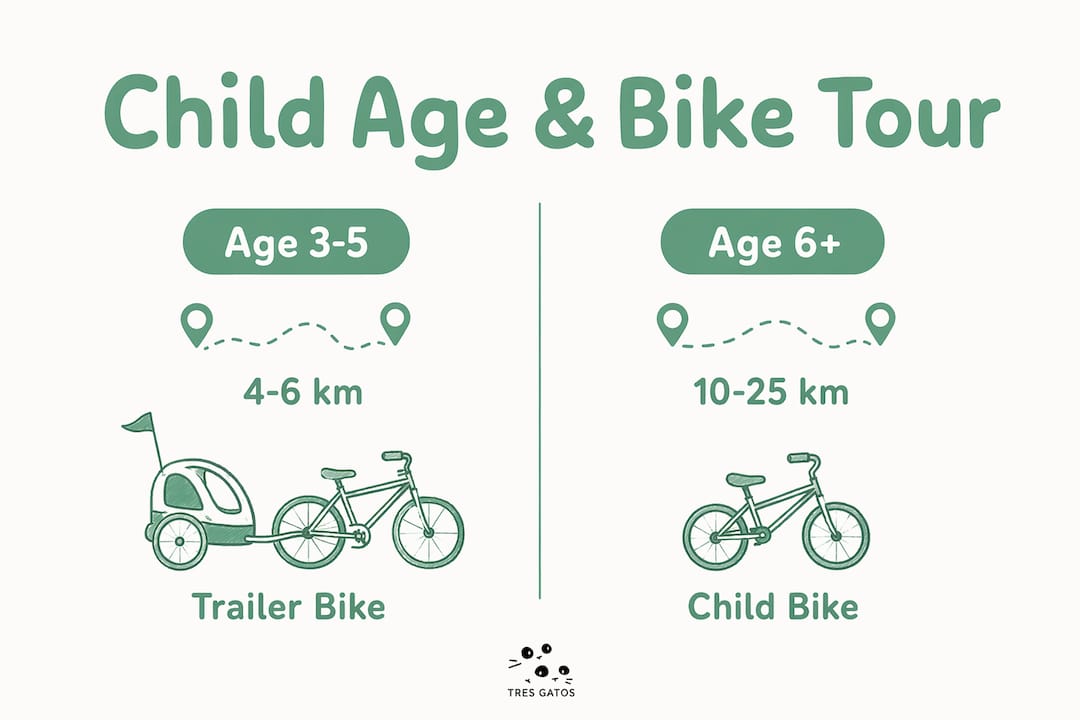
The table below shows how distance and format match different age groups on family cycling tours.
| Age group | Recommended daily distance | Best format |
|---|---|---|
| 3–5 years | 4–6 km | Trailer or cargo bike |
| 6–8 years | 6–10 km | Tag-along or own bike |
| 9–12 years | 15–25 km | Own bike with rest stops |
| Multi-day families | 25–50 km | Mixed modes, rest days every 2–3 days |
Pace matters more than distance. The key stressor for families is not how far they ride but how fast the group moves. A tour that rushes past everything interesting is a tour that ends in tears. The pace should always match the slowest rider, which on a family tour is almost always the youngest child.
Pro Tip: Plan your first family cycling trip around a flat, car-free route. Parks, riverside paths, and dedicated bike lanes remove the anxiety of traffic and let you focus entirely on the kids.
How do bike tours keep young children engaged and learning?
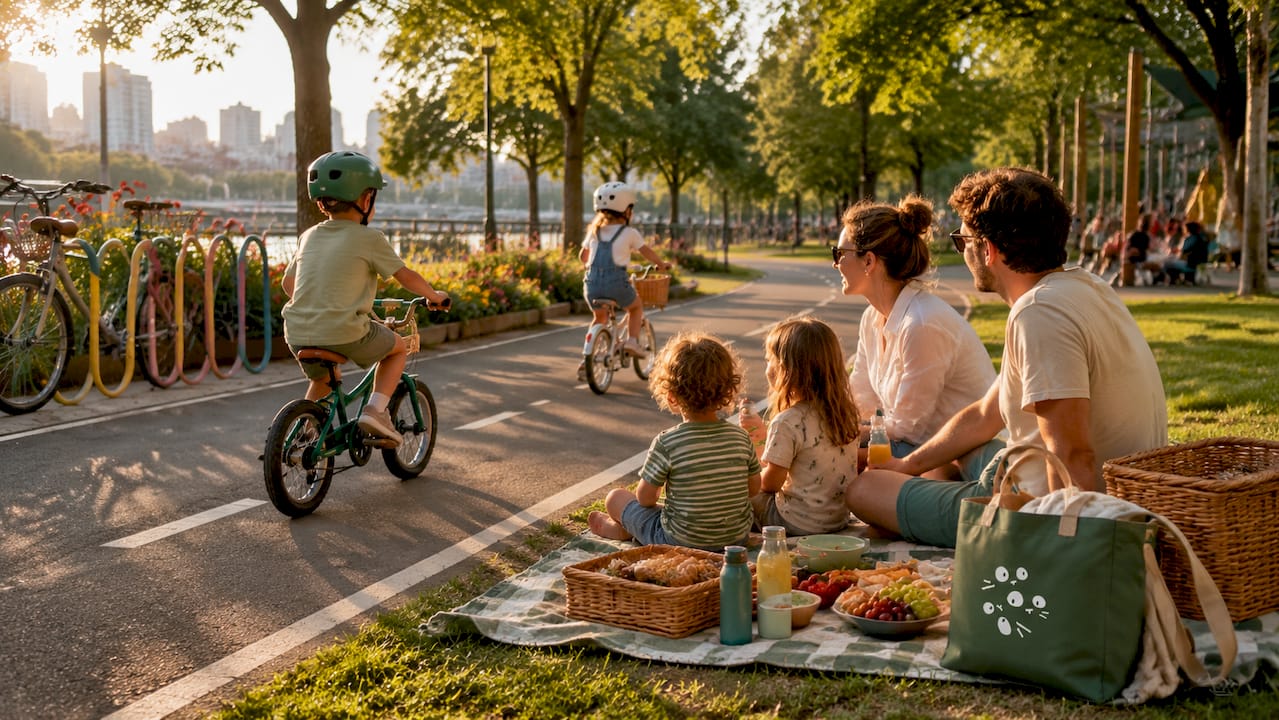
Engagement on a family bike tour does not happen automatically. It requires deliberate design. The most effective approach is to involve children in route decisions and navigation, which transforms them from passengers into participants. When a seven-year-old gets to choose whether the group turns left toward the fountain or right toward the market, the ride becomes their adventure, not yours.
Several specific strategies keep young children curious and cooperative throughout a ride:
- Treasure hunts: Give each child a short list of things to spot along the route, a red door, a dog, a flag, a fountain. This works for children as young as four.
- Photography challenges: Let older kids carry a phone or simple camera and assign them a theme, like "doors" or "signs in other languages." They stop complaining about distance almost immediately.
- Snack stops as rewards: Experienced families schedule snack breaks every 45–60 minutes, timed to coincide with something worth seeing. The snack is the reward; the landmark is the context.
- Navigation roles: Give a child the map or the printed route card. Even if they cannot read it accurately, the responsibility shifts their attitude.
Varied terrain also helps significantly. Children stay engaged longer when the scenery changes and when interactive activities like treasure hunts are layered into the route. A flat, featureless path for two hours is hard for any child. A path that moves through a market square, past a canal, and into a park with a climbing frame is a completely different experience.
Pro Tip: Pack one small, surprising snack that the children have not seen before. Novelty at the 45-minute mark does more for morale than any pep talk.
The deeper benefit is what happens to family dynamics when the ride goes well. Shared discovery, even small discoveries, builds a particular kind of closeness. The best memories come from unhurried pauses rather than distance covered. Parents who internalize that shift tend to have much better trips.
Are bike tours safe for children? Equipment and route choices
Bike tours are safe for young children when the equipment and route are matched to the child's age and ability. That sentence is the whole answer. The details are in the matching.
Equipment by age and ability:
- Trailers: Best for children under 4 or for tired older children who need a break. Trailers keep the group moving without forcing a small child to pedal beyond their capacity.
- Tag-along bikes: Attach to an adult's bike and give children aged roughly 4–9 the feeling of riding independently while the adult controls direction and speed.
- Child-sized bikes: Appropriate for confident riders aged 6 and up on flat, low-traffic routes.
Mixing riding modes is standard practice among experienced family cyclists. A child might ride their own bike on flat sections and switch to a tag-along for a longer stretch or a busier road. That flexibility keeps the group's pace steady and the child's confidence intact.
The comparison below shows how different route types affect safety and enjoyment for young children.
| Route type | Safety level | Child enjoyment | Notes |
|---|---|---|---|
| Dedicated bike path | High | High | Best choice for families with young children |
| Quiet residential streets | Medium-high | High | Works well with a guide who knows the area |
| Shared pedestrian paths | Medium | Medium | Requires slower pace and more supervision |
| Main roads with bike lanes | Medium | Low | Stressful for children; avoid where possible |
| Off-road trails | Variable | High | Only suitable for older, confident riders |
Helmets are non-negotiable. Reflective clothing matters on any route with vehicle traffic. Teaching children basic hand signals before the ride starts, not during it, gives them a sense of agency and reduces the chance of sudden, unpredictable movements. For families preparing their first city ride, a practical overview of family bike tour preparation covers the full equipment checklist in detail.
How do bike tours compare with other family travel activities?
Bike tours deliver a combination of benefits that passive sightseeing formats simply cannot match. A bus tour or a walking tour with young children is a study in managed boredom. A bike tour is a study in managed energy, which is a much better problem to have.
Here is how family cycling trips compare with common alternatives across four dimensions that matter to parents:
-
Physical activity: Bike tours provide genuine cardiovascular exercise for children and adults. Car travel and bus tours provide none. Walking tours provide some, but the pace is often too slow to feel like movement and too fast for small legs over long distances.
-
Cognitive engagement: Cycling through a city requires children to pay attention to their surroundings, follow directions, and make small decisions. Passive formats ask children to sit still and listen, which is not a natural state for anyone under ten.
-
Independence and resilience: Riding a bike, even a tag-along, gives children a physical skill they can feel proud of. Completing a route, however short, produces a real sense of accomplishment. Bus tours produce no equivalent feeling.
-
Social interaction: Small-group guided tours, like those Tresgatos runs with a maximum of nine people, create natural conversation between families. Children meet other children. Parents talk to the guide. The social texture of the experience is richer than a museum visit or a hop-on bus.
The physical benefits compound over a trip. Regular cycling improves mood, sleep quality, and appetite in children, which makes every subsequent day of travel easier. Families who understand how distances are planned for young riders tend to arrive at the end of a tour in better shape than those who improvise.
Key Takeaways
Bike tours suit young children because they match children's physical limits, reward curiosity, and create shared family experiences that passive travel formats cannot replicate.
| Point | Details |
|---|---|
| Distance is the right size | City family tours cover 6–10 km, which fits a young child's stamina without exhaustion. |
| Pace beats distance | The group should always move at the slowest rider's speed; rushing is the main cause of unhappy children. |
| Engagement requires design | Treasure hunts, snack stops, and navigation roles keep children curious and cooperative throughout. |
| Equipment flexibility matters | Mixing trailers, tag-alongs, and own bikes lets children contribute while keeping the group moving. |
| Guided small groups add value | A knowledgeable guide on a quiet route removes traffic stress and lets parents focus on the children. |
What I've learned from watching families ride
I have watched a lot of families on bikes. Some arrive with a plan so detailed it would impress a logistics manager. Others show up with a vague idea and two kids who have not eaten since breakfast. The families who have the best time are almost never the ones with the best plan.
What actually works is a parent who has quietly accepted that the ride will not go as expected, and who has decided in advance that this is fine. The child who stops to stare at a pigeon for four minutes is not ruining the tour. That child is having the tour.
The insight I keep coming back to is this: family bike tours work best when parents stop measuring success by distance and start measuring it by moments. The fountain stop that turned into a twenty-minute water fight. The guide who knew the name of the cat that lives outside the bakery. The child who asked to go again the next morning.
Pacing is the technical word for it. But what it really means is giving the ride permission to be slow. Cities look different at 8 km/h than they do from a bus window. Children know this instinctively. The job of the adult is to remember it.
One practical note: if you are riding in a city you do not know, a guide who actually lives there changes the experience entirely. Not because they know more facts, but because they know which streets are quiet on a Tuesday morning and which café will let a five-year-old use the bathroom without buying anything.
— Evgeny
Tresgatos family bike tours in Barcelona and Paris
If you are planning a family trip to Barcelona or Paris and want a ride that works for young children, Tresgatos runs three-hour tours with a maximum of nine people and one guide who lives in the city.
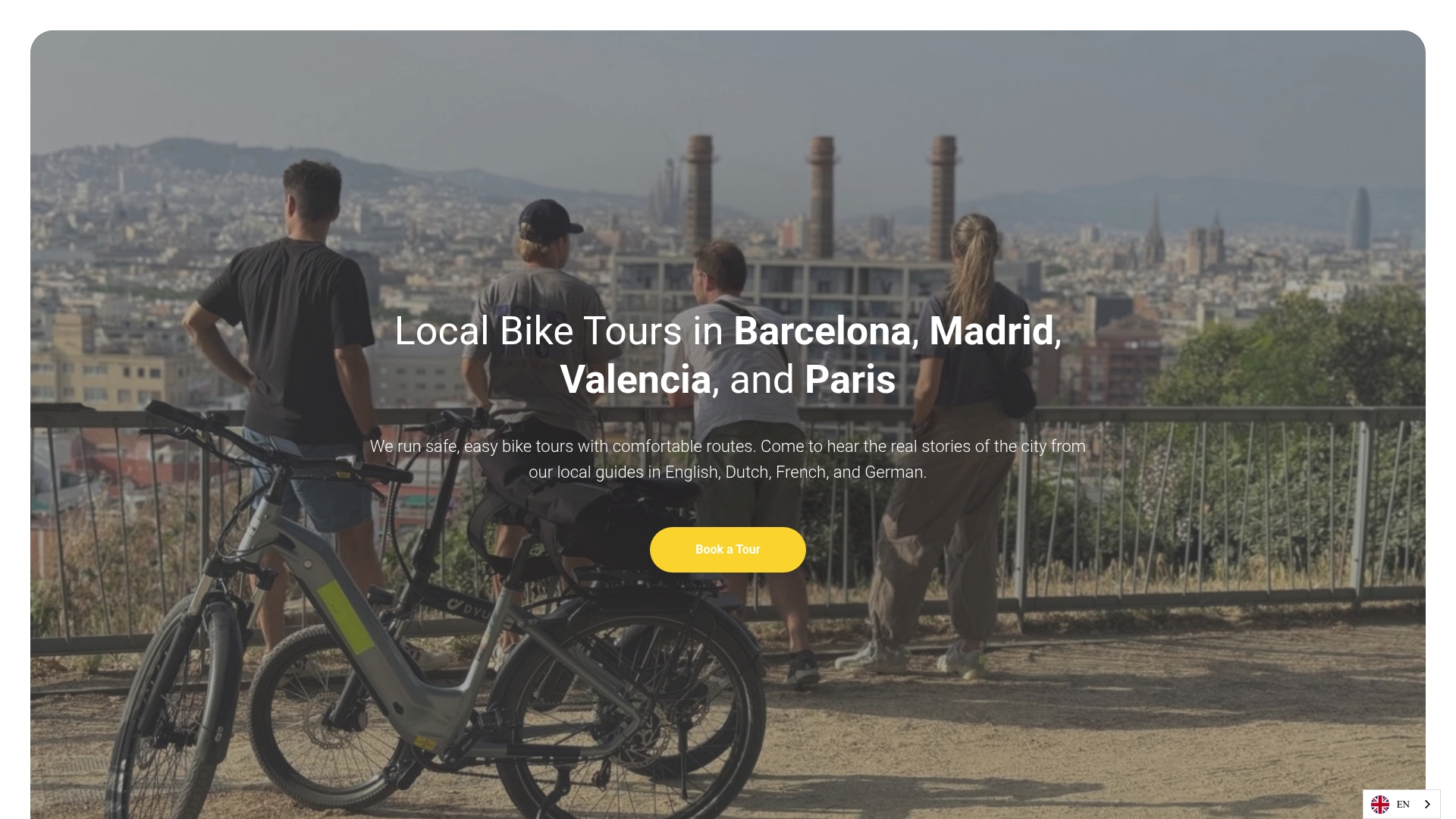
Tag-along bikes and child-sized bikes are available. The pace is set by the group, not a schedule. Guides like Igor in Barcelona and Pierre in Paris know the quiet routes, the good stops, and how to read a group that includes a tired six-year-old. Everything is included: bike, helmet, and insurance. No surcharges at the end.
You can book a Barcelona family tour directly, or browse the full range of family-friendly city tours across Barcelona, Paris, Madrid, and Valencia.
FAQ
Why do bike tours work well for young children?
Bike tours are designed around short distances, gentle pacing, and frequent stops, which match young children's stamina and attention spans. City family tours typically cover 6–10 km, producing a sense of achievement without exhaustion.
What age can children join a family bike tour?
Children as young as 3 can join using a trailer or cargo bike attachment. Children aged 6 and up can typically ride their own bikes on flat, low-traffic routes with appropriate supervision.
How do you keep young children engaged on a bike tour?
Involving children in navigation, adding treasure hunts or photography challenges, and scheduling snack breaks every 45–60 minutes are the most effective strategies for maintaining engagement throughout a ride.
Are bike tours safe for children in cities like Barcelona or Paris?
Bike tours on dedicated paths or quiet residential streets are safe for young children when helmets are worn and the route avoids heavy traffic. A local guide who knows the city's quieter cycling routes significantly reduces risk.
What equipment do young children need for a bike tour?
Children need a properly fitted helmet, age-appropriate bike or trailer, and comfortable clothing. Reflective gear is recommended for any route with vehicle traffic. Most guided family tours, including Tresgatos, provide bikes and helmets as part of the booking.