
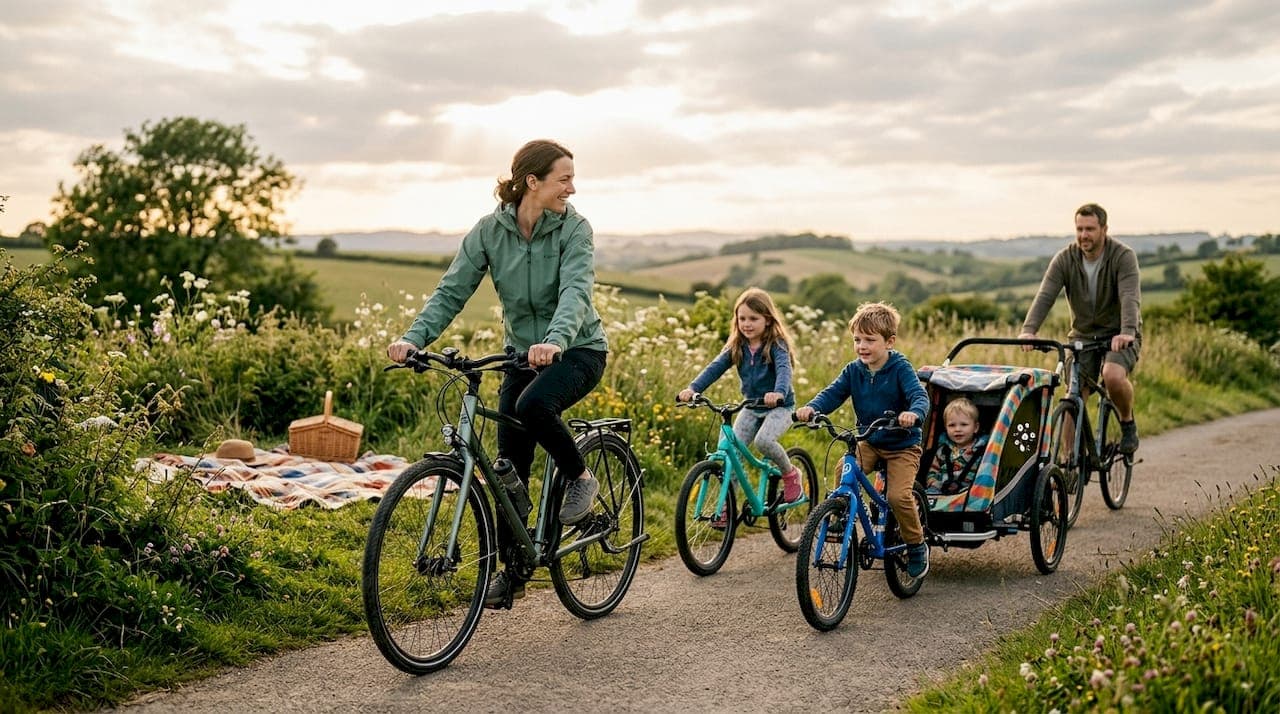
A family bike tour is a guided cycling trip organized specifically for families, where the operator handles route planning, accommodations, luggage transfers, and age-appropriate equipment so parents can focus on riding rather than logistics. Unlike a simple bike rental, a family bike tour is a structured experience that places toddlers in child trailers, teens on e-bikes, and everyone at a pace that leaves room for a cheese stop or a castle detour. The result is less stress for parents and more genuine adventure for kids. If you've been wondering what separates a family bike tour from a regular cycling holiday, the answer is in the planning that you don't have to do.
What is a family bike tour, exactly?
A family bike tour is defined as an organized, multi-day cycling trip designed to accommodate riders of different ages and abilities, with the tour operator managing the details that would otherwise consume a parent's entire vacation. The industry term used by operators like Tripsite and Butterfield & Robinson is guided family cycling tour, though "family bike tour" is the phrase most families actually search for.
The key logistics handled by operators include route selection, hotel bookings, daily luggage transfers, and gear provision. This means you arrive at each destination without a loaded pannier and without having spent the morning arguing over Google Maps. Children experience the ride as an adventure. Parents experience it as a vacation.
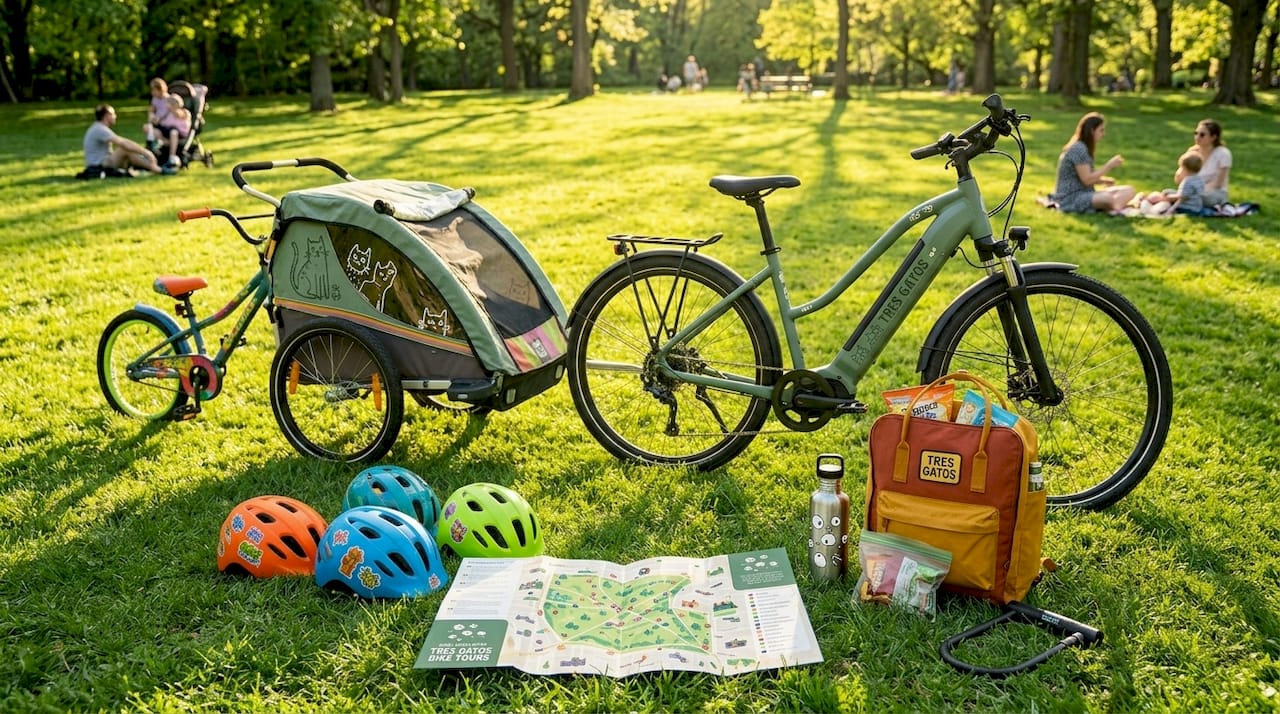
What makes these tours genuinely different from a casual cycling holiday is the equipment range. A well-run family tour offers child trailers for toddlers, tag-along bikes for kids aged five to nine, and e-bikes for adults who want to keep up without arriving at dinner completely spent. Frequent stops for sightseeing, local food, and cultural visits are built into the itinerary, not squeezed in as afterthoughts.
How family bike tours differ from casual rentals or day trips
Renting bikes for a day and following a map is a perfectly fine afternoon. A family bike tour is a different category of experience entirely.
Here is what a structured family cycling holiday provides that a rental does not:
- Route planning and daily distances calibrated to children's endurance, not adult ambitions
- Luggage transfers from hotel to hotel, so no one rides with a backpack full of rain gear and snacks
- Age-appropriate equipment including child trailers (ASTM F1975-15 certified), tag-alongs, and e-bikes
- Guided or self-guided formats with GPS tracks, printed maps, or a live guide who knows where the good bakeries are
- Cultural and food stops woven into the route, from local markets to historic sites
Tour providers reduce parental planning friction significantly, which directly improves how much children enjoy the experience. When a parent isn't stressed about navigation or accommodation, kids pick up on that. The ride feels like play, not a project.
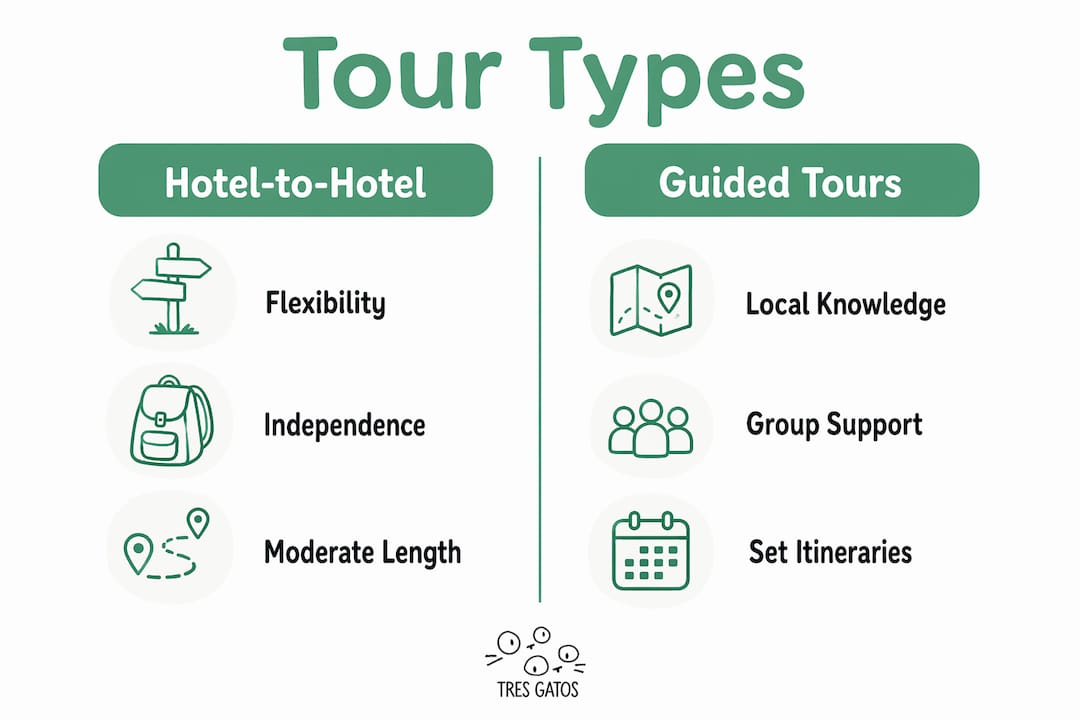
Self-guided tours suit families who want flexibility and privacy. Guided tours suit families who want local knowledge and someone to call when a tire goes flat. Both formats exist across Europe, from the Loire Valley to the Austrian lake district.
How do family bike tours keep children safe?
Safety on a family cycling tour depends on three things: the right equipment, the right habits, and the right pace. All three are manageable with some preparation.
Equipment that fits and holds
Helmets must fit properly before any ride begins. A helmet that sits too high or rocks side to side offers minimal protection. Batavus and Burley both specify that helmet fitting is the single most important safety step when cycling with children, ahead of any other gear consideration.
Child bike seats accommodate children from about 9 months to 3 or 4 years old. Bike trailers extend that range from 12 months up to age 6, and many models carry two children plus a small cargo load. Weight limits vary by manufacturer and must be respected. Exceeding them affects the trailer's handling and braking behavior.
E-bikes and trailers: what parents need to know
Using an e-bike to tow a trailer is safe when done correctly. The hitch must be fully engaged, the load must stay within the manufacturer's limit, and the rider must practice smooth starts and early braking. E-bike assistance actually helps stability by maintaining steady momentum, but sharp acceleration and hard braking with a trailer attached create real risks.
Burley's guidance is specific: reduce acceleration, brake earlier than you think you need to, and practice the combination before riding it in traffic. The stopping distance with a loaded trailer is longer than most riders expect.
Pro Tip: Before your tour departs, take a 20-minute practice ride with the trailer loaded to the weight you'll actually use. The handling difference is noticeable, and 20 minutes of practice prevents surprises on day one.
Road positioning and group riding
The Guernsey Bikeability scheme formalizes what experienced family cyclists already know: where you place children in a group matters. Younger children on tag-alongs or in trailers ride directly behind the lead adult. Older children who ride independently stay ahead of the rear adult, who acts as a buffer from traffic. Signaling clearly and consistently is taught as a non-negotiable habit, not an optional courtesy.
What types of family bike tours are available?
Family cycling tours come in several formats, and the right one depends on your children's ages, your family's fitness level, and how much structure you want.
- Hotel-to-hotel tours are the most common format. You ride a set distance each day, your luggage arrives at the next hotel before you do, and the route is pre-planned with rest day options built in.
- Bike and boat tours combine cycling with river or canal cruising. The boat serves as a floating hotel, which removes accommodation logistics entirely and gives kids a second mode of transport to get excited about.
- Multi-adventure tours blend cycling with kayaking, hiking, or swimming. These work well for families with older children who want variety across a week.
- Themed tours focus on a specific cultural or culinary thread. A five-day Wisconsin cheese tour, for example, covers about 60 miles with stops at local creameries and farmhouses, starting at $1,360 per person. That price point reflects what a well-organized themed tour actually costs when accommodation, route support, and cultural access are included.
| Tour type | Best for | Typical length |
|---|---|---|
| Hotel-to-hotel | Families wanting flexibility and independence | 5 to 8 days |
| Bike and boat | Younger children, families avoiding daily packing | 6 to 10 days |
| Multi-adventure | Active families with kids aged 8 and up | 5 to 7 days |
| Themed (food, culture) | Families who want a narrative thread | 3 to 6 days |
How to plan a family bike trip abroad
Planning a family cycling holiday abroad is straightforward when you break it into four decisions: equipment, daily distances, route format, and what the operator handles for you.
Choosing the right bike setup
Start with your youngest child. A child under 12 months cannot safely ride in a trailer or seat. From 12 months to about age 4, a trailer is the most stable option. From age 5 onward, a tag-along bike gives children an active role without requiring them to navigate independently. Teens and strong young riders do well on standard bikes or, on hilly terrain, e-bikes.
For cycling accessories like mirrors, lights, and child-specific helmets, check what your tour operator includes and what you need to bring. Most European operators provide helmets, but confirm the sizing range in advance.
Planning daily distances for kids
European multi-day family tours shorten daily stages and build in flexible options so families can opt out of a riding day without disrupting the group. A reasonable daily distance for a family with children under 10 is 15 to 25 kilometers. For older children and teens, 30 to 40 kilometers is manageable with breaks. Going beyond that on consecutive days leads to tired children and tense parents.
Pro Tip: Ask your tour operator specifically what the shortest daily stage option is. If they can't answer that question clearly, the tour was not designed with children in mind.
What to pack for a family bike tour
Keep it light. Luggage transfers mean you're not carrying everything on the bike, but overpacking still creates problems at check-in and check-out.
- Padded cycling shorts for adults and older children (one pair per person is enough if you rinse them)
- Rain layers that pack small, one per person
- Sunscreen and a small first-aid kit in your handlebar bag
- Snacks for the first hour of each day before the first stop
- A printed copy of the day's route even if you're using GPS
GPS apps and printed routes both have a place on a family tour. GPS fails when a phone battery dies. Printed routes fail when it rains. Carry both.
Key takeaways
A family bike tour works because the operator removes the logistics that exhaust parents, leaving the parts that children actually remember.
| Point | Details |
|---|---|
| Definition is specific | A family bike tour is an organized cycling trip with age-appropriate gear and operator-managed logistics. |
| Equipment determines safety | Helmets, trailers, and e-bike handling must match the child's age, weight, and the terrain. |
| Tour formats vary widely | Hotel-to-hotel, bike and boat, multi-adventure, and themed tours each suit different family profiles. |
| Daily distances matter | Keep stages at 15 to 25 km for families with young children to avoid exhaustion. |
| Operators reduce stress | When logistics are handled, children experience the ride as adventure rather than obligation. |
What I've learned from watching families ride
I've watched a lot of families get on bikes in Barcelona and Paris. The ones who enjoy it most are not the fittest or the most experienced. They're the ones who stopped trying to see everything and let the ride set the pace.
The parents who struggle are usually the ones who booked a tour but kept the tourist mindset: maximize, optimize, cover ground. A child on a tag-along doesn't care about the next monument. They care about the dog they just passed, the smell from the bakery, the shadow their bike makes on the cobblestones. When a parent slows down to match that, something shifts. The city actually lands.
What I'd tell any family considering a guided cycling holiday: pick a tour where the daily distance feels almost too short. You can always add a detour. You cannot un-exhaust a seven-year-old at 4pm. The safety measures for city riding matter, but the pace matters more. A well-paced tour is a confident tour, and confident kids on bikes are a genuinely good thing to witness.
The other thing I'd say: the guide is the difference between a route and an experience. A route gets you from A to B. A guide named Igor or Marina tells you why the building on the corner has a bullet hole in it, and your kids remember that for years.
— Evgeny
Ride with Tresgatos in Barcelona or Paris
Tresgatos runs guided bike tours in Barcelona and Paris with groups capped at nine people, one local guide, and everything included: bike, helmet, insurance. No hidden charges. The guides, Igor, Pierre, Kevin, and Marina among them, actually live in the cities they show you. For families who want a city to feel real rather than staged, that matters. If Barcelona is on your list, you can book a Barcelona bike tour directly and choose the pace that fits your family. Three hours, a small group, and someone who knows where the good stops are.
FAQ
What is a family bike tour in simple terms?
A family bike tour is an organized cycling trip where the operator handles routes, accommodations, and age-appropriate equipment so families can ride together without managing logistics themselves.
What age can children join a family bike tour?
Children from 12 months can ride in a certified bike trailer. Older children from age 5 can use tag-along bikes, and teens typically ride standard or e-bikes depending on the terrain.
How long are daily stages on a family cycling holiday?
Most family-focused European tours plan daily stages of 15 to 25 kilometers for families with young children, with flexible opt-out options on longer days.
Is it safe to use an e-bike with a child trailer?
Yes, when the hitch is correctly engaged, weight limits are respected, and the rider practices smooth acceleration and early braking. Sharp starts and hard stops with a loaded trailer significantly increase instability.
What should I pack for a family bike tour abroad?
Pack padded shorts, compact rain layers, sunscreen, a small first-aid kit, snacks, and both a GPS app and a printed route card as backup.