
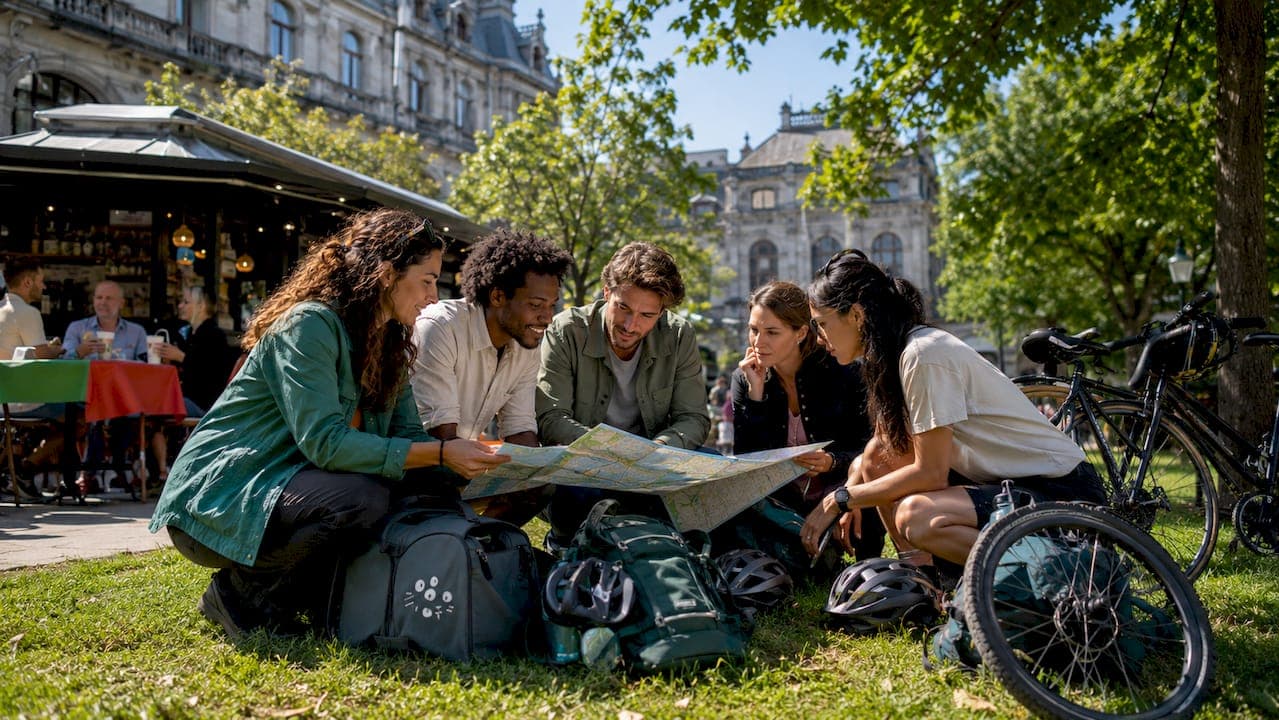
A corporate cycling expedition abroad is defined as a multi-day or single-day group ride in a foreign city or region, combining physical activity, local cultural immersion, and structured team-building. Done well, it outperforms most conference room exercises because the road creates conversations that a workshop never will. The challenge is that most organizers underestimate what it takes to plan a group bike trip across borders. Rider fitness varies, logistics multiply, and cultural context gets lost without the right guide. This article walks you through every stage, from the first planning call to the last kilometer.
How do you organize a team bike tour abroad?
Organizing a team cycling expedition overseas starts with two questions most people skip: who is actually coming, and what do they need to feel included? A group of 20 people will include seasoned cyclists, occasional weekend riders, and at least two or three people who haven't been on a bike in years. Ignoring that reality produces a miserable experience for half the group.
Start your assessment here:
- Group size and fitness range. Identify your slowest and fastest riders. The gap between them determines your route difficulty and pace strategy.
- Tour type. Fully supported tours handle all logistics, luggage, mechanical support, and hotels. Self-guided tours reduce costs by 30–50% but require your group to manage its own logistics on the road. For corporate groups, fully supported is almost always the right call.
- E-bike availability. E-bikes accommodate mixed fitness levels and are now standard across providers. They let a 55-year-old executive keep pace with a 30-year-old triathlete without anyone feeling embarrassed.
- Planning timeline. Corporate cycling events typically require 3–8 months of lead time for bespoke arrangements. Book early if your dates are fixed around a conference or offsite.
- Collaborative planning tools. Use shared documents in Google Workspace or Notion to track preferences, dietary needs, and fitness levels before you commit to a route.
Pro Tip: Survey your group before you contact any tour operator. A simple five-question form about fitness level, cycling experience, and cultural interests will save you two rounds of back-and-forth with vendors.
The tour type decision shapes everything downstream. A fully supported international biking event means you hand off the hard parts. A self-guided trip means you become the logistics coordinator, the mechanic, and the morale officer simultaneously.
How to plan routes, accommodations, and cultural stops
The best group bike trip planning abroad does not start with a map. It starts with a list of experiences you want the group to have, and then works backward to the route. This is the difference between a ride that feels like a commute and one that people talk about six months later.
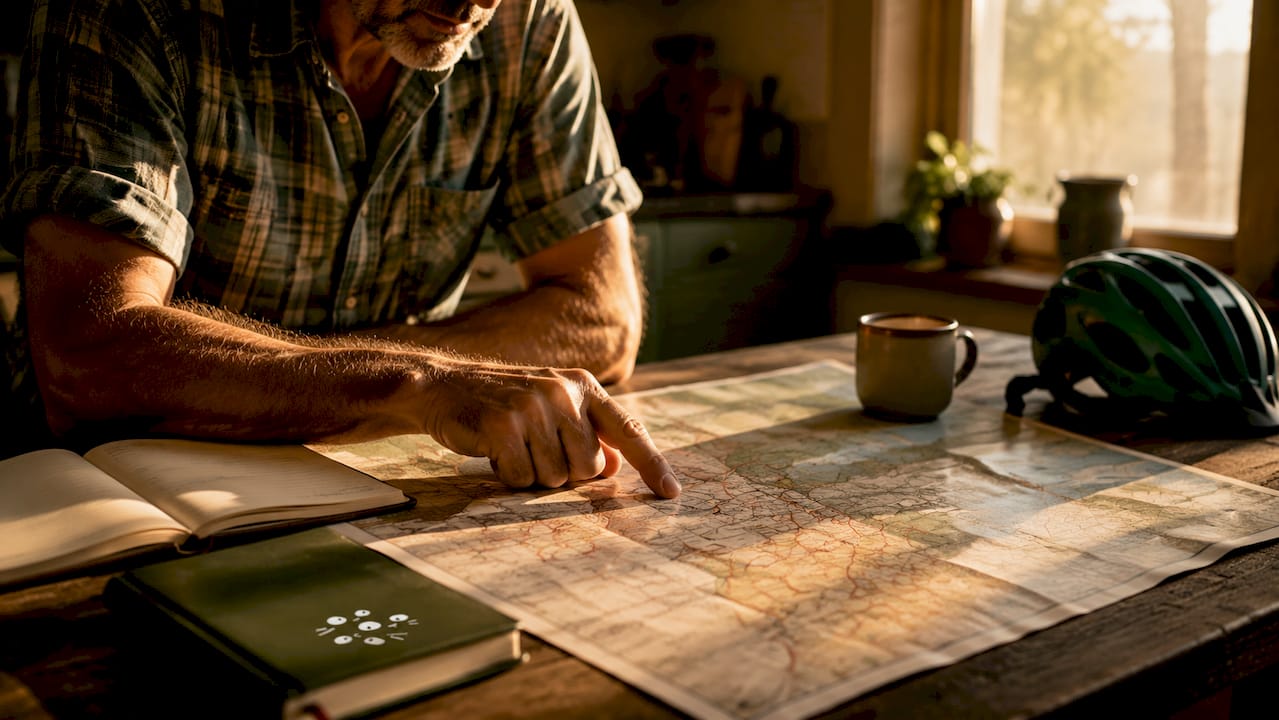
Build a flexible "menu of stops"
Adaptable itineraries consistently outperform rigid routes in corporate tour satisfaction. Instead of locking in every stop, create a shortlist of three or four options at each decision point. If the group is tired after lunch, you skip the afternoon hill and take the riverside path instead. If energy is high, you add the detour to the market. Flexibility is not a lack of planning. It is the plan.
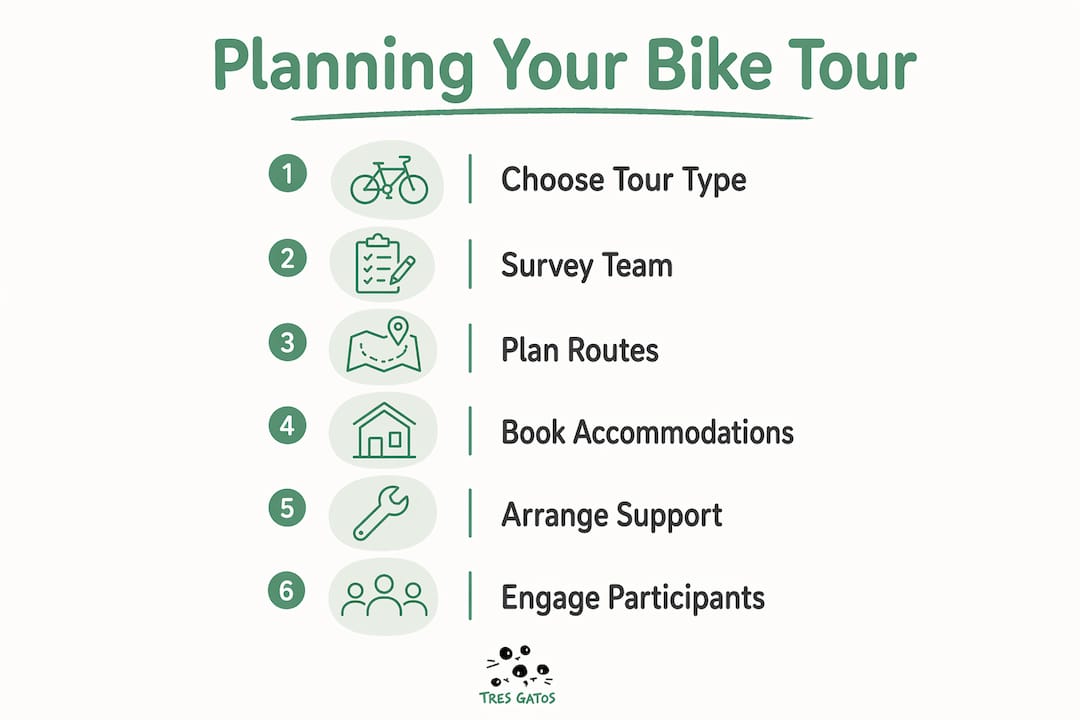
Vet every hotel for bike compatibility
Hotels must have secure, staffed bike storage. Most standard hotels do not provide this by default, and finding out at 9 p.m. after a 60-kilometer ride is a problem you do not want. Call ahead and confirm two things: locked storage accessible to your group, and a reception desk that is staffed during your expected arrival window.
| Planning element | What to confirm | Why it matters |
|---|---|---|
| Hotel bike storage | Locked room or cage, staffed hours | Prevents theft and morning chaos |
| Route difficulty | Max elevation, surface type | Matches fitness levels to terrain |
| Cultural stops | Local guide knowledge, language | Deepens team immersion |
| Non-rider activities | Parallel program options | Keeps the whole group engaged |
| Luggage transfers | Who moves bags between hotels | Removes daily logistics burden |
Blend cycling and non-cycling participants
Not everyone on your team will ride every day. Some will skip a stage due to fatigue or injury. Design the itinerary so non-riders have a parallel program that reconnects with the group at lunch or at the end of the day. A cooking class, a walking tour of the old quarter, or a visit to a local market all work well. The group stays integrated even when it splits.
Pro Tip: For cities like Barcelona or Paris, a local guide's cultural knowledge is worth more than any app. A guide who grew up in the Gràcia neighborhood will show your team a Tuesday market that no travel site lists.
What logistics and support systems keep the tour running smoothly?
Execution is where most corporate cycling tours either hold together or fall apart. The planning phase sets the stage, but the logistics on the ground determine whether people are energized or exhausted by day two.
Here are the four systems every organizer must lock in before departure:
-
Guide-to-rider ratio. The industry standard is approximately 8:1, meaning one guide per eight riders. For corporate groups with mixed abilities, consider a tighter ratio. Two guides for 14 riders is not extravagant. It is sensible.
-
Mechanical support. Clarify in writing whether your tour operator handles bike assembly and repairs, or whether that responsibility falls to you. Mechanic support costs approximately €200 per person when hired separately. Factor that into your budget from the start, not as a surprise line item.
-
Luggage transfers. On multi-day tours, bags should travel ahead to the next hotel by van. Confirm this is included in your package. Riders carrying full backpacks over 80 kilometers is a morale problem waiting to happen.
-
Communication protocols. Establish a group chat before day one. Share the day's route, meeting points, and emergency contacts each morning. A simple WhatsApp group works. What does not work is assuming everyone will figure it out.
"The true value of group cycling lies in cultural immersion and human connection rather than physical challenge alone." — BBC News
This is worth holding onto when you are deep in spreadsheet mode. The logistics exist to protect the experience, not to become the experience.
How do you engage every team member on the ride?
The best international biking events for corporate groups are not the ones with the most kilometers. They are the ones where the quietest person on the team ends up telling a story at dinner that nobody had heard before. That happens when the structure is right.
Here is what actually works for mixed-ability groups:
- Use e-bikes strategically. Assign e-bikes to riders who need them without making it a big announcement. A good guide handles this quietly during the bike fitting. Nobody feels singled out, and the group stays together on the road.
- Let the guide do the cultural translation. Local guides who are skilled cyclists and cultural translators create measurably better immersion for corporate teams. A guide named Igor who grew up in Barcelona's Poblenou district will point out the old factory that became a tech hub and explain why that matters to the city's identity. That context sticks.
- Design for spontaneous interaction. The best team-building moments on a bike tour are unplanned. A flat tire, a wrong turn into a neighborhood market, a local who invites the group to watch a street performance. Build slack into the schedule so these moments can happen.
- Use spoke-and-hub itineraries for non-riders. Non-cyclists follow a parallel track that converges with the riders at key points. This keeps the group socially connected without forcing anyone to ride who does not want to.
Pro Tip: Ask your guide to prepare two or three short stories about the places you will pass through. Not facts. Stories. The kind a local tells at dinner. Teams remember stories. They forget facts.
The physical challenge is a vehicle, not the destination. Groups that understand guided tour benefits before they depart arrive with better expectations and leave with better memories.
Key takeaways
Organizing a team bike tour abroad requires locking in tour type, guide ratio, accommodation logistics, and mixed-ability participation strategies well before departure.
| Point | Details |
|---|---|
| Start planning early | Book 3–8 months ahead for fully supported corporate cycling events with custom routes. |
| Choose fully supported tours | Supported tours handle logistics, luggage, and mechanical needs so organizers can focus on the group. |
| Use e-bikes for inclusion | E-bikes level fitness gaps and keep mixed-ability groups together on the road. |
| Vet hotels for bike storage | Confirm locked, staffed storage before booking. Most standard hotels do not offer this. |
| Hire culturally fluent guides | A guide who lives in the city adds context that no route map can provide. |
What I've learned from organizing rides across borders
I have watched a lot of corporate groups arrive at a bike tour with the same look: slightly skeptical, slightly competitive, already checking their phones. By the end of the first hour on the road, something shifts. The phone goes in the pocket. Someone asks the guide a question. Someone else laughs at the answer.
What I have found is that the logistics matter less than most organizers think, and the guide matters more. A rigid itinerary with a great guide is a good trip. A flexible itinerary with a mediocre guide is a frustrating one. The route is just geography. The guide is the experience.
The mistake I see most often is over-engineering the schedule. Organizers pack in too many stops, too many activities, too many "team-building moments." The road already does the work. Your job is to remove friction, not add programming.
Mixed-ability groups are also less of a problem than they appear on paper. E-bikes close most of the fitness gap. A good guide closes the rest. What actually derails a tour is poor hotel vetting, unclear communication on day one, and a group that never got a proper briefing on what to expect. Those are fixable problems. Spend your planning energy there.
Barcelona and Paris are both cities where the cycling infrastructure and the cultural density make for genuinely good corporate rides. Not because they are famous, but because a guide who actually lives there has something real to show you.
— Evgeny
Plan your next corporate ride with Tresgatos
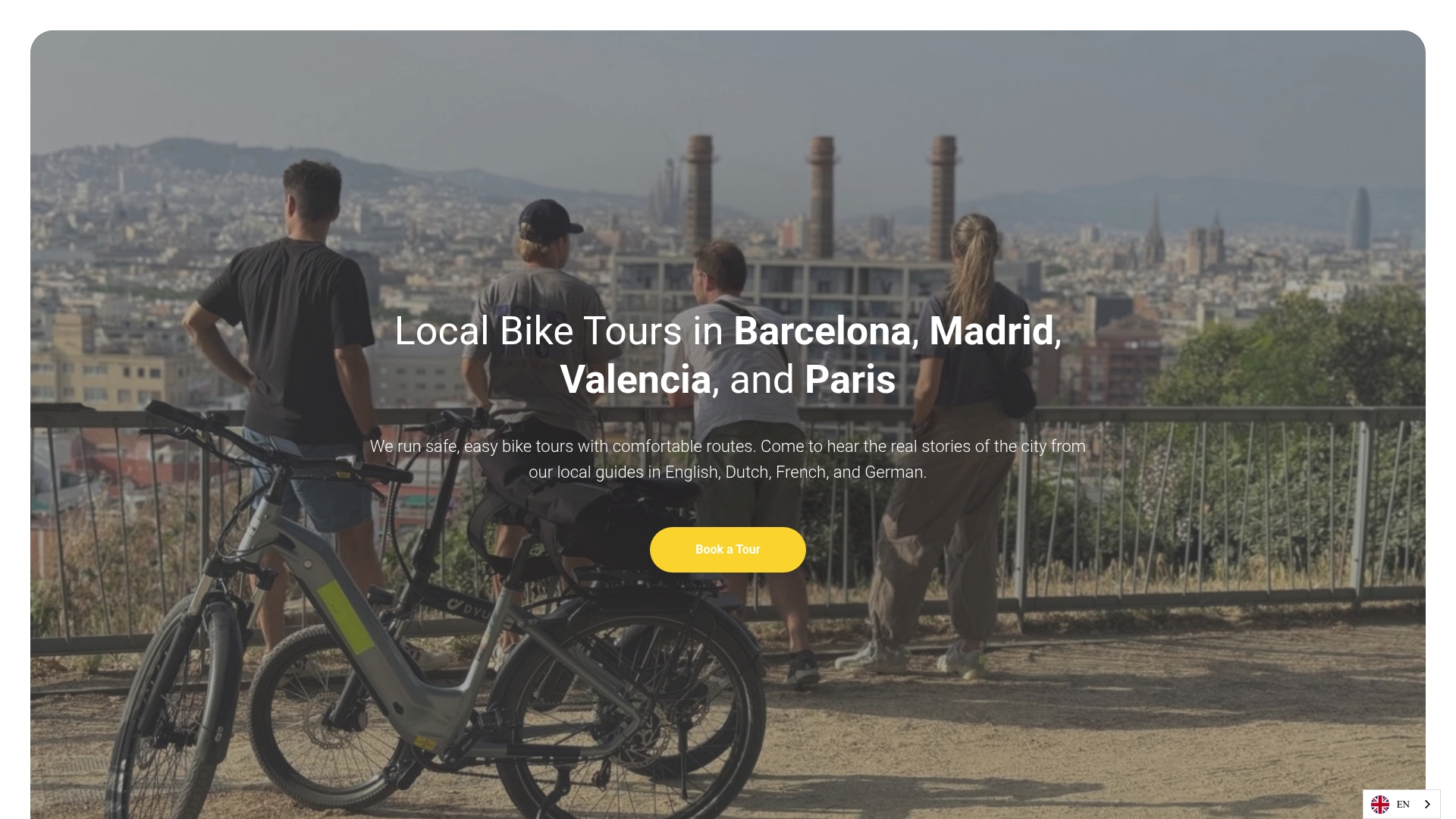
Tresgatos runs small-group bike tours in Barcelona and Paris, with groups capped at nine people and one multilingual guide who actually lives in the city. Every tour is all-inclusive: bike, helmet, and insurance, with no hidden surcharges. For corporate groups, the format translates directly into a focused, low-friction team experience where the guide does the heavy lifting on cultural context. Whether your team is based in Frankfurt, Amsterdam, or New York, a Barcelona or Paris bike tour gives you a half-day that people will still be talking about at the next offsite. Check availability and book directly at Tresgatos.
FAQ
How far in advance should I book a corporate bike tour abroad?
Corporate cycling events typically require 3–8 months of lead time for fully supported, customized arrangements. Book earlier if your dates are tied to a conference or fixed travel window.
What is the recommended guide-to-rider ratio for group tours?
The industry standard is approximately 8:1. For mixed-ability corporate groups, a tighter ratio of one guide per six or seven riders improves safety and group cohesion.
Do all team members need to be experienced cyclists?
No. E-bike availability means mixed fitness levels are standard on corporate tours. Non-riders can follow a parallel program and rejoin the group at scheduled stops.
What are the best destinations for corporate bike tours in Europe?
Barcelona and Paris rank consistently well for corporate groups because of strong cycling infrastructure, dense cultural stops, and a year-round riding season. Both cities support customized corporate itineraries with local guide expertise.
Who handles bike assembly and mechanical support on tour?
This depends on your tour operator. Mechanic support hired separately costs approximately €200 per person. Confirm in writing before departure whether assembly, repairs, and luggage transfers are included in your package.