
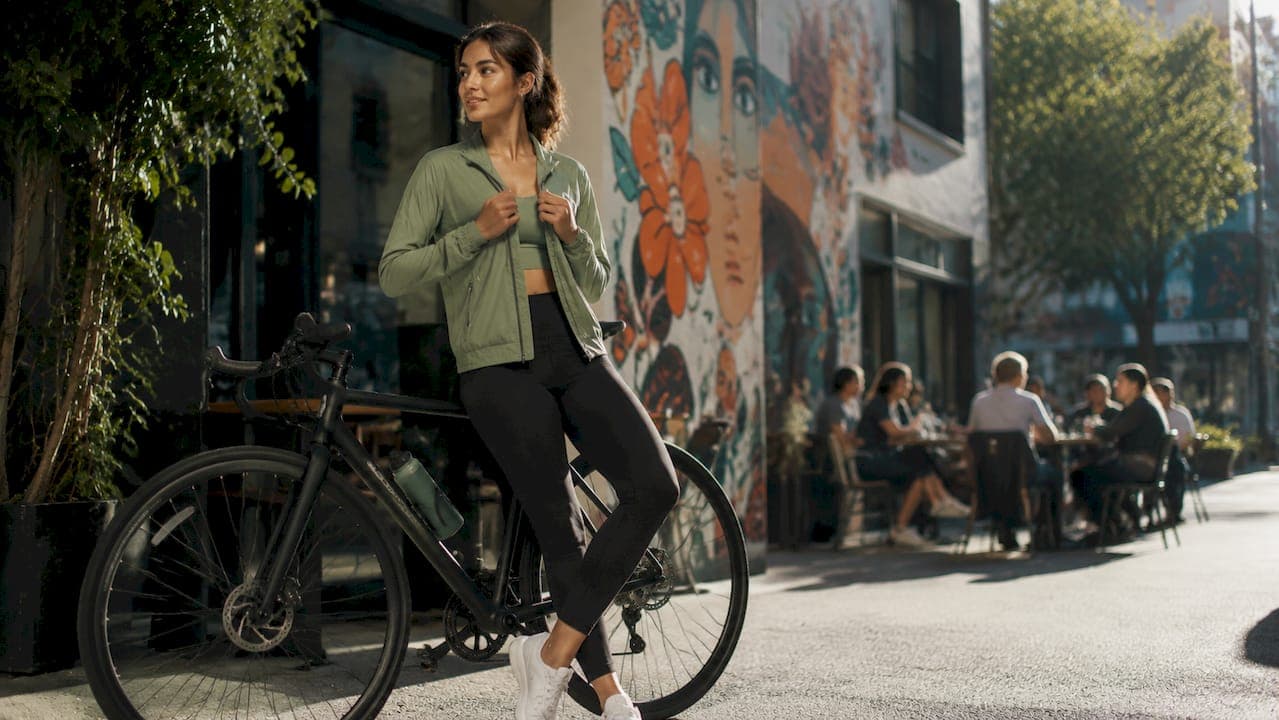
Comfortable urban cycling attire is defined by three qualities: breathability, flexibility, and the ability to walk into a café without looking like you just finished a race. When you dress comfortably for city bike tours, you are solving a specific problem that neither pure sportswear nor regular travel clothes handle well on their own. The right outfit keeps you cool while pedaling, warm when you stop, and presentable when the route takes you past a terrace worth sitting at. This guide covers fabrics, footwear, dresses, and packing light, so you spend the ride thinking about the city, not your waistband.
What fabrics and layering strategies work best for city bike tours?
Good cycling clothing supports thermoregulation by balancing heat retention and sweating, keeping you comfortable and focused on the ride rather than on your body temperature. That balance is harder to strike in a city than on a trail, because you stop constantly. Traffic lights, photo moments, a guide pointing out a building. Each stop lets your body cool, then you pedal again and heat builds back up fast.
The fabrics that handle this best are merino wool and synthetic blends designed for moisture management. Merino regulates temperature naturally and resists odor, which matters on a three-hour tour that ends at a restaurant. Synthetic blends made from polyester or nylon dry faster after sweating and tend to cost less. Either works. What does not work is cotton. Cotton holds moisture against your skin, which feels fine for the first twenty minutes and miserable for the last forty.
Layering is where most casual cyclists get it wrong. The standard approach used by experienced urban riders follows three layers:
- Base layer: A fitted, moisture-wicking top that moves sweat away from your skin. A lightweight merino or synthetic short-sleeve shirt works in most conditions.
- Mid layer: A light fleece or insulated vest for cooler mornings or shaded city streets. Choose one with a full zip so you can open it at traffic lights without stopping to remove it.
- Outer layer: A packable, windproof jacket that fits into a jersey pocket or a small bag when you no longer need it. Windproof but breathable materials prevent the chill from city wind tunnels without trapping heat.
The key word in that last point is packable. Removable layers reduce the planning penalty for city tours with microclimate changes, letting you adjust in seconds rather than suffering through the second half of the ride overdressed.
Pro Tip: Dress for 10 degrees warmer than the actual temperature when you start. You will warm up within five minutes of riding, and a jacket you can stuff into a basket is always better than one you wish you had left at the hotel.
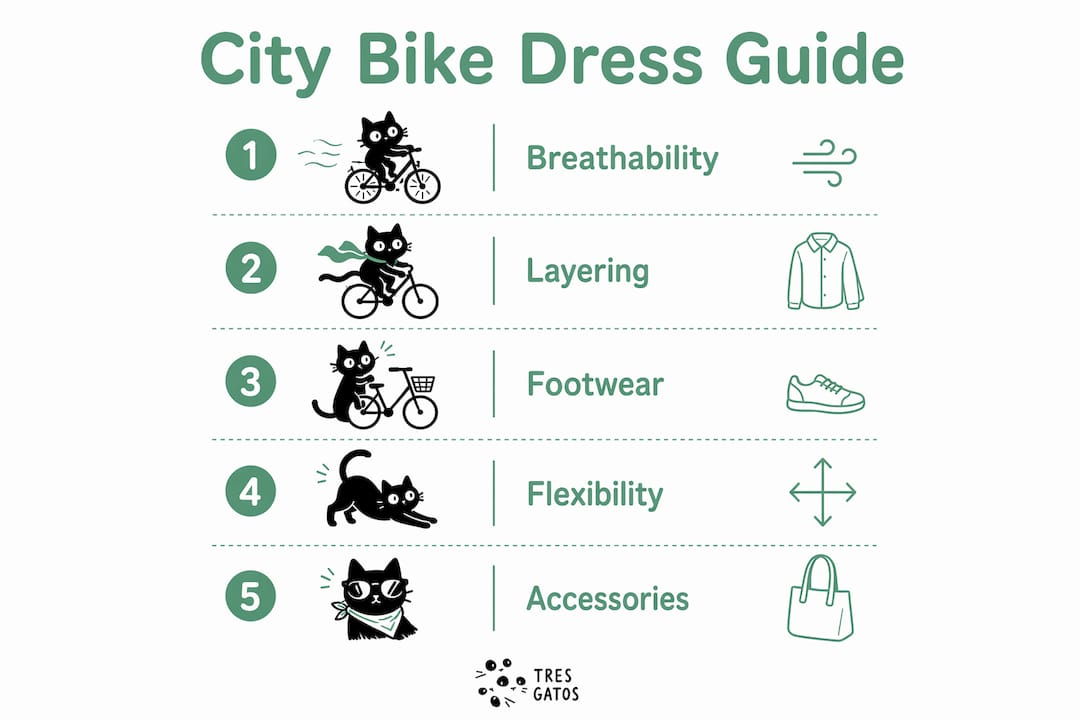
How to choose comfortable and safe footwear and pants for city cycling
The "movement mismatch" problem is real: clothing that feels fine for walking causes chafing or snagging while cycling. Nowhere is this more obvious than in your choice of shoes and pants.
For footwear, the rule is simple. You need a shoe with a sturdy, flat sole that transfers pedaling power without flexing uncomfortably, and that lets you walk normally when you get off the bike. Sneakers with rubber soles, like a classic low-top canvas shoe or a trail runner, cover both requirements. What to avoid:
- Sandals or flip-flops. Your foot can slip off the pedal, and the strap can catch on the crank. Not worth it.
- High heels or wedges. Balance on a bike depends on foot contact with the pedal. A raised heel changes that contact point and increases the chance of a fall.
- Slippery-soled dress shoes. Leather-soled shoes slide on metal pedals, especially when wet. If you are wearing them for dinner after the tour, pack them and ride in sneakers.
- Shoes with very long laces. Tuck them in or tie them short. A lace caught in a chain stops the ride immediately and can cause a fall.
For sturdy-soled footwear that also handles city walking, a low-profile trail runner or a leather sneaker with a rubber sole is the practical standard among experienced urban cyclists.
On the bottom half, the priority is stretch and hem length. Leggings, stretchy chinos, or athleisure pants allow the full range of motion that pedaling requires. Skinny jeans restrict the knee at the top of the pedal stroke and tend to chafe at the inner thigh after thirty minutes. Wide-leg trousers and palazzo pants look great standing still and become a hazard near the chain ring. If you love wide-leg pants, roll the right leg up to mid-calf before you get on the bike.
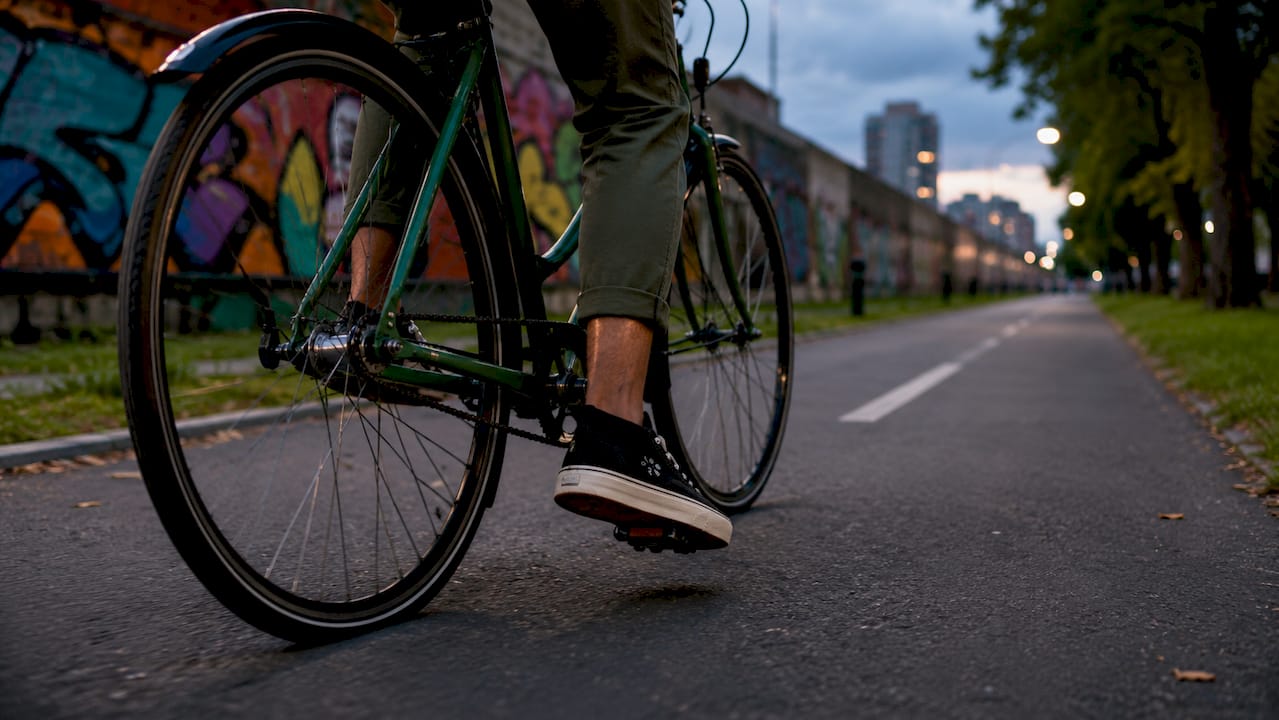
Pro Tip: If you are wearing regular pants, use a small binder clip or a rubber band around the right ankle to keep the hem away from the chain. It takes three seconds and saves a ruined pair of trousers.
How to dress comfortably in dresses or skirts while cycling in the city
Dresses and skirts are completely practical for city bike tours. The conditions are: lightweight fabric, a non-restrictive silhouette, and a hem that stays where you put it. Lightweight, breathable, and non-restrictive styles work best, and securing loose hems is the single most important step before you get on the bike.
Here is what works:
- Wear bike shorts or leggings underneath. This solves coverage, prevents inner-thigh chafing, and lets you stop, sit, and move without thinking about it. Dark-colored cycling shorts under a dress are invisible from the outside and make the whole experience more comfortable.
- Choose a hem at or above the knee. Midi and maxi lengths catch wind and can wrap around the wheel or chain. If you love a longer dress, secure the hem by knotting the fabric at one side, using a small safety pin, or tucking it into the shorts underneath.
- Try the penny trick. Gather the front hem of the skirt between your legs, place a coin or small object behind the fabric, and secure it with a hair tie or rubber band. It creates a temporary bloomer shape that keeps the fabric controlled without permanent alteration.
- Look for cycling-specific dresses. Terry Cycling makes a Transit Bike Dress in sun-protective polyester jacquard with UPF 50+ protection, which handles both sun exposure and movement well. It is not the only option, but it shows what purpose-built looks like.
- Avoid wrap dresses in wind. The overlap at the front can open while riding. A button-front or pullover style stays closed without any extra effort.
Pro Tip: A lightweight linen or cotton-blend dress in a loose A-line cut is the most forgiving shape for city cycling. It moves with you, dries fast if you sweat, and looks like you dressed intentionally rather than accidentally.
Tips for accessorizing and packing light for city bike touring
The best city bike tour outfit carries itself. That means pockets over bags, and function over decoration.
- Sunglasses that wrap or fit close to the face. Oversized fashion frames catch wind and vibrate off your nose on cobblestones. A sport wrap or a close-fitting frame stays put without needing adjustment every block.
- Hair secured before you start. A braid, a low bun, or a ponytail under the helmet works. Loose hair under a helmet becomes a tangled problem by the end of the first kilometer.
- A jersey with rear pockets. The Terry Touring Jersey includes three open rear pockets and a zip security pocket, which means your phone, snacks, and a folded map fit without a bag. Rear pockets on a cycling jersey sit at the lower back, accessible while riding, and do not shift your center of gravity the way a backpack does.
- A small crossbody bag if you need more space. Wear it across the chest rather than on one shoulder so it does not slide during turns. Keep it under 5 liters. Anything larger starts to affect your balance and comfort on longer stretches.
- Your packable jacket in the bike basket. Most city tour bikes have a front basket. Use it. Stuff your jacket in there when you warm up rather than tying it around your waist, where it can loosen and catch in the rear wheel.
For travel outfit ideas that translate well to city cycling, the consistent pattern is neutral, versatile pieces that work on and off the bike without requiring a change of clothes mid-tour.
Key takeaways
Dressing for a city bike tour means choosing breathable, flexible layers and practical footwear that perform on the bike and look right when you step off it.
| Point | Details |
|---|---|
| Fabric choice matters most | Merino wool and synthetic blends manage moisture; cotton holds sweat and becomes uncomfortable fast. |
| Layer with removability in mind | A packable windproof jacket handles city microclimates without adding bulk you cannot store. |
| Footwear needs a flat, sturdy sole | Sneakers with rubber soles work on pedals and on foot; avoid sandals, heels, and slippery dress shoes. |
| Dresses work with the right prep | Bike shorts underneath and a secured hem make any lightweight dress tour-ready. |
| Pockets beat bags | A jersey with rear pockets or a small crossbody bag keeps essentials accessible without affecting balance. |
What I have learned from watching people get on bikes
I have seen a lot of people show up to a bike tour in the wrong shoes. Not wrong in a dangerous way, just wrong in a "you will regret this by kilometer four" way. Leather-soled loafers on wet cobblestones in Paris. Platform sandals in Barcelona in July. Once, memorably, a man in a full suit who was genuinely fine and had clearly done this before.
The honest observation after years of watching groups ride is this: the people who enjoy the tour most are not the ones in the most technical gear. They are the ones who dressed practically enough to forget about their clothes entirely. A pair of stretchy pants, a breathable top, and shoes they can walk in. That is the whole formula.
What trips people up is the gap between "what I would wear for a walk" and "what works on a bike." Walking clothes and cycling clothes overlap significantly, but not completely. The movement mismatch is real. A flowy skirt that feels elegant on the Ramblas becomes a distraction the moment you start pedaling. A tight pair of raw denim jeans that looks sharp at dinner restricts your knee on every upstroke.
My practical recommendation: lay out what you plan to wear, then sit down and lift your knees to your chest. If the fabric pulls, bunches, or restricts, choose something else. That thirty-second test has saved more rides than any amount of gear research.
— Evgeny
Ride with Tresgatos: the outfit is yours, the city is ours

Tresgatos runs small-group bike tours in Barcelona, Paris, Madrid, and Valencia. Max nine people, three hours, one guide who actually lives in the city. Guides like Igor in Barcelona and Pierre in Paris know which streets are smooth, which café terrace is worth stopping at, and which shortcut makes the whole route click. You bring comfortable clothes and a working pair of legs. Everything else, including the bike, helmet, and insurance, is included. No surcharges. If you want to see what a Barcelona bike tour looks like when the guide is the experience rather than the route, that is where to start.
FAQ
What is the best outfit for a city bike tour?
Athleisure combinations like a breathable T-shirt, leggings, and rubber-soled sneakers are the practical standard for city bike tours. They allow full pedaling movement, dry quickly, and work equally well when you step off the bike.
Can I wear a dress or skirt on a city bike tour?
Yes. Wear bike shorts or leggings underneath for coverage and comfort, and secure any hem at or above the knee to prevent it from catching in the wheel or chain.
What shoes should I wear for a city bike tour?
Sneakers or trail runners with flat, rubber soles are ideal. They grip the pedal, allow normal walking at stops, and handle most urban surfaces. Avoid sandals, heels, and leather-soled shoes.
Do I need special cycling clothes for a casual city tour?
No. Technical cycling gear is not required. The priority is moisture-wicking fabric and a fit that does not restrict knee movement. Standard athletic or athleisure clothing meets both requirements for most city tours.
How do I handle changing weather on a city bike tour?
Bring a packable windproof layer you can remove and store in a basket or jersey pocket. City microclimates shift quickly, and a jacket you can stuff away in thirty seconds is more useful than one you have to carry all day.