
Valencia is a city that rewards people who slow down. To explore Valencia like a local resident means choosing the right neighborhood, eating lunch at 2:30 PM, cycling the Turia Gardens on a Tuesday morning, and knowing which paella restaurants to walk straight past. It is not about ticking off sights. It is about adopting a pace and a set of habits that make the city feel like yours, even for a week. This guide covers the neighborhoods, transport, daily rhythms, food culture, and community practices that separate a resident's Valencia from a tourist's version.
Which Valencia neighborhoods offer the most authentic local experience?
Neighborhood choice fundamentally shapes your trip in Valencia. Each district runs at a different speed and attracts a different kind of daily life. Getting this decision right is the single most useful thing you can do before you arrive.
| Neighborhood | Character | Best for |
|---|---|---|
| Ruzafa | Bohemian, young, independent cafes and markets | Travelers in their 20s and 30s wanting social energy |
| Ciutat Vella | Historic, medieval streets, central | First-timers who want walkable proximity to culture |
| El Cabanyal | Maritime village feel, working-class roots | Those who want a quieter, beachside residential rhythm |
| L'Eixample | Modernist architecture, wide boulevards | Travelers who prefer a calmer, more residential pace |
Ruzafa, Ciutat Vella, El Cabanyal, and L'Eixample each offer a distinct local culture, which means your daily experience changes completely depending on where you base yourself. Ruzafa is the neighborhood where locals in their 20s and 30s spend their evenings. It has independent coffee shops, a covered market, and a density of small restaurants that serve the neighborhood rather than passing tourists. Staying here means your morning coffee comes with a side of actual neighborhood life.
El Cabanyal sits close to the beach and still carries the feel of the fishing village it once was. The streets are narrow, the architecture is tiled and colorful, and the pace is noticeably slower than the center. L'Eixample, by contrast, offers wide tree-lined streets and a more composed, residential atmosphere. It suits travelers who want to feel like they live in a proper city apartment rather than a tourist zone.
Pro Tip: Rent an apartment rather than a hotel room. A kitchen means you shop at the local market, cook at home some nights, and fall into the same routines as your neighbors. That shift alone changes how you experience the city.
How to get around Valencia like a local
Movement habits reveal a lot about how a city actually works. In Valencia, the locals cycle, walk, and use public transit in a specific sequence that tourists rarely follow.
-
Use Valenbisi, the city bike-share system. A weekly pass costs a few euros and gives you unlimited short rides between stations across the city. Locals use it for commuting, errands, and casual movement. Pick up a bike near your apartment, drop it at a station near your destination. No parking, no fuss.
-
Cycle the Turia Gardens as your main corridor. The 9km dry riverbed park runs through the heart of the city and connects most major neighborhoods car-free. Locals use it daily for cycling, running, reading, and socializing. Treat it as your main artery, not a one-time attraction.
-
Walk within Ciutat Vella. The historic center is compact enough that walking is faster than any other option. The streets are narrow and pedestrian-friendly. Locals who live here rarely take transport for trips under 20 minutes.
-
Take the tram to the beach. Line 4 and Line 6 connect the city center to El Cabanyal and Malvarrosa beach. Locals use it on weekday mornings when the beach is quiet. Avoid it on summer weekend afternoons unless you enjoy standing very close to strangers.
-
Avoid taxis for short trips. Locals do not hail taxis to cross a neighborhood. If a destination is under 2km, they walk or cycle. Arriving somewhere by taxi signals immediately that you are not from here.
Pro Tip: The Turia Gardens is not a tourist park. Cycling or walking it regularly, rather than visiting once, is how residents use it. Bike-friendly Valencia old town routes make this even easier to build into your daily routine.
What daily routines and local rhythms shape Valencian life?
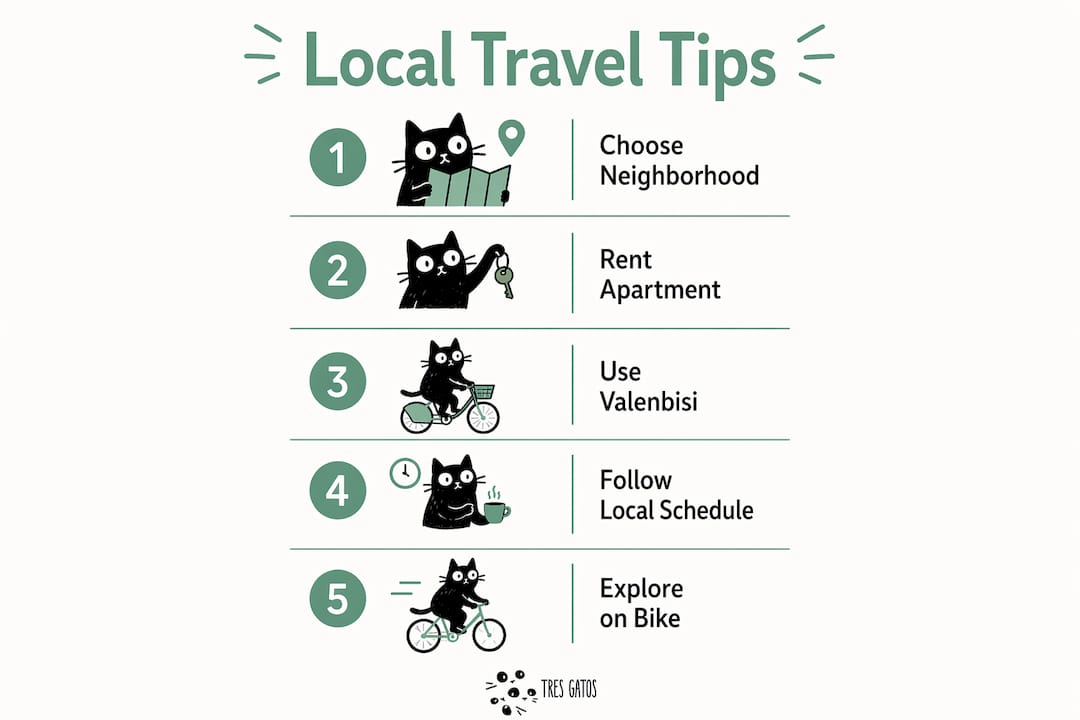
Valencians follow a delayed daily schedule built around outdoor living, long meals, and social time in the evening. Adjusting your own schedule to match this is the single most effective way to feel less like a visitor.
The day starts with a small breakfast, often just a coffee and a piece of toast with tomato and olive oil. Around 10:30 or 11 AM, locals take a mid-morning snack break. This typically means a sandwich and another coffee at a neighborhood bar. If you are eating a full breakfast at 9 AM and wondering why the city feels quiet, this is why.
Lunch is the main meal of the day and runs from roughly 2 PM to 4 PM. Restaurants fill up at 2:30 PM and stay busy until well past 3. Eating lunch at noon marks you as a tourist immediately. The afternoon after lunch is flexible and often slow. Some businesses close, parks fill up, and people move at a noticeably reduced pace.
"The secret to experiencing Valencia like a local is embracing a slower pace, prioritizing time outdoors, long meals, and social interactions over dense sightseeing." — Aire Holidays
Evenings in Valencia start late. Dinner before 9 PM is unusual. From around 7 PM, locals take a paseo, a social stroll through the neighborhood or along the seafront. Terraces fill up. The city gets louder and more social. Plan one major morning activity, leave your afternoons open, and eat dinner when the restaurants actually want to serve you.
Where and how to eat like a local in Valencia
Valencian food culture is specific, and getting it right matters more here than in most Spanish cities. Valencia invented paella, and locals have strong opinions about how and when it should be eaten.
- Eat paella at lunch, never dinner. Locals eat paella at 2:30 PM, cooked fresh over wood fires. Restaurants serving paella at night are almost always reheating pre-cooked rice. The difference in quality is significant.
- Go to El Palmar for the real thing. This small village south of the city is where traditional Valencian paella originates. Book in advance on weekends. It is a communal, unhurried meal, not a quick lunch stop.
- Avoid restaurants directly around the Cathedral. The streets immediately surrounding the Cathedral are tourist-trap territory for paella. Walk two or three blocks in any direction and the quality improves considerably.
- Try horchata and fartons at a horchatería. Horchata is a cold drink made from tiger nuts, served with elongated pastries called fartons. Locals drink it as an afternoon snack. Horchatería Santa Catalina in Ciutat Vella is a reliable spot that locals still actually use.
- Order a café con leche, not a latte. Coffee culture here is specific. A café con leche is half espresso, half hot milk. Ordering a flat white or a latte signals that you have not been paying attention.
Pro Tip: Visit Mercat de Ruzafa or Mercat Central on a weekday morning. Regular market visits build familiarity with vendors and give you access to seasonal produce that no restaurant menu can replicate. Go twice and the vendors start recognizing you.
How to engage with the community beyond sightseeing
The difference between visiting Valencia and living it comes down to how you spend the hours between the main sights. Community engagement is less about organized activities and more about consistent, low-key presence in the same places.
Valencia Greeters offer free personalized walking tours led by local volunteers. These are not professional sightseeing tours. They are small-group or solo walks with a resident who wants to show you their city. The focus is everyday life, neighborhood history, and the kind of detail that no guidebook covers. This is one of the most direct ways to get a genuine introduction to local life, and it costs nothing.
Here are a few other practices worth building into your stay:
- Shop at the same market stall twice. The second visit is when the vendor remembers you. By the third, you are getting the better tomatoes.
- Pick one cafe and return every morning. Frequenting one cafe consistently shifts your status from tourist to familiar face. Staff start making your order before you ask. That is a small thing that changes how the city feels.
- Use the beach like a resident. Locals go early on weekdays, bring their own food, and stay for hours. They do not arrive at noon with a selfie stick.
- Sit in a plaza without an agenda. Plaza del Tossal in Ruzafa or Plaça de la Reina in the evening. Order a drink. Watch the city move. This is not wasted time. It is the point.
For a structured introduction to the less touristy neighborhoods and local routes, a guided bike tour with a resident guide covers ground that would take days to find on your own.
Key takeaways
Living Valencia like a resident requires adjusting your schedule, your neighborhood, and your pace before you adjust your itinerary.
| Point | Details |
|---|---|
| Choose the right neighborhood | Ruzafa suits social travelers; El Cabanyal suits those wanting a quieter, beachside pace. |
| Match the local schedule | Eat lunch at 2:30 PM, skip dinner before 9 PM, and take your mornings slowly. |
| Use Valenbisi and Turia Gardens | Cycling the 9km riverbed park daily is how residents move, not a one-time tourist activity. |
| Eat paella at lunch in El Palmar | Paella served at dinner is almost always reheated. Book El Palmar on weekends in advance. |
| Build repeat habits | One market stall, one cafe, one plaza. Returning to the same spots is what makes a city feel like yours. |
Why slow travel in Valencia is not optional
I have spent time in a lot of European cities, and Valencia is the one where rushing punishes you most visibly. You can feel it within a day. Arrive with a packed itinerary and the city simply does not cooperate. Restaurants are closed when you want lunch. Plazas are empty when you want atmosphere. The beach is crowded when you planned a quiet swim.
The locals are not being difficult. They are just living on a different clock, and it is a better one. The mid-morning snack break, the long lunch, the slow evening paseo: these are not inefficiencies. They are the structure of a day designed around pleasure rather than productivity.
What I have found is that the fastest way to feel at home in Valencia is to pick one cafe and go back every morning. Not because of the coffee, though the coffee is good. Because by day three, the person behind the counter nods when you walk in. That nod is worth more than any guided tour. It means you are no longer a visitor in their eyes, and that changes how you carry yourself in the rest of the city.
The Turia Gardens taught me the same lesson. I walked it once on my first trip and thought: nice park. I cycled it every morning on my second trip and understood why it exists. It is not a park. It is the living room of the city.
— Evgeny
See Valencia on a bike with someone who actually lives here
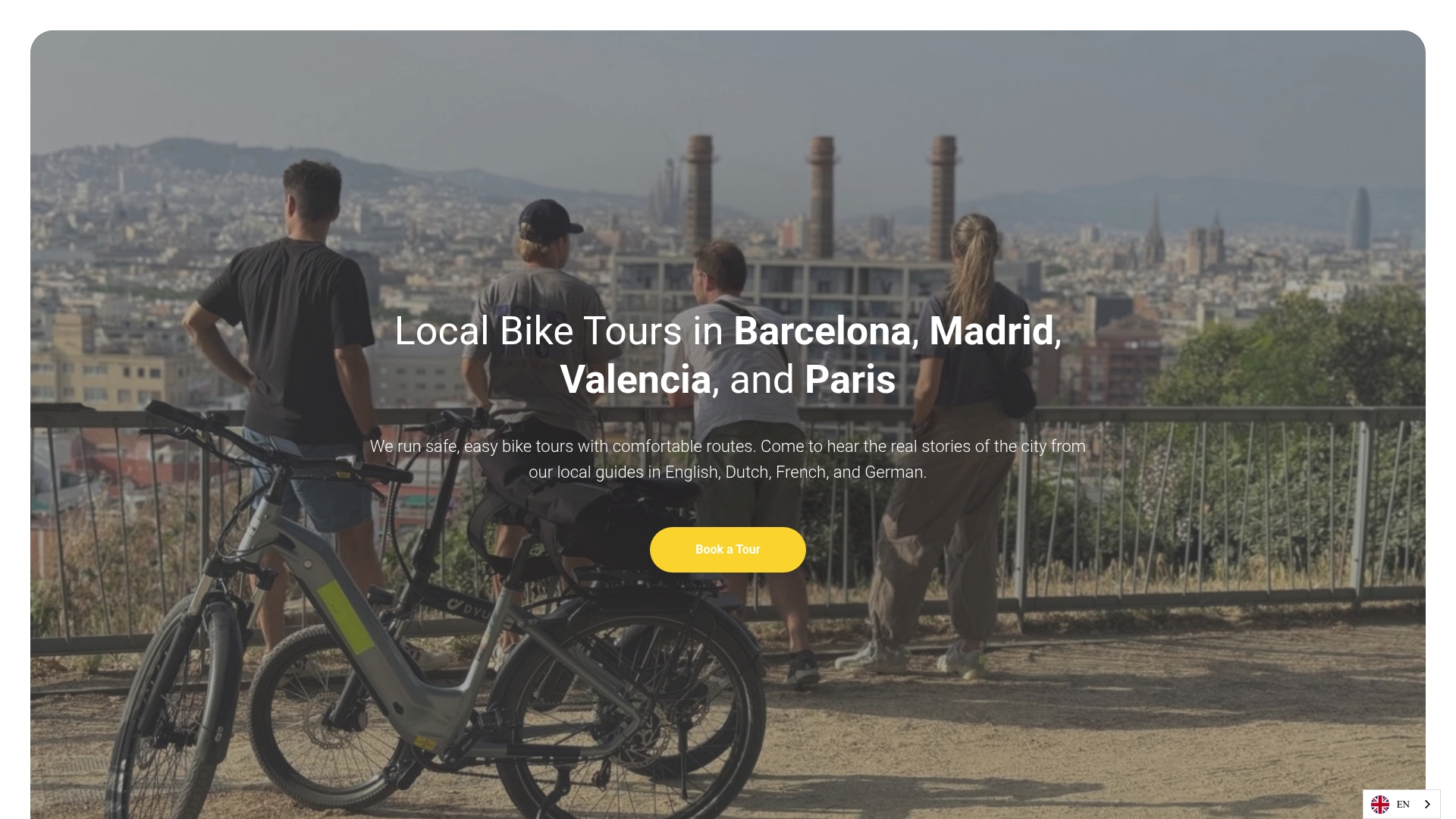
The most efficient way to get oriented in Valencia is to spend three hours on a bike with a guide who actually lives in the city. Tresgatos runs small-group Valencia bike tours with a maximum of nine people, one multilingual local guide, and a pace that lets the neighborhoods land rather than blur past. The route covers Turia Gardens, the historic center, and the residential streets that most visitors never reach. Bike, helmet, and insurance are included. No surcharges. If you want to know which paella restaurant to book and which plaza to sit in on a Thursday evening, the guide is the person to ask. Book your Valencia tour and start with the right foundation.
FAQ
What is the best neighborhood to stay in for a local feel?
Ruzafa is the top choice for travelers who want social energy, independent cafes, and a young local crowd. El Cabanyal suits those who prefer a quieter, beachside residential atmosphere.
When should I eat paella in Valencia?
Eat paella at lunch, ideally around 2:30 PM. Restaurants serving paella at dinner are typically reheating pre-cooked rice, which locals consider a significant drop in quality.
Is Valenbisi easy to use as a visitor?
Yes. A weekly Valenbisi pass costs a few euros and gives you access to bike-share stations across the city. It is the most practical way to move between neighborhoods the way residents do.
What is the best time of year to visit Valencia?
Late May offers the best balance of weather and crowd levels, with daytime temperatures between 72°F and 82°F and Mediterranean water around 68°F to 75°F, before peak summer tourism arrives.
What are Valencia Greeters?
Valencia Greeters are local volunteers who offer free personalized walking tours to small groups or solo travelers, focused on everyday neighborhood life rather than conventional sightseeing.