
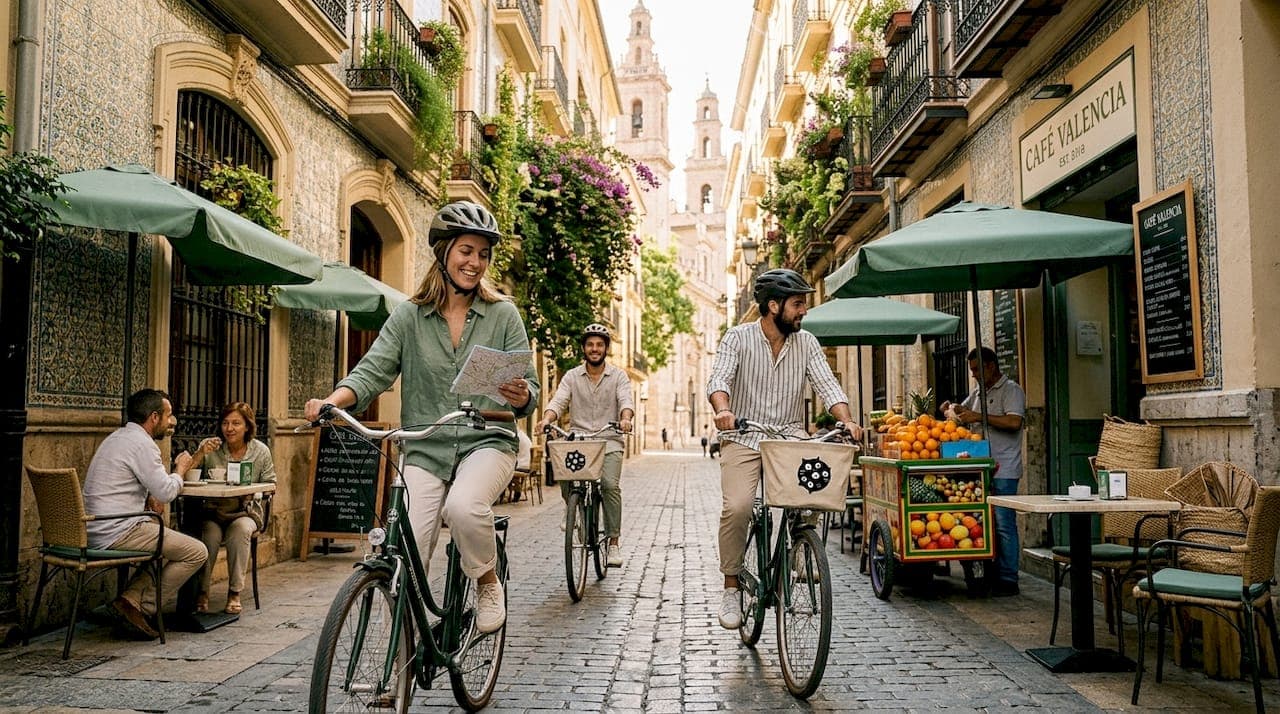
Most people who visit Valencia see the Cathedral, walk through the Central Market, and call it done. That's not a criticism. Those places earned their reputation. But if you want to know what Valencia actually feels like on a Tuesday afternoon, you need to get on a bike and go somewhere else. A valencia hidden gems bike tour takes you into the city's quieter neighborhoods, past street art that won't be there next month, into gardens that locals treat as their own backyard. This article walks you through what to look for in a tour, which spots are worth your time, and how to match the route to the kind of traveler you are.
Table of Contents
- Key Takeaways
- How to choose the right Valencia hidden gems bike tour
- 1. Jardins de Monforte: the garden most tourists walk past
- 2. Ruzafa neighborhood: cafes, alleys, and inner gardens
- 3. Cartografías de la memoria negra: history in the streets
- 4. Turia Gardens beyond the main stretch
- 5. La Marina and the Port area
- 6. L'Eixample: the streets nobody photographs
- 7. Artisan markets and street art beyond Central Market
- Comparing the main bike routes and their highlights
- Matching the right tour to your travel style
- My take on what actually makes these tours worth it
- Ride Valencia with a guide who actually lives there
- FAQ
Key Takeaways
| Point | Details |
|---|---|
| Guide matters more than route | A local who actually lives in Valencia will show you things no map lists. |
| Small groups reach better places | Groups of 9 or fewer can stop, linger, and enter spaces big tour buses never reach. |
| Cultural depth rewards slow riders | Pacing down lets the city's layered history land, especially in neighborhoods like Ruzafa and the old center. |
| Valencia's flat layout is a gift | The city's flat cycling corridors make it one of Europe's most accessible cities to cover by bike. |
| History is embedded in street names | Some of Valencia's most significant stories are hidden in street names and require a guide to decode. |
How to choose the right Valencia hidden gems bike tour
Not all bike tours in Valencia are equal. Some follow the same five landmarks every group hits before lunch. Others take you somewhere you couldn't have found with two hours and a good map app. Here's what to evaluate before you book.
Group size. Anything over twelve people and the guide is managing logistics, not telling stories. Small groups move faster, stop more easily, and get into spaces that don't accommodate crowds. Aim for nine or fewer.
Guide background. A knowledgeable local guide shares stories, avoids busy streets, and introduces places travelers rarely find alone. Ask whether your guide actually lives in the city, not just works there.
Route focus. Valencia has multiple layers: medieval history, maritime trade, modern arts districts, early African community history. Decide what you care about, then ask whether the tour covers it. A route through Ruzafa and L'Eixample is a different experience from one that covers the Port and La Marina.
Bike type and comfort. Most of Valencia is flat, which makes standard bikes perfectly workable. E-bike options suit riders who want to cover more ground or simply don't want to arrive sweaty. Check in advance what's included.
Safety and traffic. Routes that rely on segregated paths like Turia Gardens or dedicated cycling lanes are far more relaxed than those threading through car traffic. If you're bringing kids or newer cyclists, this matters a lot.
Pro Tip: Ask the tour company how many of their guides have been with them for more than a year. High guide turnover is a reliable sign of a company that treats guides as interchangeable, which means the stories you hear will be interchangeable too.
1. Jardins de Monforte: the garden most tourists walk past
This place sits near the Turia Gardens, and most tourists skip it entirely. Jardins de Monforte is a 19th-century garden with formal hedges, marble statues, and a stillness you don't expect five minutes from a busy boulevard. A good guide stops here not because it's on the checklist, but because it genuinely surprises people.
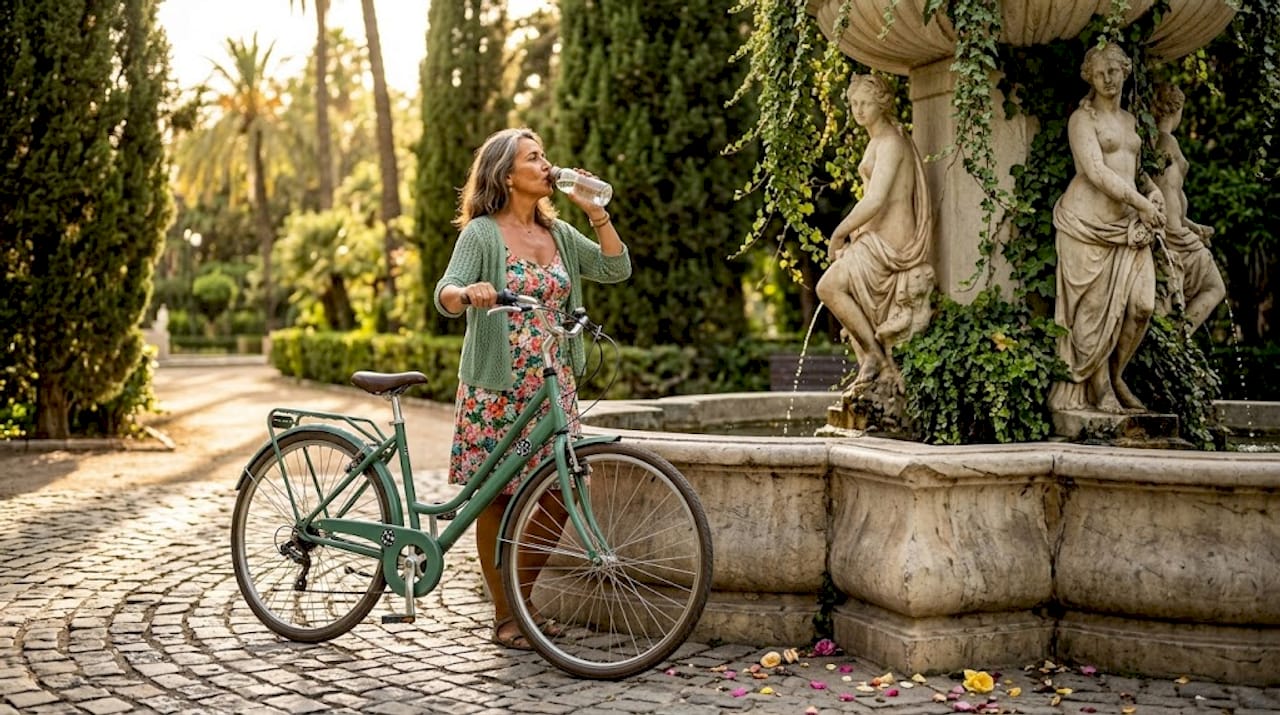
It's the kind of place that rewards you for going slowly. Bring water, take your time, and notice the detail in the stonework.
2. Ruzafa neighborhood: cafes, alleys, and inner gardens
Ruzafa has been Valencia's creative neighborhood for a while now, but it still has corners that feel like they belong to the people who live there. Bluebell Coffee is a good example: a small cafe with a hidden inner garden that most visitors walk past on the street outside, not knowing it exists.
On a bike tour, you can thread through the narrower streets at low speed, which is how you actually see Ruzafa. Riding through quickly misses the point. The neighborhood rewards the kind of pace that lets you notice a doorway, a mural, a courtyard.
Pro Tip: If your guide offers to stop for coffee anywhere in Ruzafa, say yes. The places they choose are not the places with the A-boards on the sidewalk.
3. Cartografías de la memoria negra: history in the streets
This is one of the most overlooked aspects of Valencia for visitors, and one of the most significant. Valencia's Cartografías de la memoria negra project uses routes, archives, and cultural memory to make a largely invisible history visible. Between 1490 and 1520, more enslaved Africans arrived in Valencia than in the Americas during the same period. Up to 14% of the city's population may have been enslaved at one point.
That history is literally in the street names. Carrer dels Negres, now renamed Calle de las Almas, is one example. A guide who knows this history can show you these locations in context, not as dark tourism, but as a more complete version of the city's past. It changes how you look at the old center.
Not every tour covers this. Ask specifically before you book.
4. Turia Gardens beyond the main stretch
Most visitors know the Turia Gardens as the green corridor running through the city. The well-known sections near the City of Arts and Sciences get the most foot traffic. But the full route covers 9 km of greenery, historic bridges, and calm stretches that thin out considerably once you leave the central sections.
The quieter parts of Turia are genuinely peaceful. Families cycling with small children, older residents on their morning walk, a few runners. On a bike, you can cover the less crowded sections in a way that's impossible on foot and still have time to stop at the spots that actually reward a closer look.
5. La Marina and the Port area
La Marina gets mentioned in travel writing as Valencia's "up-and-coming" waterfront, but that framing misses something. The Port of Valencia and La Marina area carry real maritime history, much of it tied to trade routes that shaped the medieval city. The America's Cup infrastructure left behind some striking architecture, and the atmosphere on a weekday morning is notably calm.
A bike is the right tool for this area. Distances between points of interest are short but slightly too spread out for a comfortable walk. You cover the ground easily, and a guide who knows the maritime history adds a layer that the scenery alone doesn't give you.
6. L'Eixample: the streets nobody photographs
L'Eixample is Valencia's early 20th-century expansion district. It has the grid layout and the broad boulevards, but tucked into it are quieter plazas and streets with real architectural character that don't appear in travel photography because they're not dramatic enough for Instagram. They are, however, very pleasant to be in.
This is where you notice Valencia's reputation as Spain's most underrated city making actual sense. The city's 'underrated' status means you can find genuine, non-commercialized moments just a few streets from the main landmarks. On a bike, guided by someone who lives in the neighborhood, L'Eixample stops being a transit zone and becomes somewhere worth spending time.
7. Artisan markets and street art beyond Central Market
Tourists often miss the smaller artisan markets and street art pockets in neighborhoods further from the Cathedral. These places give a more honest picture of local daily life than the main market, which is genuinely impressive but primarily visited by other tourists by mid-morning.
A good Valencia cycling adventure will route you past at least one or two of these spots. The street art in particular changes regularly. A guide who walks or bikes these areas regularly knows what's new and what's worth stopping for.
Comparing the main bike routes and their highlights
| Route | Approx. length | Main draw | Difficulty | Best for |
|---|---|---|---|---|
| Turia Gardens full route | 9 km | Nature, bridges, calm stretches | Easy | Families, all ages |
| Ruzafa and L'Eixample | 4 to 6 km | Cafes, culture, street art | Easy | Food lovers, social travelers |
| Old center with cultural history | 3 to 5 km | Black history, street names, architecture | Easy | History buffs, curious travelers |
| La Marina and Port | 5 to 7 km | Maritime history, open waterfront | Easy | Couples, architecture fans |
| Combined city loop | 10 to 14 km | Mix of all the above | Moderate | Active travelers, longer stays |
Valencia's flat urban layout is genuinely rare among major European cities. That makes it possible to combine several of these routes in a single three-hour ride without anyone arriving exhausted. The trade-off is depth versus breadth. A tour that tries to cover everything ends up explaining nothing. The routes that go slowly and tell specific stories are the ones people remember.
Matching the right tour to your travel style
Different travelers want different things. Here's a practical breakdown.
- History and cultural narrative: Go specifically for routes that cover the Cartografías de la memoria negra project and the old city center. Ask your tour company whether their guide covers Black history and early trade routes, not just medieval Christian architecture.
- Nature and a slower pace: Jardins de Monforte combined with the quieter sections of Turia Gardens is the right combination. These areas don't require rushing and reward lingering.
- Food, social life, and local flavor: Ruzafa and the surrounding streets are the answer. A guide who drinks coffee there on their days off will know which door to knock on.
- Active families or groups: The flat La Marina stretch and Turia Gardens are safe, manageable, and interesting enough to hold attention across different ages and fitness levels.
Pro Tip: When you contact a tour company, ask them to name a specific street or cafe they visit on the route. If they can't, or if the answer sounds like marketing copy, that tells you something about how well the guide actually knows the area.
My take on what actually makes these tours worth it
I've seen a lot of bike tours in European cities, and the gap between a good one and a forgettable one comes down to one thing: whether the guide lives in the city or performs it.
The tours that cover Valencia's layered history, including the parts most tour companies don't touch, are the ones that change how you see a city. Walking past Calle de las Almas without knowing what the street name used to be is one experience. Standing there with a guide who explains why it was renamed, and what that change meant, is something else. That kind of moment doesn't happen on a big group tour where the guide is managing crowd dynamics.
What I'd push back on is the assumption that "off the beaten path" means physically remote. Some of Valencia's most overlooked spots are literally 200 meters from the Cathedral. The issue isn't distance. It's whether anyone on the tour has thought carefully about what to say when you get there.
Pace also matters more than people realize. You can cover Turia Gardens and Ruzafa in two hours if you don't stop. You can spend three hours in a smaller area and come away with a genuinely different understanding of the city. The second option is harder to sell online. It's also far better.
— Evgeny
Ride Valencia with a guide who actually lives there
If what you've read here is the kind of ride you're looking for, Tresgatos runs a Valencia bike tour that covers Turia Gardens, Ruzafa, and cultural history routes with a guide who actually lives in the city. Three hours, maximum nine people, and no scripted commentary. The guide is the product.

All bikes, helmets, and insurance are included. No add-ons, no surprises at checkout. If you want to see what's covered or book your spot, the link has everything you need. You can also browse Tresgatos' full tour lineup across Valencia, Barcelona, and Paris.
FAQ
What does a Valencia hidden gems bike tour typically include?
Most quality tours include a bike, helmet, and a local guide who covers quieter neighborhoods and cultural sites beyond the main landmarks. The best ones are small groups of nine or fewer.
How long are bike tours in Valencia?
Most guided tours run two to three hours and cover 5 to 14 km depending on the route. Valencia's flat layout means even casual cyclists can handle the full distance comfortably.
Is Valencia good for cycling?
Yes. Valencia has one of Europe's most bike-friendly urban layouts, with 9 km of segregated green paths through Turia Gardens alone, plus dedicated cycling lanes through most neighborhoods.
What neighborhoods are worth seeing by bike?
Ruzafa, L'Eixample, La Marina, and the quieter stretches of Turia Gardens are all worth visiting. Local knowledge makes the difference in knowing where to stop and what to look for.
Do Valencia bike tours cover the city's history?
They can, but not all of them do. Tours that specifically address the Cartografías de la memoria negra project and Valencia's early African community history are less common, so ask the tour company directly before booking.