
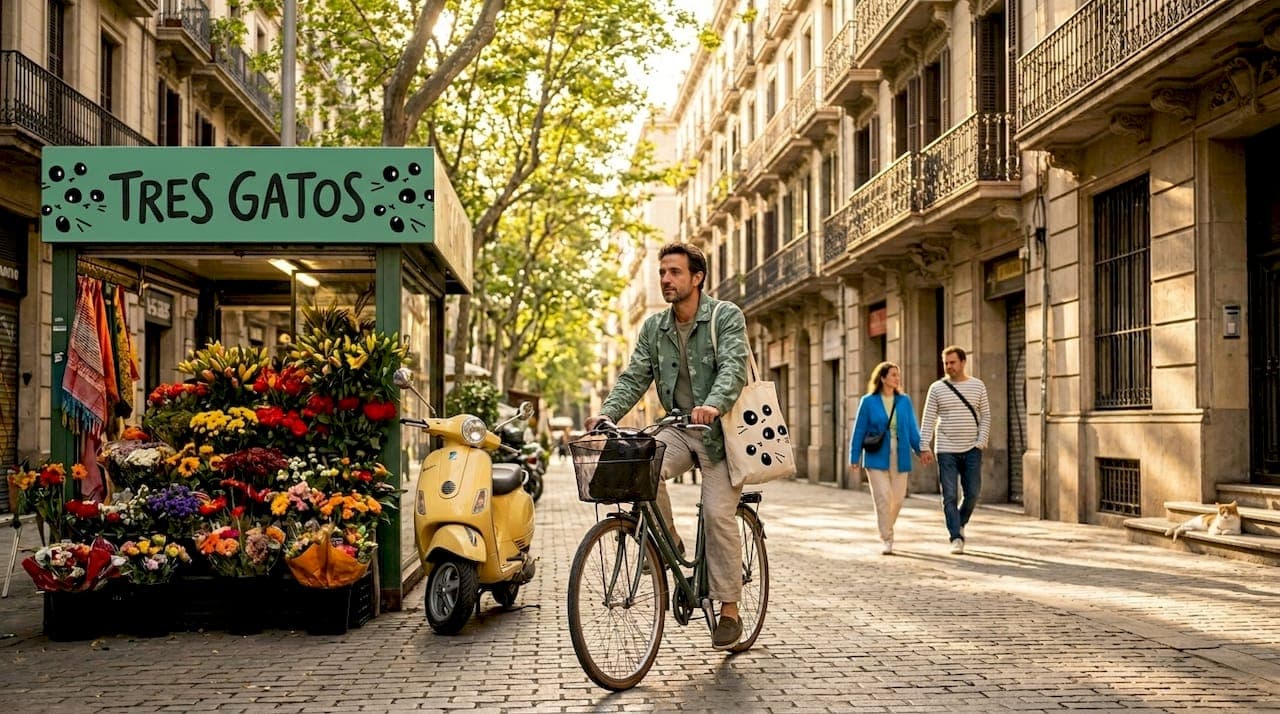
Walk up to any local cyclist in the Eixample neighborhood and ask them why Barcelona locals cycle different routes than tourists. They will probably shrug, point vaguely toward the beach promenade, and say something like "that's where the tourists go." But the real answer runs deeper than personal preference. It involves deliberate city planning, social pressure from overtourism, hard-won knowledge of infrastructure, and daily routines that have nothing to do with sightseeing. Understanding these factors changes how you ride this city completely.
Table of Contents
- Key Takeaways
- Why Barcelona locals cycle different routes than tourists
- How overtourism pushes locals off popular paths
- Safety, infrastructure, and what locals actually know
- Cultural habits that shape how locals ride
- How to cycle more like a local in Barcelona
- My take on what cycling reveals about Barcelona
- Ride Barcelona the way locals do
- FAQ
Key Takeaways
| Point | Details |
|---|---|
| Superblocks reshape local routes | Barcelona's superblock system pushes locals onto quieter perimeter streets rather than central tourist corridors. |
| Overtourism shifts ride timing | Over three-quarters of residents feel tourism has peaked, leading locals to adjust both routes and departure times. |
| Infrastructure knowledge matters | Locals use red carpet zones and bike-boxes that tourists often miss or misread entirely. |
| Local cycling serves daily life | Errands, school runs, and commutes shape local route logic far more than any landmark does. |
| Tourists can ride smarter | Choosing off-peak hours and peripheral lanes puts you on roads locals actually use. |
Why Barcelona locals cycle different routes than tourists
The short answer is that locals are not trying to reach the Sagrada Família. They are trying to get to work, drop off their kids, or pick up groceries. The routes that make sense for those goals look almost nothing like the routes that make sense for someone who wants to photograph the Arc de Triomf on the way to the beach.
But there is a structural reason too, one that most visitors never hear about. Barcelona has spent the last decade reshaping its streets through a system called superblocks (superilles in Catalan). These are clusters of roughly nine city blocks where through-traffic is filtered onto perimeter roads and interior streets are calmed to 10 km/h. Cars cannot cut through. Cyclists and pedestrians can.
The practical effect is striking. Inside a superblock, the streets are quiet enough to feel like a different city. Outside, on the perimeter roads that carry the filtered motor traffic, things move faster and feel more urban. Locals know which side of that boundary they want to be on, and they plan their routes accordingly.
- Perimeter roads carry heavier traffic but also have better-developed cycle infrastructure, including segregated lanes.
- Interior superblock streets are slower and calmer, ideal for short hops between neighborhood destinations.
- Traffic calming inside superblocks also improves air quality and reduces noise, making them genuinely pleasant to ride through.
- Tourists, unaware of this logic, tend to plot straight lines between landmarks, which often cuts across both zones without taking advantage of either.
Pro Tip: Before you ride, pull up Barcelona's official cycling map and look for the superblock boundaries in the Eixample grid. Routing along the interior streets between Sant Antoni and the Universitat area gives you a calm, fast corridor that most visitors on rental bikes never find.
How overtourism pushes locals off popular paths
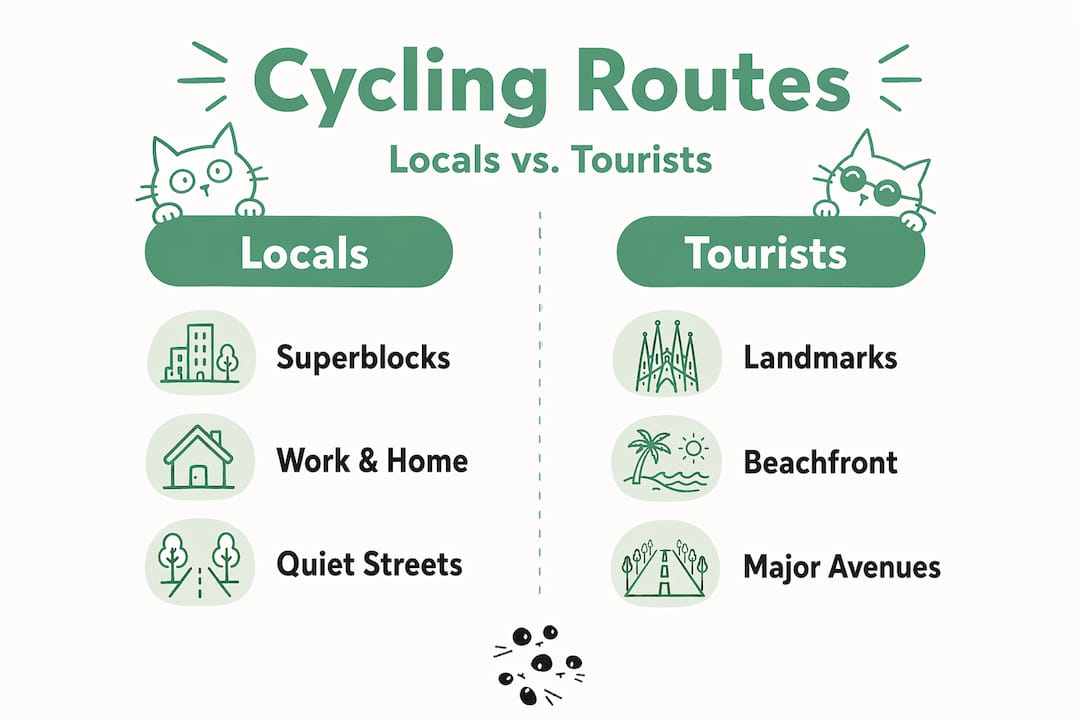
This is where the sociology gets interesting. 76% of Barcelona residents feel that tourism in the city has reached its ceiling. That sentiment does not stay abstract. It shows up in behavior, including cycling behavior.
Locals avoid La Rambla on a Saturday afternoon not because they do not know it exists, but because riding through a crowd of tourists pulling rolling suitcases is genuinely unpleasant and, at times, unsafe. The same applies to the beachfront promenade between Barceloneta and the Fòrum, which tourists cycle prominently despite the congestion and the awkward mix of pedestrians, e-scooters, and rental bikes.
The social dimension goes further than mere inconvenience. Rising real estate prices linked to short-term rentals have reshaped entire neighborhoods, and locals feel the tension of that change daily. Avoiding tourist-heavy cycling corridors is, for many residents, a small act of reclaiming their city.
Here is what that looks like in practice:
- Locals shift their commute rides to before 8:00 a.m. or after 7:00 p.m. to avoid peak tourist hours on shared paths.
- The Carrer de la Marina and Avinguda Diagonal corridors see heavy local cycling traffic precisely because tourists rarely venture there.
- Gràcia, Poblenou, and Sant Martí are neighborhood cycling hubs for locals that barely register on most tourist maps.
- The Sagrada Família perimeter is treated by local cyclists the way drivers treat a known traffic jam: you go around it, not through it.
Safety, infrastructure, and what locals actually know
Barcelona now has over 240 km of cycle lanes, and the network has grown substantially in recent years. But not all of it is equally legible to someone visiting for four days.
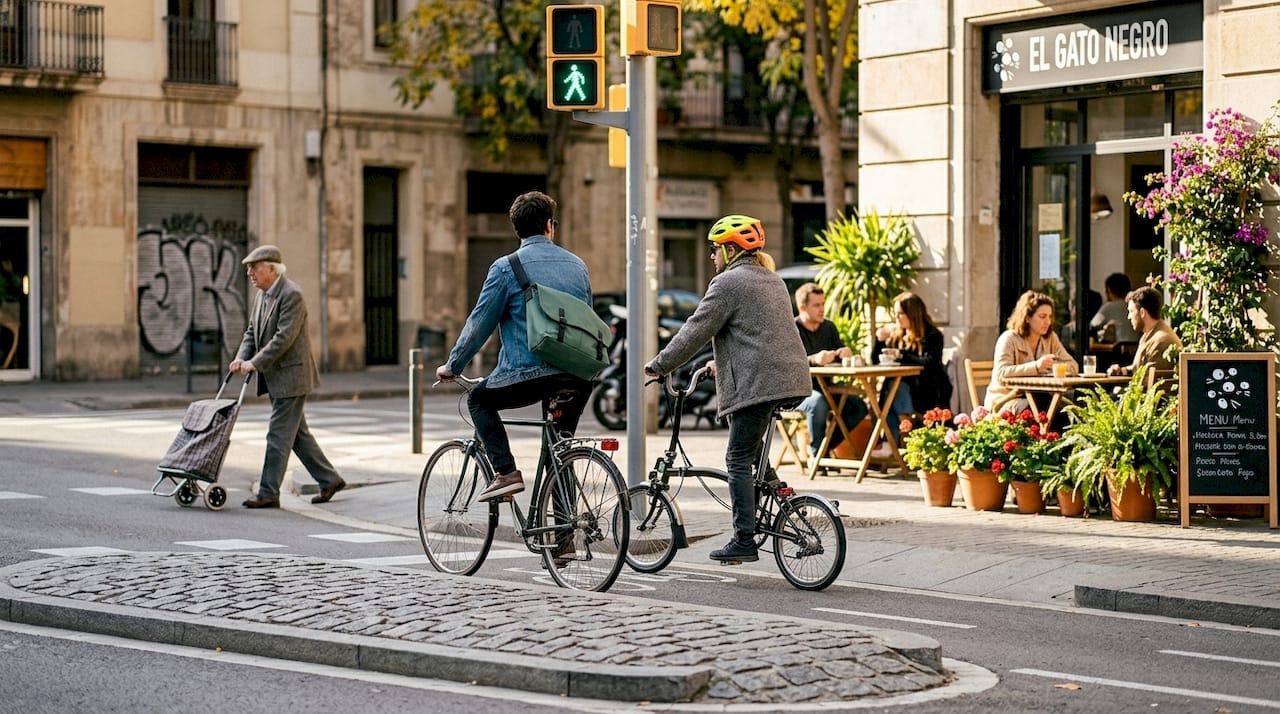
Locals understand the infrastructure in a way that takes time to develop. They know which intersections have bike-boxes (advanced stop lines that let cyclists position ahead of motor traffic at red lights). They know where the red carpet zones are, the stretches of red-painted asphalt that signal dedicated cycling space. The recent extension of the Travessera de les Corts cycle lane, for example, includes exactly these features: advanced stop lines, improved sightlines, and better junction design. Locals use it. Most tourists have never heard of it.
Tourists, by contrast, tend to prioritize scenery over safety. The seafront path looks beautiful and feels obvious on a map. It is also shared with pedestrians, poorly enforced, and frequently chaotic near the beach access points. Here is a practical sequence for reading local cycling infrastructure like a resident:
- Look for the red asphalt. Red carpet zones are not decorative. They mark space that is legally yours as a cyclist, and drivers in Barcelona generally respect them.
- Find the bike-box at intersections. Position yourself there at red lights. It puts you ahead of turning cars and makes you visible.
- Check whether a lane is segregated or painted. A painted lane on a fast road is not the same as a physical barrier. Locals know which painted lanes are safe and which ones they treat as advisory.
- Avoid the beach promenade between 10:00 a.m. and 6:00 p.m. The infrastructure there is genuinely poor for cycling, regardless of how pleasant it looks.
Pro Tip: The Poblenou neighborhood has some of the best-designed, least-crowded cycle infrastructure in the city. The Rambla del Poblenou is a wide, calm boulevard with a proper lane, and it connects to the coastal path at a point where crowds thin out considerably. Locals from the Sant Martí district use it daily.
For more on urban rider safety in cities like Barcelona, understanding how to read road markings and junction design makes a measurable difference in how confidently you ride.
Cultural habits that shape how locals ride
Locals prioritize routes that connect to work, school, and shops. That sounds obvious, but it has a profound effect on route logic. A local cycling from Sarrià to the Eixample is solving a completely different problem than a tourist cycling from the Gothic Quarter to Park Güell. The local wants the fastest, safest connection between two functional points. The tourist wants the most scenic path between two landmarks.
This shapes not just where people ride, but how they ride.
- Locals ride at a purposeful pace. They are not stopping to photograph the street art in El Born, even though it is genuinely worth stopping for.
- Bike use among residents is tied to neighborhood hubs: markets, schools, metro stations, and local bars. The cycling network makes sense when you know where those hubs are.
- Barcelona residents tend to use bikes for trips under 4 km. Longer distances go to the metro. Tourists often try to cycle distances that locals would not attempt on a bike.
- Unwritten etiquette matters. Locals signal turns with their hands, yield to pedestrians at shared crossings without being asked, and rarely ride two abreast on busy lanes. Tourists, understandably, have not had time to absorb these norms.
Understanding this gap is not a criticism of tourists. It is just the difference between someone who rides a route every day and someone riding it for the first time. The city reads differently when you know it.
How to cycle more like a local in Barcelona
You do not need to live here to ride smarter. A few adjustments make a real difference.
| Tourist approach | Local approach |
|---|---|
| Beachfront promenade all day | Coastal path before 9:00 a.m. or after 7:00 p.m. |
| La Rambla as a cycling route | Carrer del Consell de Cent or Carrer de Provença through the Eixample grid |
| Sagrada Família perimeter | Avinguda de Gaudí connecting to the Hospital de Sant Pau, far less crowded |
| Rental bike from tourist hub | Bicing station or local rental in Gràcia or Poblenou |
| Landmark to landmark routing | Neighborhood to neighborhood routing via superblock interiors |
Beyond the route choices themselves:
- Ride before 9:00 a.m. The city is a different place. Markets are opening, locals are commuting, and the streets belong to residents.
- Use the Barcelona cycling map alongside neighborhood guides to understand which areas have genuine local life worth cycling through.
- Respect the cycle lane hierarchy. If a lane is marked for bikes, use it. Do not ride on the pavement because it feels safer. It is not, and it frustrates locals.
- Try the Eixample interior streets on a Sunday morning. The superblock logic makes them almost car-free, and you get the grid without the traffic.
Pro Tip: Download the Bicing app even if you are not a subscriber. The map shows you every public bike station in the city, which doubles as a real-time guide to where locals actually cycle. Stations with high turnover are on routes people actually use.
My take on what cycling reveals about Barcelona
I have ridden this city hundreds of times, in every season, at every hour. What strikes me most is not the infrastructure or the overtourism numbers. It is the silent negotiation happening on every shared path, every day.
Locals and tourists are not enemies on these roads. But they are solving different problems, and the friction that results is real. I have watched a local commuter on a cargo bike try to navigate through a cluster of tourists on rental bikes stopped in the middle of a cycle lane to look at a map. Nobody is wrong. Both have a right to be there. But the experience is genuinely different depending on which side of that moment you are on.
What I have come to believe is that the best cycling routes in Barcelona are not the ones on any tourist map. They are the ones that reveal how the city actually functions. The Eixample grid at 7:30 a.m. The Poblenou industrial streets repurposed into cycling corridors. The quiet superblock interiors where kids ride to school and neighbors stop to talk. These are not hidden. They are just not marketed, because the people who use them do not need to market them.
The infrastructure is genuinely getting better. The Travessera de les Corts extension, the expanding superblock network, the ongoing segregation of lanes that were previously just painted lines. Barcelona is building a city for cyclists who live here. Tourists who understand that will have a far better time on two wheels than those who stick to the promenade.
— Evgeny
Ride Barcelona the way locals do
If you want to feel the difference between a tourist route and a local one, the most direct way is to ride with someone who actually lives here.
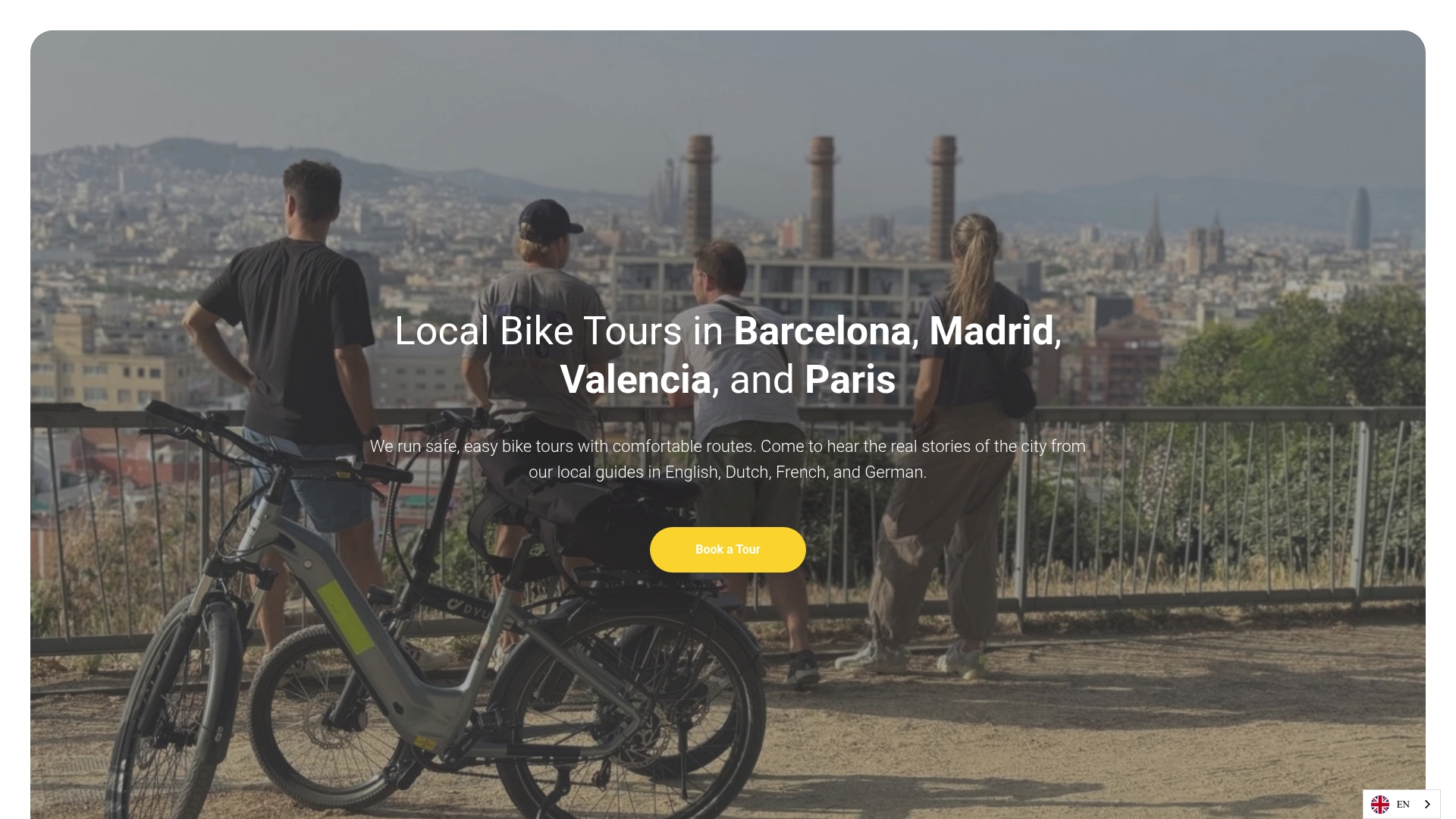
Tresgatos runs small-group bike tours in Barcelona with a maximum of nine people and one guide who calls this city home. The routes are not the beachfront loop. They are the ones that show you how the city works: the superblock interiors, the neighborhood markets, the cycle lanes that locals use every day. Bike, helmet, and insurance are included. No hidden charges. You can also browse all available tours across Barcelona, Paris, and beyond. Three hours with someone who knows where to go, and why.
FAQ
Why do locals avoid La Rambla when cycling?
La Rambla has no dedicated cycle lane and is heavily congested with pedestrians and tourists, making it slow and unsafe for regular cycling. Locals route through parallel streets in the Eixample or Gothic Quarter instead.
What are Barcelona's superblocks and how do they affect cycling?
Superblocks are clusters of nine city blocks where car traffic is filtered to perimeter roads and interior streets are calmed to 10 km/h, creating quieter cycling conditions that locals prefer for short neighborhood trips.
What are the best cycling routes for locals in Barcelona?
Local cycling routes Barcelona residents favor include the Eixample interior grid, Travessera de les Corts, Rambla del Poblenou, and Avinguda Diagonal. These connect neighborhoods efficiently and use well-designed cycle infrastructure.
When is the best time for tourists to cycle like locals?
Riding before 9:00 a.m. or after 7:00 p.m. significantly reduces congestion on shared paths. These are the hours when residents shift their rides to avoid tourist-heavy corridors.
Are Barcelona cycling tips for tourists available through guided tours?
Yes. Small-group guided tours, like those run by Tresgatos, use local-preferred routes and explain the infrastructure logic behind them, giving visitors practical knowledge they can apply independently afterward.