
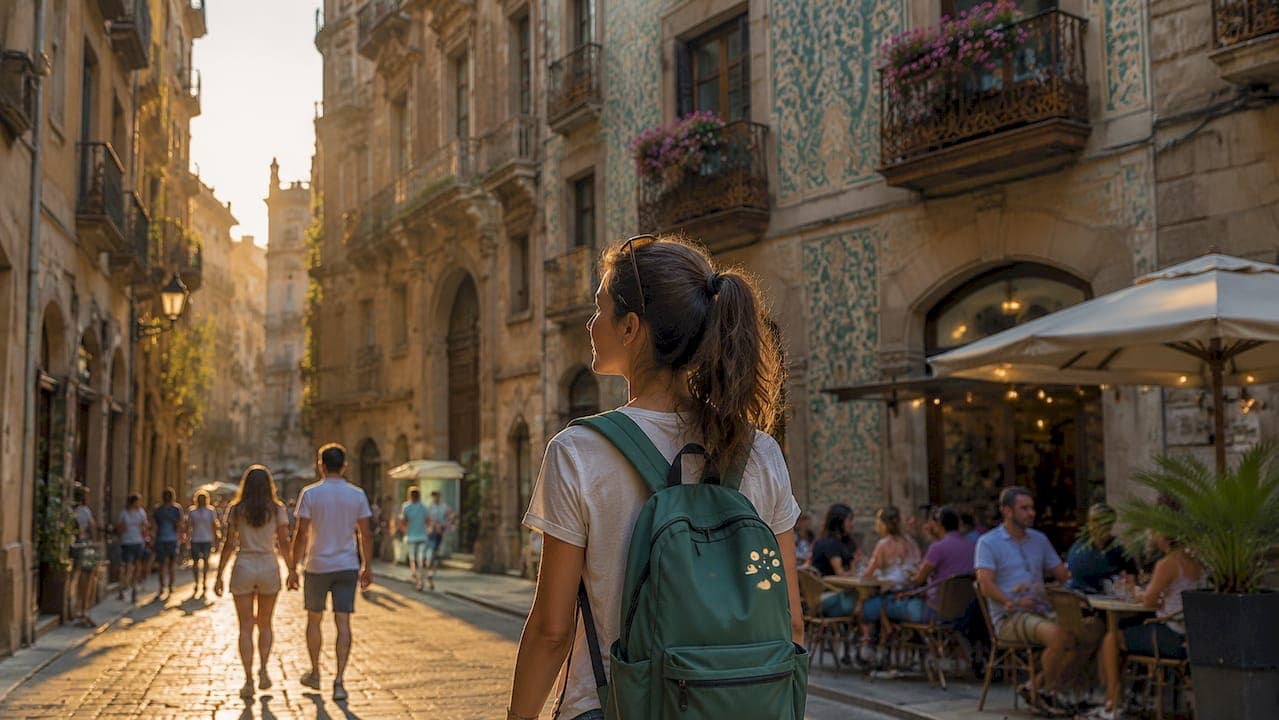
Barcelona's must-see spots on any city tour are the Sagrada Família, Park Güell, and the Gothic Quarter. These three alone cover modernist architecture, medieval history, and the kind of street life that makes the city feel real. But they are just the starting point. The examples of must-see spots on a Barcelona tour covered here go well beyond the postcard version, mixing top attractions in Barcelona with neighborhoods most visitors walk past. Plan at least four days. Book skip-the-line tickets weeks ahead for the big sites. The rest you can figure out as you go.
1. What makes Sagrada Família and Park Güell must-see Barcelona landmarks?
The Sagrada Família is the defining structure of Barcelona. Antoni Gaudí began it in 1882, and it is nearing completion in 2026, making this a genuinely rare moment to visit. The towers are finally all standing. The interior, with its forest of branching columns and kaleidoscopic light through stained glass, reads differently depending on the time of day. Morning light through the eastern windows is a different experience from the warm amber of late afternoon on the western side.
Booking is not optional. Sagrada Família sells out at least two weeks ahead during peak season. That means if you are traveling in june, july, or august, you need tickets before you leave home. A skip-the-line guided tour adds real value here because the building's symbolism is dense. Without context, you are looking at stone. With it, you are reading a story.
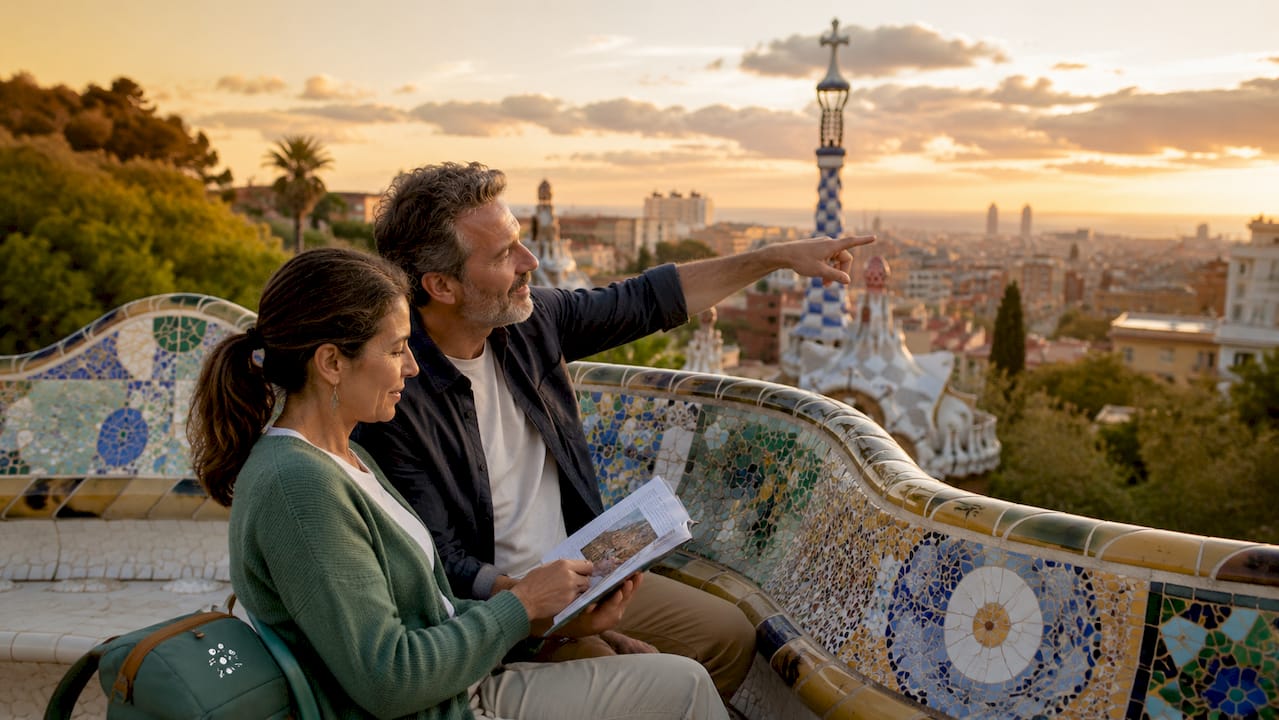
Park Güell sits on a hill above the Gràcia neighborhood and splits into two distinct areas. The Monumental Zone costs €10 and requires advance booking. It holds the famous mosaic terrace, the dragon staircase, and the hypostyle hall. The free surrounding park is larger, quieter, and offers views over the city that are just as good. Most visitors skip the free section entirely, which is their loss.
- Book Sagrada Família at least two weeks ahead in summer
- Visit Park Güell's Monumental Zone early morning to beat tour groups
- Combine both sites on the same day since they are in the same part of the city
- A guided tour at Sagrada Família is worth the extra cost for the architectural context
Pro Tip: At Park Güell, walk past the paid zone into the free upper terraces. The views are comparable, the crowds are thin, and you can sit on a bench without someone's selfie stick in your face.
2. Which historic neighborhoods are essential on a Barcelona tour?
The Gothic Quarter is the oldest part of Barcelona and costs nothing to walk. Its medieval streets contain Roman walls, the Barcelona Cathedral, Plaça Reial, and dozens of small plazas where locals actually sit. The area is compact enough to cover in two hours at a slow pace, but it rewards longer wandering. The streets shift from wide to narrow without warning, which is part of the point.
El Born sits just east of the Gothic Quarter and has a different energy. It is where you find the Picasso Museum, the Santa Maria del Mar church, and a concentration of independent shops and bars. The Picasso Museum holds over 4,000 works and is one of the most visited museums in Spain. Arriving when it opens avoids the worst of the crowds.
- Gothic Quarter: free, walkable, best in the morning before tour groups arrive
- El Born: Picasso Museum, Santa Maria del Mar, good for lunch and afternoon wandering
- Gràcia: village feel away from crowds, local market, Plaça del Sol for evening drinks
- Joan Miró Foundation on Montjuïc: less visited than Gaudí sites, genuinely good collection
Gràcia is the neighborhood most visitors skip. It sits just below Park Güell and has the feel of a small town that got absorbed by a city but never quite changed. The squares fill up in the evening with people who actually live there. That alone makes it worth an afternoon.
3. What are the best viewpoints, parks, and beaches in Barcelona?
Bunkers del Carmel
The Bunkers del Carmel offers a 360° view of the entire city, free of charge. It sits on a hill in the Carmel neighborhood and requires a steep walk with no shade. Bring water. Go at sunset. The view takes in the sea, Montjuïc, the Sagrada Família towers, and the grid of the Eixample district all at once. No other spot in the city gives you this.
Montjuïc Hill
Montjuïc holds more than most visitors expect. The hill has the Joan Miró Foundation, the National Art Museum of Catalonia (MNAC), the Montjuïc Castle, and terraced gardens. A funicular runs from the Paral·lel metro station, so the climb is optional. The castle at the top has a complicated history as a military prison, which the museum inside addresses directly. The gardens are free and largely ignored by tourists.
- Take the funicular from Paral·lel metro station
- Walk through the gardens toward the castle
- Stop at MNAC for the Romanesque art collection
- End at the Joan Miró Foundation before it closes
Barceloneta Beach
Barceloneta is 1.1 kilometers of sand with beach bars and seafood restaurants along the Passeig Marítim. In summer, arrive before 10 AM to get a good spot. The water is clean and swimmable from june through september. The neighborhood behind the beach has some of the city's best rice dishes and grilled fish, at prices that are still reasonable if you avoid the front-row tourist traps.
Pro Tip: For Bunkers del Carmel, go on a weekday evening. Weekends draw crowds that somewhat defeat the purpose of going somewhere quiet for a view.
4. Tibidabo and Camp Nou: worth your time?
Tibidabo sits at the highest point of the city and holds an amusement park that has been operating since 1901. The views from the top are the best in Barcelona on a clear day, stretching to Mallorca in the right conditions. The park itself is charming in an old-fashioned way. It is not a major theme park, but the combination of rides, views, and the Sagrat Cor church makes it a good half-day option, especially with kids.
Camp Nou is the home stadium of FC Barcelona and one of the largest stadiums in Europe. The museum and stadium tour draw football fans from across the world. Camp Nou sits alongside Montjuïc and Tibidabo as one of the city's major draws outside the Gaudí circuit. If football is part of your trip, book the tour or a match ticket well in advance.
5. How to plan your Barcelona sightseeing efficiently
A 4-day trip covers the major sites at a comfortable pace. Three days is possible but leaves little room for the neighborhoods. Five days lets you slow down and actually eat lunch without checking the time.
| Approach | Best for | Trade-off |
|---|---|---|
| 3 days, packed itinerary | First-time visitors with limited time | Rushed, little neighborhood time |
| 4–5 days, mixed pace | Most travelers | Good balance of sites and wandering |
| Guided bike tour on day 1 | Orientation and context | Covers ground fast, sets up the rest of the trip |
| Neighborhood afternoons | Repeat visitors or slow travelers | Fewer landmarks, more texture |
The most practical approach is to front-load the ticketed sites. Do Sagrada Família and Park Güell in the first two days, when you have the energy and the bookings are locked in. Leave the Gothic Quarter, El Born, and Gràcia for afternoons and evenings, when the light is better and the pace is slower. Many of the best experiences in Barcelona cost nothing: the Gothic Quarter, Barceloneta Beach, and the Bunkers del Carmel are all free.
La Boqueria market on La Rambla is worth a visit, but timing matters. Arriving before 9 AM means seeing local vendors setting up and avoiding the tour groups that arrive mid-morning. After 10 AM, the market is crowded and the prices at the front stalls reflect it.
Key takeaways
The most effective Barcelona itinerary combines advance-booked landmark visits with free neighborhood time, spread across at least four days.
| Point | Details |
|---|---|
| Book landmarks early | Sagrada Família sells out two weeks ahead in summer; Park Güell requires at least one week. |
| Free sites are genuinely good | Gothic Quarter, Bunkers del Carmel, and Barceloneta Beach cost nothing and deliver a lot. |
| Neighborhoods add texture | Gràcia and El Born show a side of the city that the landmark circuit misses entirely. |
| Timing changes everything | La Boqueria before 9 AM, Bunkers del Carmel at sunset, Sagrada Família in morning light. |
| Four days is the right baseline | Three days is feasible but fast; four days lets the city land at a human pace. |
What I actually tell people before they go
People ask me which sites to prioritize, and my honest answer is: book the Sagrada Família first, then figure out the rest. Not because it is the most beautiful thing in the city, but because it is the one that will sell out and leave you standing outside with a photo of the facade.
The mistake I see most often is treating Barcelona as a checklist. Travelers spend three days running between Gaudí buildings and leave without ever sitting in a square in Gràcia or eating lunch somewhere that does not have a menu in six languages. The Joan Miró Foundation is a good example of what gets skipped. It is a serious collection in a beautiful building on Montjuïc, and on most days you can walk through it without queuing.
La Boqueria is worth mentioning because people always ask. Go before 9 AM or skip it. The market at that hour is genuinely interesting. After 10 AM it is a crowd-management exercise with overpriced fruit cups.
The Bunkers del Carmel is the one I always recommend last, because it tends to be the one people remember most. No ticket, no tour group, just a hill with a view of the whole city. Bring water. Go at dusk. That is Barcelona at its most straightforward.
— Evgeny
See Barcelona at the right pace with Tresgatos
Three hours on a bike with someone who actually lives here covers more ground than a day of solo map-checking. Tresgatos runs small-group bike tours in Barcelona with a maximum of nine people and one local guide. Guides like Igor and Marina know which streets to take, where to stop, and what the buildings actually mean. The tour is all-inclusive: bike, helmet, insurance, no surcharges.
For the ticketed sites, Tresgatos also handles fast-track entry for Sagrada Família and Park Güell, so you are not spending your first morning in a queue. If you want a full picture of the city before you start wandering on your own, the Barcelona travel guide is a good place to start planning.
FAQ
How far in advance should I book Sagrada Família tickets?
Book at least two weeks ahead during summer. In peak season, tickets sell out faster than that, so booking before you leave home is the safest approach.
Is Park Güell worth visiting if I skip the Monumental Zone?
Yes. The free areas of Park Güell offer city views and Gaudí's naturalistic design without the entry fee or the crowds of the paid section.
What are the best free things to do in Barcelona?
The Gothic Quarter, Barceloneta Beach, and the Bunkers del Carmel are all free and rank among the most rewarding experiences in the city.
How many days do I need to cover the main Barcelona sightseeing spots?
Four days is the recommended baseline. Three days is possible but leaves little time for neighborhoods like Gràcia or El Born.
When is the best time to visit La Boqueria market?
Arrive before 9 AM to see local vendors and avoid tour groups. After 10 AM the market is crowded and the front stalls cater almost entirely to tourists.